Women's Polo Dress Guide
The polo dress is a shirtdress built on the polo shirt — knit piqué, a soft collar and a button placket, lengthened into a sporty day dress that needs almost no styling to look finished.
Shop Women's Polo Dresses Now
Shop Women's Polo Dresses on Amazon Shop Women's Polo Dresses on eBayThe Amazon and eBay links on this page are affiliate links. If you make a purchase through them, Apparel Search may earn a commission.
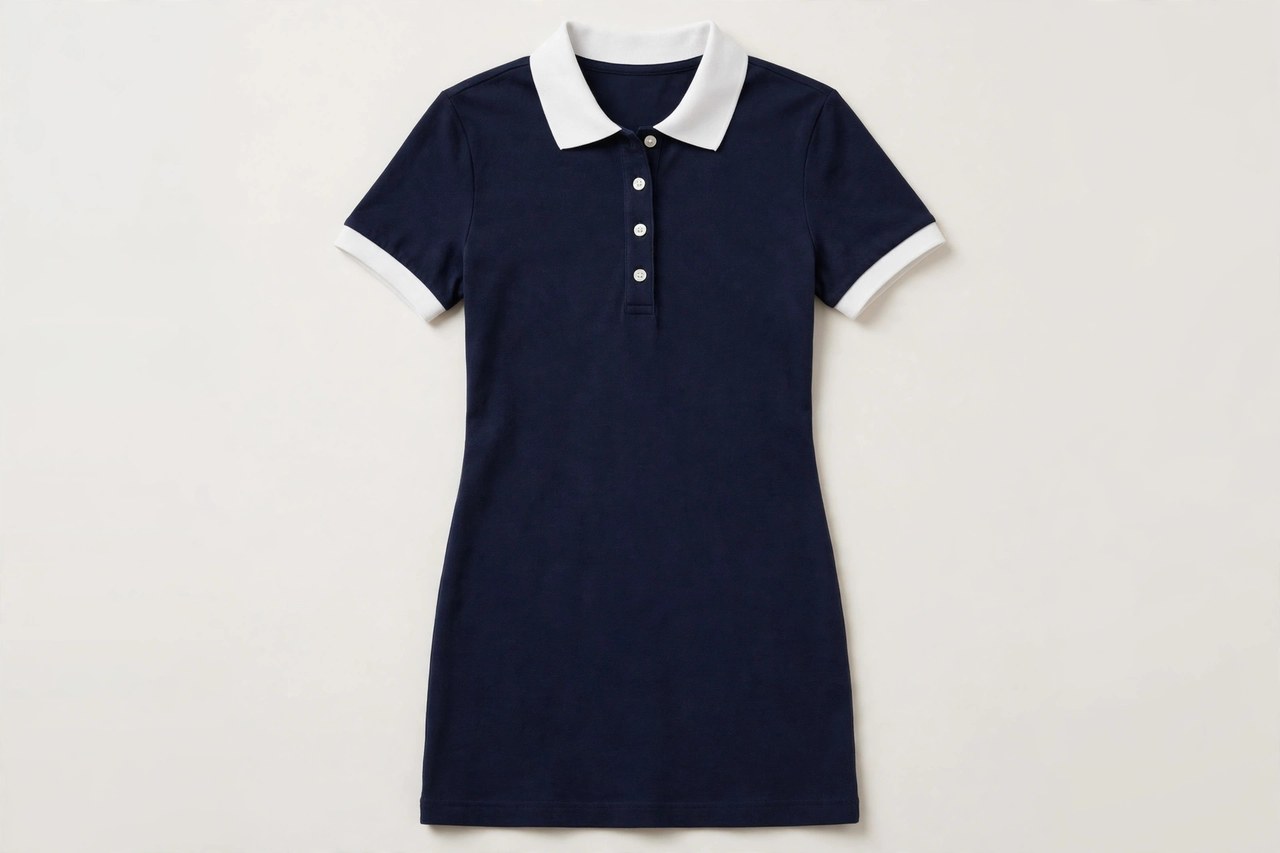
The polo dress takes one of the most familiar garments in the wardrobe — the polo shirt — and simply keeps going. The top half is unmistakably a polo: a knit piqué body, a soft ribbed collar that sits open or buttoned, and a short placket with two or three buttons. Below the waist, instead of ending at the hip, the knit continues into a skirt, turning a sport shirt into a complete one-piece outfit. It is a shirtdress in spirit but a knit dress in construction, which is why it feels as easy as a T-shirt while looking considerably more deliberate.
That dual identity is the reason the style endures. It arrived with the country-club and tennis culture that made the polo shirt famous, and women adopted the dress version early as warm-weather daywear for spectating, traveling and resort life. Today it sits in a useful middle ground: polished enough for a casual office, a school event or a lunch where jeans would feel too little, yet comfortable enough for a full day on your feet. If you like a dress that requires no layering decisions and no special undergarments, the polo dress is one of the most reliable answers in summer dressing.
Construction: Piqué, Collar and Placket
The classic fabric is cotton piqué, the textured knit with a fine waffle-like surface originally woven for breathability on court. Piqué holds its shape better than jersey, resists showing every wrinkle, and gives the dress its slightly crisp, sporty hand. Modern versions also come in cotton-elastane blends for stretch, in smoother interlock knits for a dressier finish, and in performance polyester piqué that wicks moisture for golf and travel. Heavier piqué makes a more structured dress; lighter jersey versions drape closer and read more casual.
The details that make it a polo rather than a generic knit dress are all at the top. The collar is knitted separately and attached so it lies flat, sometimes in a contrasting tipped color. The placket — the reinforced opening with buttons — controls the neckline depth and is usually the place to check quality: buttons should be securely sewn, the placket should not ripple, and the stitching where collar meets placket should be even. Side vents at the hem, a chest logo embroidery and ribbed sleeve bands are the other heritage touches, all borrowed directly from the shirt.
Lengths, Fits and Choosing Your Size
Lengths run the full range. Above-the-knee styles are the sporty original, popular for golf, tennis spectating and hot-weather travel. Knee-length and midi polo dresses are the modern workhorses, appropriate for far more settings and easier to wear without a second thought about sitting or bending. Silhouette matters as much as length: straight shift cuts skim the body and suit the athletic heritage best, A-line versions add a gentle flare from the waist that many women find more forgiving, and belted or drawstring-waist versions define the middle on an otherwise straight knit.
Fit in a knit dress should be close but never tight. Piqué has natural give, and a dress that pulls across the placket buttons or strains at the hips is a size too small, however the number reads. Check the shoulder seam sits at the shoulder point, the collar lies flat when the top button is open, and the skirt falls without clinging at the back. Between sizes, most women prefer the larger in white and pale colors, which show more in bright light. Long-torso wearers should seek tall or longer-length lines rather than sizing up, which adds width without adding the needed length.
Styling, Wearing and Care
Styling a polo dress is mostly about the shoe and one accessory. White sneakers keep the heritage sporty look intact and are the default for daytime. Loafers or espadrilles lift it toward smart-casual, while a low wedge and a woven tote make it resort-ready. A sweater draped over the shoulders leans into the classic country-club reference on purpose. Belts work on straighter cuts: a slim leather or webbing belt at the natural waist instantly makes the dress look chosen rather than simply pulled on. Keep jewelry simple — the collar and placket already frame the neckline.
Care is knit care. Wash polo dresses inside out in cool water on a gentle cycle to protect the collar shape and any embroidery, reshape the collar while damp, and dry flat or on a hanger away from strong sun, which fades dark piqué quickly. Avoid hanging a wet heavy piqué dress by the shoulders for long periods, as the skirt weight can stretch the body. Fold rather than hang for storage if the knit is heavy. Treated this way, a good piqué polo dress holds its collar, color and shape for many seasons — which is exactly the point of a classic.
Related Women's Guides
Photos

Looking for Women's Clothing Stores?
This guide helps you choose women's polo dresses. To browse where to buy, visit our women's clothing store directory, where you can find retailers that carry them.