Women's Retro Jeans Guide
Retro jeans are women's jeans cut the way past decades cut them — high rises, straight legs, bells and relaxed fits in sturdy denim that modern skinny styling left behind.
Shop Women's Retro Jeans Now
Shop Women's Retro Jeans on Amazon Shop Women's Retro Jeans on eBayThe Amazon and eBay links on this page are affiliate links. If you make a purchase through them, Apparel Search may earn a commission.
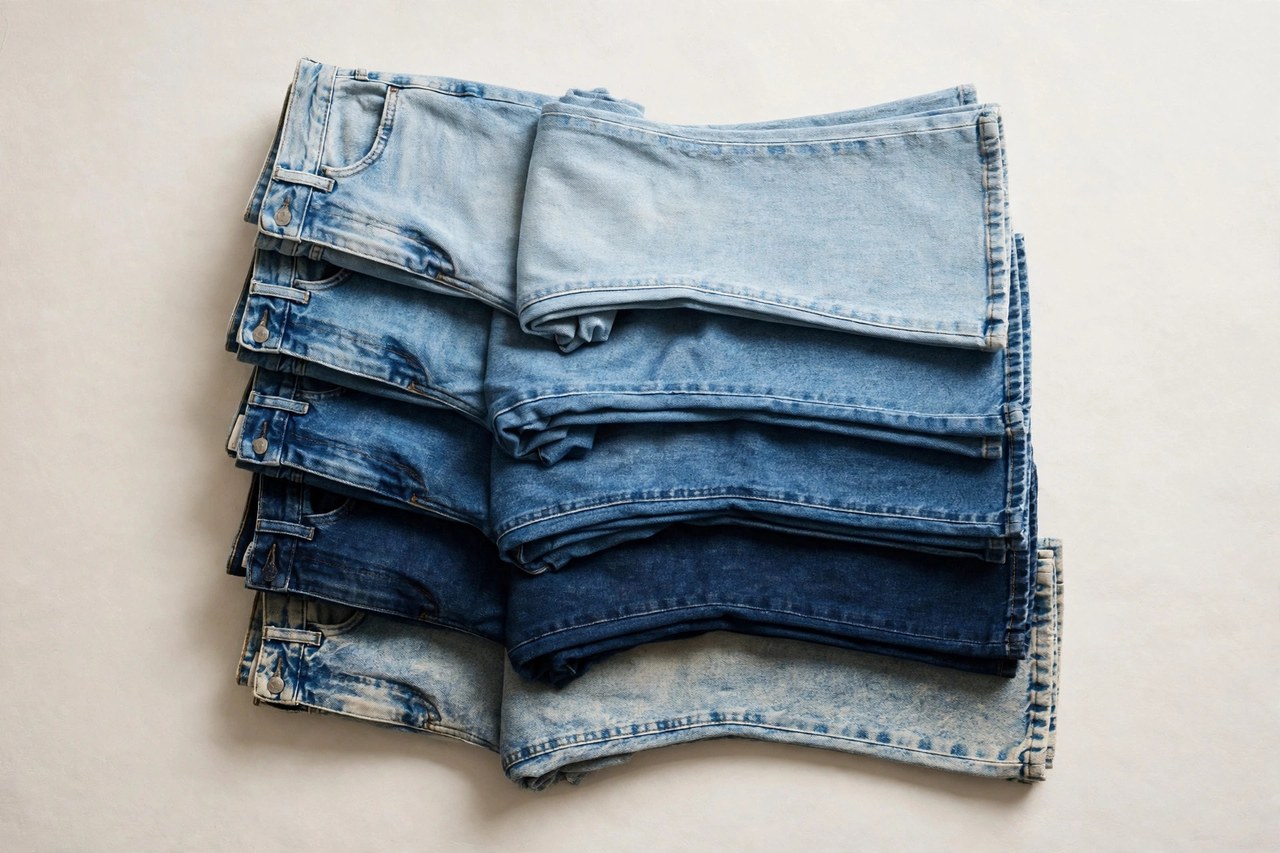
Jeans began as work trousers, became the uniform of teenage rebellion, and ended the twentieth century as the most democratic garment in the wardrobe — and at every stage, women wore them cut to the fashion of the moment. Retro jeans are those period cuts: the cuffed, side-zip jeans of the 1950s, the slim cigarettes of the 1960s, the sweeping bells of the 1970s, the high, tapered jeans of the 1980s and the relaxed, baggy fits of the 1990s. This guide is about cut and decade, across all makers.
For the story of one famous maker in particular, see our separate retro Levi jeans guide; here the subject is the wider world of women's retro denim, including the many brands, store labels and unbranded workwear jeans that filled wardrobes alongside the famous names. Whether you buy true vintage or modern jeans sewn to a vintage pattern, the fit language is the same: rise, leg shape and hem decide the decade, while wash and hardware finish the impression.
Cuts by Decade: Fifties Cuffs to Seventies Bells
Women's jeans of the 1950s were still partly workwear and partly novelty: dark, stiff denim, a high natural waist, a straight or slightly tapered leg, and the famous deep cuff turned up at the ankle, often with a side zip rather than a fly front. 1960s jeans slimmed down with the decade — lower on the hip as the sixties progressed, narrow through the leg, ending at the ankle bone, in paler washes and colored denim as jeans moved from ranch and campus into everyday fashion.
The 1970s gave jeans their most dramatic silhouette: the bell bottom and the flare, fitted tight through thigh and knee then widening to hems that could reach twenty-two inches around, worn long over platform shoes. Hip-hugger rises, wide waistbands, contrast stitching, patch pockets and embroidered or studded decoration all belong to this era, in denim that ranged from rigid dark indigo to soft, pre-washed stone tones. A genuine seventies flare is cut differently from a modern bootcut — the break comes lower and the hem is far wider.
Eighties and Nineties: High Waists and Relaxed Fits
The 1980s raised the waist to its highest, pleated the front on dressier styles, and tapered the leg tightly to the ankle — the silhouette now nicknamed mom jeans, though at the time it was simply fashion. Designer jeans made denim a status item, and finishes multiplied: stonewash, acid wash, bleached and black denim all date-stamp a pair at a glance. Fit was close and structured, with firm denim and little or no stretch, so vintage eighties jeans should be bought by waist measurement, not by modern size.
The 1990s relaxed everything: straight, loose and baggy legs, mid and low rises returning by decade's end, carpenter and cargo details borrowed from workwear, and long hems pooling over trainers and boots. Because nineties denim was made in huge quantities in durable fabrics, it is now the easiest true vintage to find in wearable condition. When choosing between decades, try the rise first — a fifties or eighties high waist, a seventies low hip line and a nineties slouch each sit on a different part of the body and suit different tops.
Buying Vintage Denim and Making It Last
Measure a pair of jeans you already love — waist, rise, inseam, hem width — and shop to those numbers, because vintage sizing predates modern vanity sizing and a vintage size 12 can measure like a modern 6. Inspect the stress points: the inner thigh, the seat, pocket corners and the hem fold are where old denim fails first, and check that zips run and rivets and buttons are original or soundly replaced. Stiff, unwashed vintage denim will soften and mold to you over the first wears.
Wash retro jeans sparingly and gently: inside out, cold water, mild detergent, and line drying away from harsh sun, which fades indigo unevenly. Dark raw denim earns its personal fade pattern precisely by not being washed often. Store folded rather than hung by the waistband, and mend small worn patches early — visible sashiko-style repair stitching is now part of vintage denim culture rather than a flaw. A well-chosen pair of retro jeans, whatever its decade, will usually outlast several pairs of thin modern stretch denim.
Related Women's Retro Guides
Looking for Women's Clothing Stores?
This guide helps you choose women's retro jeans. To browse where to buy, visit our women's clothing store directory, where you can find retailers that carry them.