Women's Bell-Bottom Jeans Guide
Denim flares done right — washes, rises, the flare versus bootcut question, and hemming for heels or flats.
Shop Women's Bell-Bottom Jeans Now
Shop Women's Bell-Bottom Jeans on Amazon Shop Women's Bell-Bottom Jeans on eBayThe Amazon and eBay links on this page are affiliate links. If you make a purchase through them, Apparel Search may earn a commission.
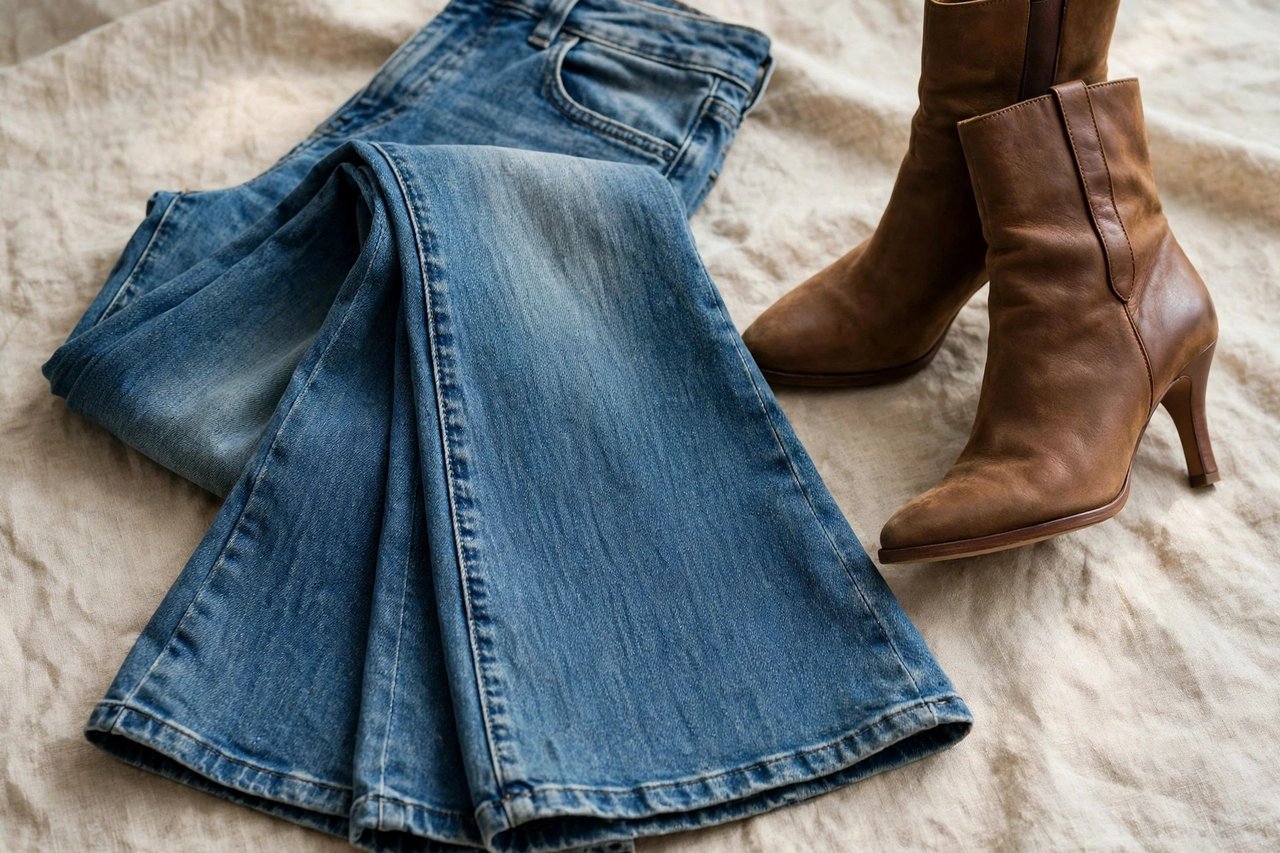
Bell-bottom jeans are where the flare silhouette began for most wardrobes: classic five-pocket denim, close through the hip and thigh, then opening from the knee into a generous bell that swishes over your shoes. Denim gives the shape a casual ease that dressy flare trousers never quite match, and it pairs with everything from a plain white tee to a silk blouse. Because jeans are bought by wash, rise and inseam as much as by cut, the bell-bottom version rewards a little homework. This guide separates true bells from their close relatives, explains which washes and rises flatter which bodies, and covers the hemming decision that makes or breaks a pair.
A quick history helps explain the fit. Sailors wore bell-bottom trousers for practical reasons long before fashion adopted them, hippie and rock culture made denim bells an emblem of the late 1960s and 1970s, and designers revived them in the 1990s and again in the 2010s with higher rises and better stretch. Modern versions are more wearable than the originals: the thigh is refined, the denim recovers its shape, and the flare is calibrated rather than costume-wide. The result is a jean that lengthens the leg, balances wider hips, and brings movement to simple outfits.
Flare, Bootcut and Other Close Relatives
Shoppers meet three similar cuts and the names are often used loosely, so here is the practical distinction. A bootcut stays fitted to the knee and then opens just enough — typically to about a seventeen or eighteen inch leg opening — to clear a boot shaft. It reads as an almost-straight jean with a gentle kick. A flare opens more decisively, usually to twenty inches or beyond, and the widening is visible from a distance. A bell-bottom is the fullest expression, with the widest hem and the most dramatic swing, sometimes approaching a small skirt for each leg on extreme fashion versions. If you want a subtle everyday jean, bootcut is the safe choice; if you want the retro line, commit to a genuine flare or bell.
Other details refine the family. Kick flares are cropped bells ending above the ankle, playful with sneakers and flats. Trouser flares in denim borrow flat fronts and welt pockets from dress pants for a smarter finish. Wide-leg jeans are sometimes mislabeled as bells, but their width starts at the hip rather than the knee, giving a completely different proportion. Knowing which shape is actually on the hanger saves the common disappointment of ordering bells and receiving a polite bootcut that never delivers the swish you wanted.
Washes, Rises and Denim Weight
Wash controls formality more than any other denim choice. Dark indigo and black bells are the dressiest, slimming through the thigh and easy to pair with blazers, heels and evening tops. Medium washes are the versatile middle, reading as classic casual denim for daytime. Light washes and faded thighs push the 1970s feeling hardest and suit relaxed, warm-weather styling. Distressing concentrates attention wherever it sits, so heavy whiskering or ripped knees will compete with the flare itself; most wearers find a clean leg lets the silhouette do the talking. Two-tone and retro contrast stitching appear on fashion pairs and date an outfit more quickly than a classic finish.
Rise shapes both comfort and proportion. A high rise around ten to eleven inches elongates the leg, holds a tucked top beautifully and suits the bell shape best for most bodies. Mid-rise bells feel more relaxed and vintage-true. True low-rise bells exist in retro revivals but are the least forgiving and the hardest to keep in place. Denim weight matters too: heavier twelve to thirteen ounce denim holds a sculptural flare and lasts for years, while lighter stretch denim with elastane feels softer on day one but can bag at the knee, so look for blends that include polyester or a recovery fiber if you choose a high-stretch pair.
Fit and Hemming for Heels Versus Flats
Fit bell-bottom jeans snugly through the waist, hip and thigh, because denim relaxes with wear and the fitted upper leg is what makes the flare look intentional. You should be able to sit and climb stairs without the waistband digging, but the front should lie smooth with no pulling. The flare should begin at your knee; on petite frames a standard cut may start the flare too low, making the jeans look like ordinary straights with a wide finish, so petite-specific bells are worth seeking out. Back pocket placement changes the rear view more than most shoppers realize — pockets set slightly higher and closer together give a lifted look under the close fit.
Hemming is the decision readers ask about most, and the rule is strict: pick your shoe height first and hem for it. Bell-bottoms should end about a quarter to half an inch off the floor in the intended shoe, covering most of the foot. A pair hemmed for three-inch heels will drag and shred over flats, and a pair hemmed for flats will look awkwardly cropped over heels, losing the long line entirely. Many devoted wearers own two pairs — a dark pair hemmed long for heels and boots, and a medium wash hemmed shorter for sneakers and flat sandals. Ask your tailor to keep the original hem finish where possible, since a reattached factory hem preserves the authentic look at the bottom of the flare.
Styling Denim Bells Day and Night
Daytime styling thrives on simplicity. A tucked or half-tucked tee, a fitted crew sweater or a chambray shirt keeps the top half clean while the jeans supply the drama below. Heeled ankle boots are the natural partner in cooler months, platform sandals carry the look into summer, and clean white sneakers work when the hem is tailored for a lower profile. Add a leather belt to define the high waist and a structured bag to keep the outfit grounded. Because the jeans already reference a strong era, one retro accent at a time is enough — round sunglasses or a suede jacket, not both plus fringe.
For evening, switch the wash rather than the formula: black or darkest indigo bells, a silk camisole or satin blouse, pointed heels and a cropped blazer or tailored jacket. The denim texture keeps the outfit relaxed while the silhouette and shine dress it up. Avoid very loose, long tops that hide the waist and fight the flare, and avoid shoes that disappear entirely under the hem except for a toe — a completely hidden shoe shortens the leg visually. When the proportions are right, bell-bottom jeans make a basic top look styled, which is exactly why they keep returning decade after decade.
Denim Care and Making the Flare Last
Denim lasts longest when it is washed least. Spot-clean small marks, air jeans between wears, and wash inside out in cold water only when they truly need it, which preserves both the wash color and the elastane that holds the fitted thigh. Skip hot drying: heat breaks down stretch fibers and can shrink the inseam you paid to have tailored, so line-dry or lay them flat. If the knees begin to soften, a short rest between wears helps the fibers recover. Store bells folded with the flare smoothed flat or hung by the waistband on a sturdy hanger so the heavy hem does not stretch the leg out of shape.
One denim-specific extra: raw and rigid bells with little or no stretch break in to your body over the first dozen wears and develop personal fading at the thigh and knee, which enthusiasts prize. They will feel unforgiving in the fitting room, so buy them snug but wearable and expect the waist to give about an inch. Stretch bells, by contrast, should fit perfectly on day one because they give far less over time. Whichever you choose, check the inner hem for wear each season — the sweeping hem is the first place bells show their age, and a timely tailor visit to raise a dragging hem by a fraction can add years to a favorite pair.
Related Women's Guides
Looking for Women's Clothing Stores?
This guide helps you choose women's bell-bottom jeans by wash, rise and flare. To browse where to buy, visit our women's clothing store directory, where you can find retailers that carry them.