Bell-Bottoms
Clothing Definitions — definitions of garments and clothing terms from Apparel Search
Search Apparel Search
At a Glance
Definition: Bell-bottoms are trousers fitted through the thigh that widen from the knee downward, so the leg opens into the shape of a bell or trumpet.
Also known as: Revived in the 1990s as flares.
Category: Clothing Definitions
Few silhouettes announce their decade like bell-bottoms, yet the famous flare began as pure workwear. The widening leg was a sailor's practical solution long before it was a fashion statement, and when fashion took it up in the 1960s it kept the shape and discarded the reasons — then exaggerated the shape for good measure. Understanding bell-bottoms means holding both stories at once: the deck of a ship, and the dance floor.
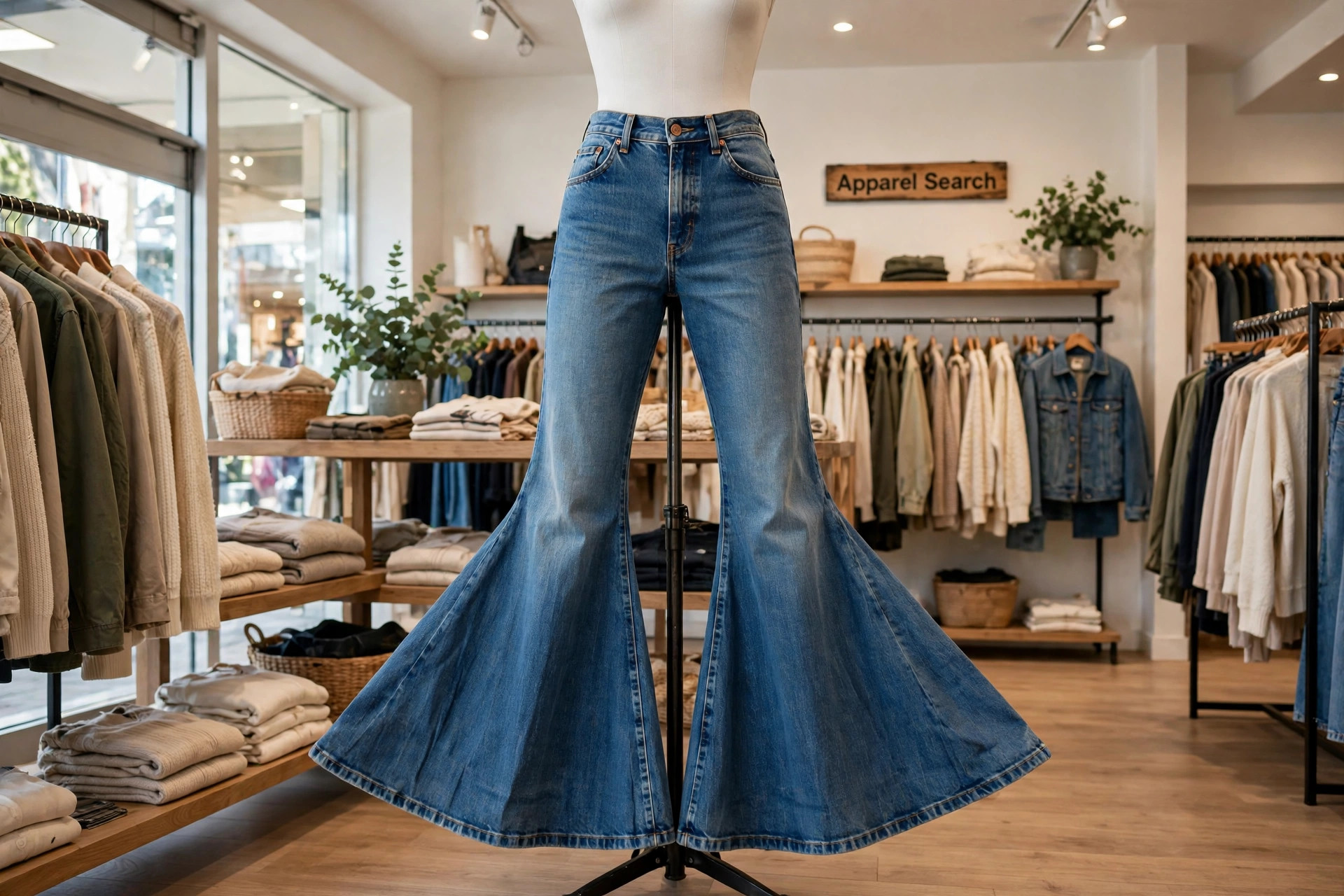
The Shape, and How It Should Fit
A bell-bottom is defined from the knee down. Above the knee the trouser fits like any other; below it, each leg widens steadily until the hem is dramatically broader than the knee, giving the bell or trumpet outline the name describes. The width is the variable: modest flares open gently, while the extreme 1970s versions could hide the shoe entirely.
Fit follows from the shape. The trouser should sit cleanly through the seat and thigh, with the widening starting at the knee — a flare that starts higher reads as a wide leg, not a bell-bottom. Length matters more than with straight pants: the wide hem should just clear the ground over the intended shoes, because a dragging bell hem frays quickly and spoils the clean trumpet line. Worn at the right length, the flare also covers the top of the shoe, which turns out to be a working feature, not just a look.
A Sailor's Idea
Bell-bottoms are traditionally said to have been introduced for sailors in the early 19th century — the date 1817 is often given — and every part of the traditional explanation is functional. A wide leg rolls up fast for wet deck work, where a straight leg binds and soaks. If a sailor went overboard or had to abandon ship, wide legs pulled off more easily in the water than tight ones. Knotted at the ends, the legs could even trap air and serve as a rough flotation aid. Navies kept the flared trouser as uniform long after merchant fashion moved on, which is how the shape stayed in public view until civilian fashion claimed it.
The working logic never entirely disappeared. Carpenters and other tradespeople have worn flared trousers because the wide hem sheds sawdust and debris over the shoe instead of into it — the same covering effect, put to a different trade's use.
The 1960s and 1970s Peak
In the modern fashion scene bell-bottoms peaked in the 1960s and 1970s, worn by men and women alike. Surplus naval trousers and the youth cultures that adopted them started the wave; the fashion industry then widened hems to widths contemporaries themselves called absurd. In jeans, in corduroy, in printed and tailored fabrics, the bell shape became one of the defining trouser silhouettes of the era — fitted at the thigh, theatrical at the hem, and inseparable in photographs from the platform shoes it was designed to cover.
As with most extreme silhouettes, the reaction was total: the 1980s replaced the flare with tapered and straight legs, and bell-bottoms became a period costume shorthand. But a shape this distinctive does not stay buried.
Flares: The 1990s Return
The style returned in the 1990s under a new name — flares — in a moderated form worn mostly by women: the same widening from the knee, cut slimmer and worn lower, usually in denim. The two names are still worth keeping apart when shopping or reading vintage descriptions. Bell-bottoms properly suggests the dramatic width of the 1960s and 1970s original; flares suggests the narrower revival cut. Our guide to women's bell-bottom jeans covers the modern versions, fits and styling in detail. The related bell sleeve applies the same flaring idea at the wrist instead of the ankle.
Nor did the story end in the 1990s. The flare has cycled back repeatedly since — in the 2000s as the bootcut's wider cousin, and again in the 2010s and 2020s as high-waisted flares became a standard denim fit alongside skinny and straight legs. Each return reuses the same fitting logic worked out in the style's first life: clean through the thigh, widening at the knee, hemmed to just clear the shoe. Denim is the fabric that carries most revivals, because it holds the bell's sharp outline and because jeans were the 1970s uniform in which the shape is remembered. A silhouette borrowed from sailors, exaggerated by one generation and moderated by the next, has settled into the permanent rotation of trouser shapes.
Not to Be Confused With
Bell-bottoms vs. bootcut: both widen below the knee, but a bootcut opens only slightly — just enough to clear a boot — while bell-bottoms widen dramatically into a full bell shape. Flares sit between the two, closer to bell-bottoms. See the women's bell-bottom jeans guide for modern fits.
Common Questions
What are bell-bottoms?
Bell-bottoms are trousers fitted through the thigh that widen from the knee downward, so each leg opens into the shape of a bell or trumpet. They were most popular in the 1960s and 1970s and returned in the 1990s as flares.
Why did sailors wear bell-bottoms?
Tradition holds that the flare was introduced for sailors in the early 19th century because a wide leg rolls up easily for deck work, pulls off quickly in the water in an emergency, and can be knotted at the legs to trap air as an improvised flotation aid.
What is the difference between bell-bottoms and flares?
They are the same basic shape — trousers widening from the knee. Bell-bottoms usually means the dramatic, wide hems of the 1960s and 1970s; flares is the name of the slimmer 1990s revival, worn mostly by women and usually in denim.