Women's Retro T-Shirts Guide
Retro T-shirts are women's tees in the styles and graphics of past decades — ringer tees, baseball tees, concert and souvenir prints, and soft single-stitch classics.
Shop Women's Retro T-Shirts Now
Shop Women's Retro T-Shirts on Amazon Shop Women's Retro T-Shirts on eBayThe Amazon and eBay links on this page are affiliate links. If you make a purchase through them, Apparel Search may earn a commission.
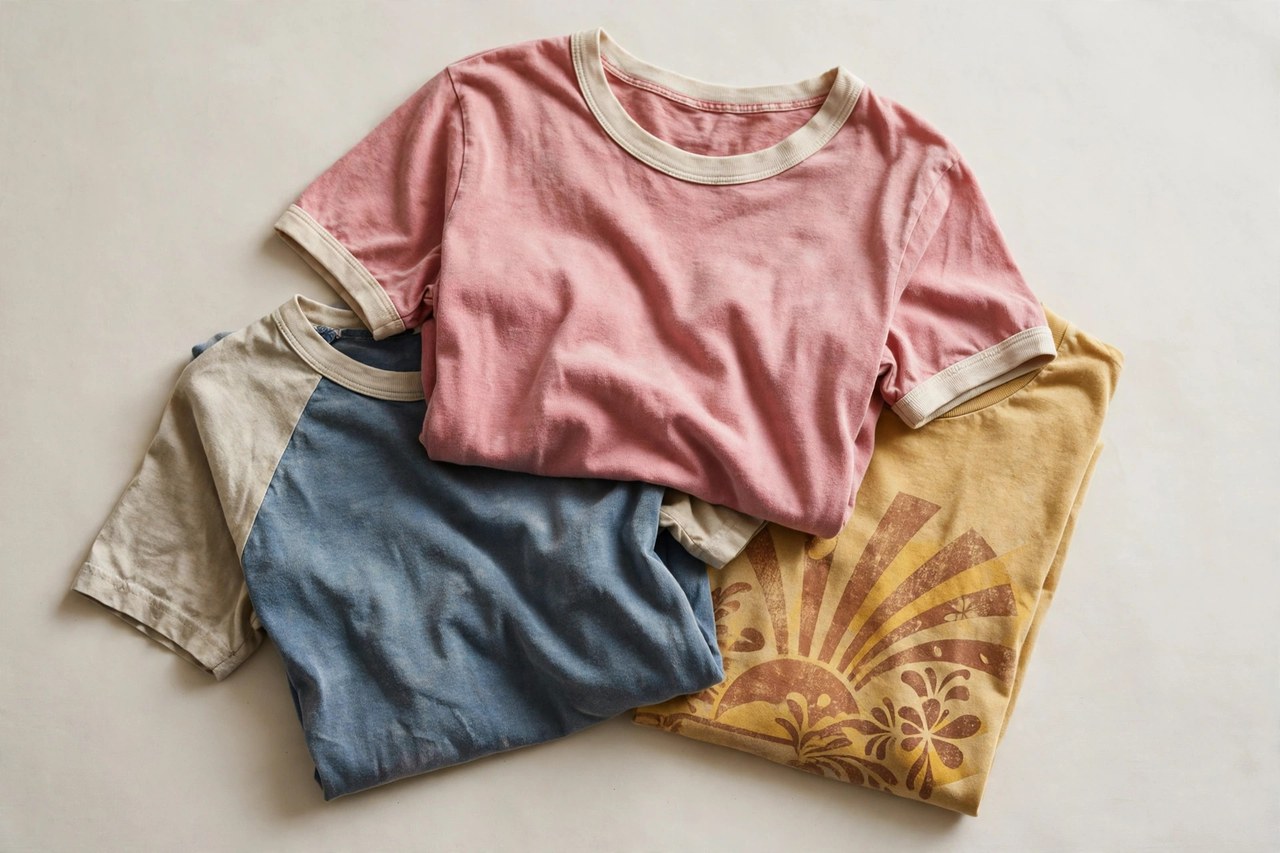
The T-shirt climbed from underwear to outerwear within living memory, and women's retro T-shirts preserve every step: the plain white tee adopted as a fashion statement in the 1950s, the printed and dyed tees of the late 1960s, and the explosion of ringer tees, baseball tees, concert tees and souvenir graphics through the 1970s and 1980s. A vintage tee is a small poster of its moment — a tour, a resort, a brand, a joke — printed on cotton that decades of washing have softened to a thinness modern shirts imitate but rarely match.
This guide is about recognizing and choosing genuine retro tees and good retro-style reproductions alike. The tells are learnable: fabric weight and blend, stitch type, print method, collar and sleeve bands, and the cut of the body, which for women's retro tees ranges from the fitted baby tee to the long, slim 1970s shape. Learn them and you can date a shirt from a market rail at arm's length, and spot the difference between a forty-year-old original and last year's vintage-look reprint.
Styles: Ringers, Baseball Tees and Fitted Cuts
The ringer tee is the signature 1970s style: a body in white or a pastel shade with contrasting ribbed bands at the collar and sleeve hems, usually carrying a centered iron-on or screen-printed graphic. The baseball or raglan tee, with three-quarter sleeves in a contrasting color joined on a diagonal seam, belongs to the same decade's sporty wave. Women's fitted tees of the era were cut long and slim with cap or short sleeves, in cotton and cotton-polyester jersey that clings rather than drapes — a very different fit from the boxy unisex tee that took over in the 1990s.
Earlier and later styles frame the decade. The 1950s and early 1960s tee was plain, white or striped, worn tucked into jeans and capris as borrowed-from-the-boys casual wear. The 1980s enlarged the canvas: oversized cuts, neon and pastel palettes, puff prints, splatter and airbrush effects, and licensed characters and logos at billboard scale. Souvenir tees from holiday towns, national parks and events run through all these decades and are often the best dated of all, because so many carry a printed year.
Graphics, Print Methods and Dating a Tee
Print is the vintage tee's archive. Iron-on transfers of the 1970s sit on the fabric with a slight sheen and crack in a characteristic fine web with age; screen prints sink more into the cloth and soften with washing; flocked prints feel velvety and belong mainly to the seventies and early eighties. Graphics divide into families — rock tours and festivals, brands and advertising characters, holiday souvenirs, school and sports teams, and novelty jokes — and originals of famous tours and early brand tees are seriously collected, with condition and size driving value as much as the band or logo.
Construction dates what graphics cannot. Collectors look first for single-stitch hems and sleeve edges, standard on American tees until the early 1990s, when double-needle stitching took over. Fabric helps too: paper-thin 50/50 cotton-polyester blends typify the late seventies and eighties, while earlier tees are all cotton and later ones heavier cotton again. Tags changed constantly — their size, wording and country-of-origin lines are a dating science of their own — and a faded, tagless, soft tee with single stitching and a period print is the collector's classic combination.
Fit, Buying and Care
Buy vintage tees by measurement and by your tolerance for character. Decades of washing shrink length more than width, vintage large is rarely modern large, and a fitted seventies tee should be tried against your shoulder and bust measurements rather than any letter size. Inspect the print under light for cracking you can live with, the underarms for staining and thinning, and the collar band, which stretches out on well-worn shirts. Honest fade and softness are the point of a retro tee; holes, hard stains and distorted prints are where most buyers draw the line.
Wash retro tees inside out, cold and gentle, with prints treated as the fragile layer they are, and line dry — tumble heat is the fastest way to finish cracking an old iron-on. Store folded rather than hung, since jersey necklines grow on hangers. For modern retro-style tees, the same care doubles their life and speeds the softening that makes them feel right. However you wear it — tucked into retro jeans, knotted over a skirt, layered under a blazer — a good vintage tee carries its decade lightly and personally, which is exactly why the style never leaves.
Related Women's Retro Guides
Looking for Women's Clothing Stores?
This guide helps you choose women's retro t-shirts. To browse where to buy, visit our women's clothing store directory, where you can find retailers that carry them.