Women's Retro Sweaters Guide
Retro sweaters are women's knitwear in period styles — twinsets, fitted pullovers, novelty knits, mohair and the bold patterned sweaters of the 1980s.
Shop Women's Retro Sweaters Now
Shop Women's Retro Sweaters on Amazon Shop Women's Retro Sweaters on eBayThe Amazon and eBay links on this page are affiliate links. If you make a purchase through them, Apparel Search may earn a commission.
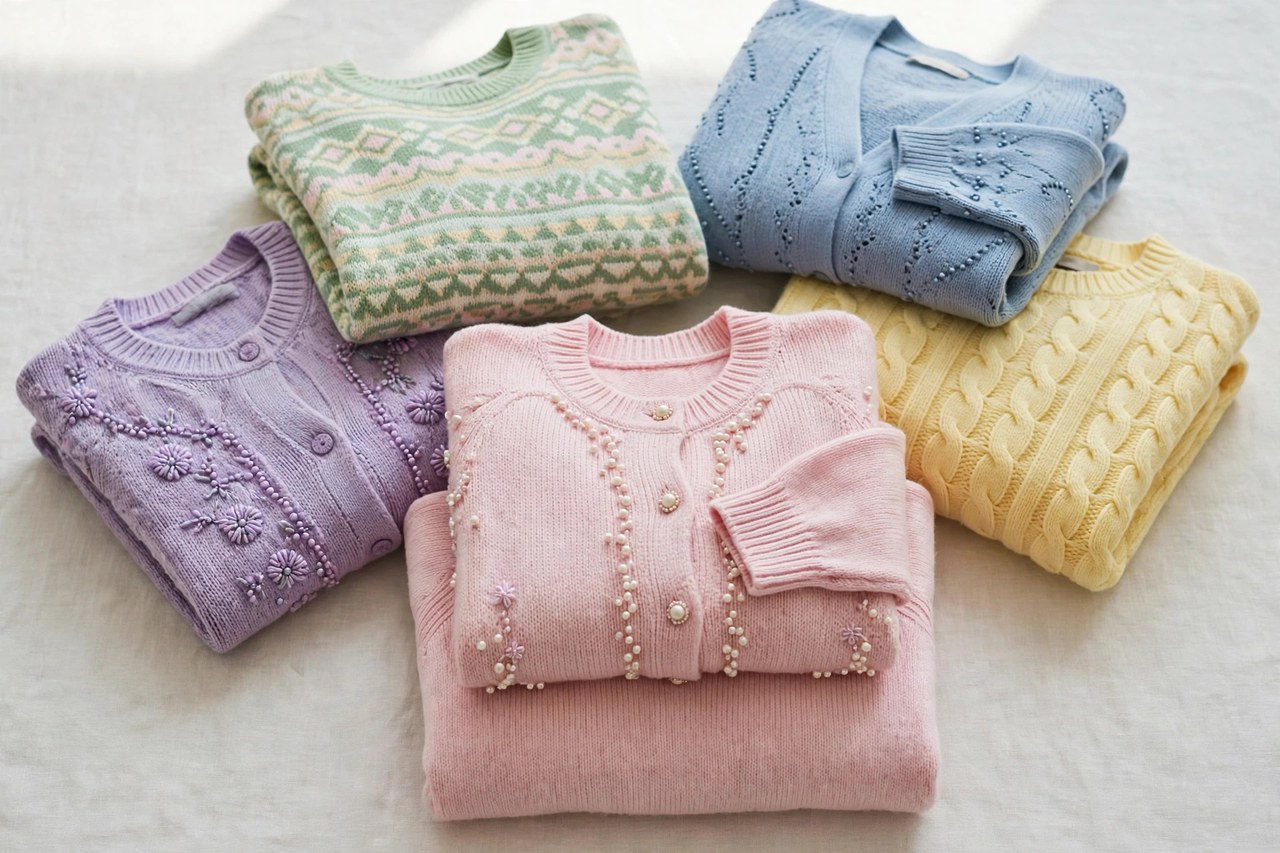
The sweater was the twentieth century's great casual invention, and women's retro knitwear charts the whole story: the fitted hand-knitted pullovers of the war years, the polished twinsets and cardigans of the 1950s, the skinny ribs of the 1960s, the slouchy mohair and hand-knit textures of the 1970s and the giant patterned sweaters of the 1980s. Retro sweaters reward study because knitwear carries its decade in its fibers as much as its shape — wool, cashmere, angora, acrylic and mohair each had their eras.
Knitwear is also where vintage condition matters most, because wool invites moths and knits stretch, pill and shrink in ways woven garments do not. This guide explains the key styles decade by decade, the fibers and decorative techniques to recognize — beading, intarsia, Fair Isle, novelty buttons — and the inspection and care routine that keeps a fifty-year-old sweater wearable. Whether you collect cashmere twinsets or wear a grandfather cardigan daily, the principles below apply to every stitch.
Forties Fits and the Fifties Twinset
Wartime knitting made the 1940s sweater close-fitting and economical: short or three-quarter sleeves, high round or V necklines, fine gauges in wool, often home-knitted from patterns with puffed or gathered sleeve heads. Sweaters were layered over blouses whose collars showed at the neck, and worn tucked into skirts and slacks. Surviving forties knits in sound condition are prized precisely because wartime wool was worked hard; check underarms, cuffs and waist ribbing, where the knitting takes its strain, and expect a genuinely small fit.
The 1950s twinset — a short-sleeved or sleeveless shell with a matching long-sleeved cardigan — became the decade's uniform in cashmere, lambswool, angora blends and orlon acrylic. Cardigans of the era are a decorative world of their own: beaded in Hong Kong and Japan for export, embroidered with flowers and birds, trimmed with fur collars, closed with novelty buttons and worn reversed, buttoned down the back. A beaded fifties cardigan in good condition, its beadwork intact and lining sound, is among the most collectible of all retro sweaters.
Sixties Ribs, Seventies Texture and Eighties Pattern
The 1960s poor boy sweater — a fine, skinny rib-knit pullover, often short-sleeved — stripped knitwear to a sleek layer for mini skirts and cigarette pants, in cotton, wool and stretch synthetics. Against it, the decade also produced op-art patterned knits and space-age synthetics. The 1970s then loosened everything: oversized mohair, brushed acrylics, hand-crocheted vests and tops, chunky hand-knits, wrap cardigans and long belted sweater coats in earthy colors and folk patterns, much of it made to look, or actually be, handmade.
The 1980s sweater is unmistakable: dropped shoulders, batwing and dolman sleeves, huge intarsia pictures and geometrics, metallic threads, angora fluff and novelty Christmas and ski knits in acrylic and wool blends. Eighties knits were made in volume and survive well, and their generous cut makes them the easiest vintage sweaters to fit today. Across decades, learn the fiber tells: cashmere and lambswool feel soft and matte, angora sheds a halo, mohair is springy and lustrous, and early acrylics can feel squeaky and pill hard — all clues when a label is missing.
Inspection, Fit and Knitwear Care
Inspect vintage knitwear in bright light, gently stretching each area: look for moth holes (often in clusters on the front and underarms of wool), thinning at elbows and seat-of-skirt contact points, stretched necklines and cuffs, and repairs — good darning is acceptable and even charming, but glued or iron-patched holes are not. Smell matters too; mustiness usually airs out, while mothball odor takes repeated airing. Measure sweaters flat and remember knits give: a fifties twinset was meant to fit like a second skin over period undergarments, so size by your comfort, not the silhouette alone.
Wash retro sweaters by hand in cool water with a wool wash, never wring, roll in a towel to press out water, and dry flat, reshaped to its measurements, away from heat and sun. Cashmere and angora improve with rest between wearings and a cedar or lavender guard against moths; never hang a sweater, which stretches it out of shape in a single season. Store folded with tissue, clean — moths target soiled wool — and brush pills away with a knit comb. Treated so, a quality vintage sweater routinely outlives its modern fast-fashion descendants by decades.
Related Women's Retro Guides
More to Explore on Apparel Search
Looking for Women's Clothing Stores?
This guide helps you choose women's retro sweaters. To browse where to buy, visit our women's clothing store directory, where you can find retailers that carry them.