Women's Retro Skirts Guide
Retro skirts are women's skirts in the defining cuts of their decades — circle skirts, pencil skirts, A-lines, minis, midis and flowing seventies maxis.
Shop Women's Retro Skirts Now
Shop Women's Retro Skirts on Amazon Shop Women's Retro Skirts on eBayThe Amazon and eBay links on this page are affiliate links. If you make a purchase through them, Apparel Search may earn a commission.
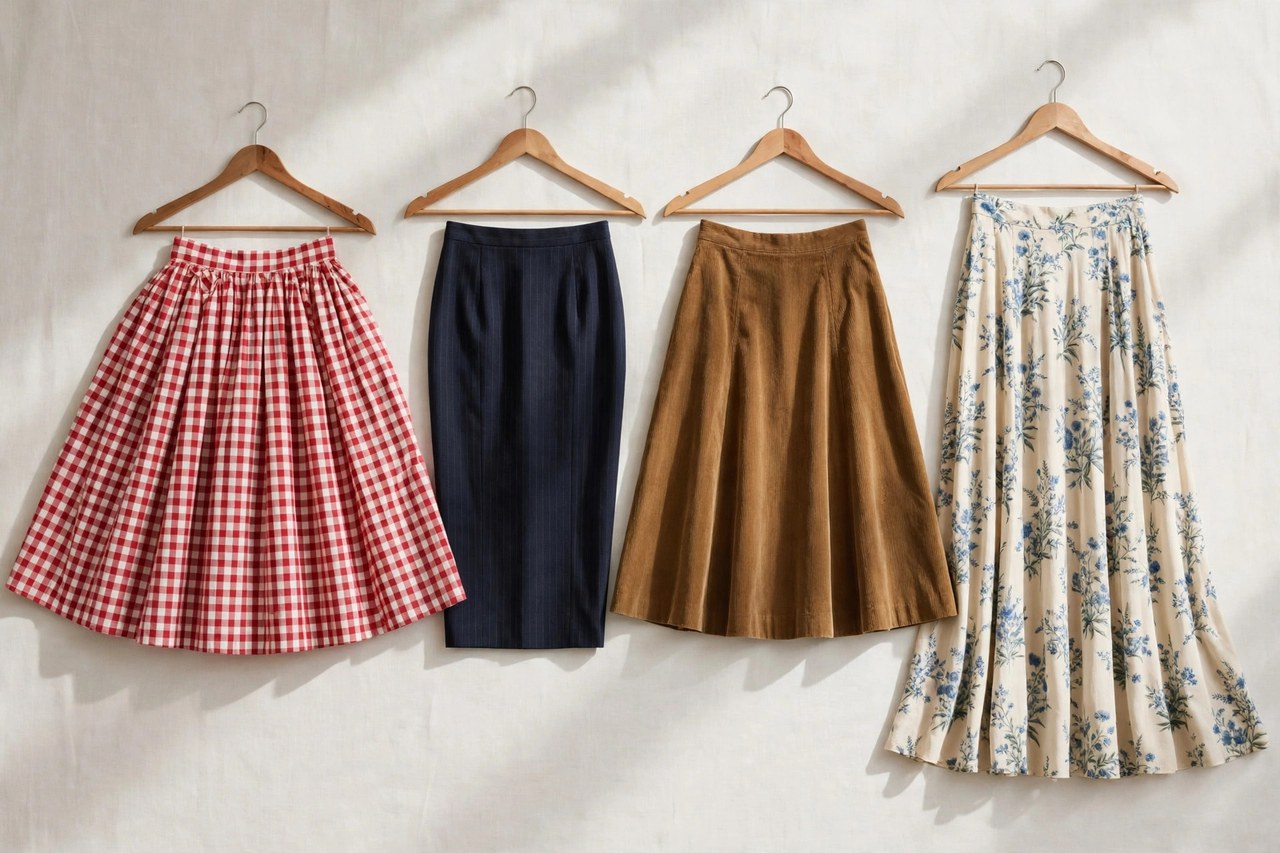
No garment tracks twentieth-century fashion faster than the skirt: its length and volume changed with every decade, sometimes with every season. Retro skirts therefore come in a clear family of shapes — the modest 1940s A-line, the two great 1950s silhouettes of circle and pencil, the rising 1960s mini, and the sweeping midi and maxi skirts of the 1970s. This guide explains each cut, the fabrics and prints that belong with it, and how period skirts were actually worn, petticoats and all.
Skirts are also the friendliest entry point into vintage dressing, because a skirt's fit depends mainly on one measurement — the waist — and period skirts were built with generous hem allowances and sturdy waistbands that tailor well. A single great circle skirt or pencil skirt, worn with a modern fitted top, gives a complete retro outfit without any other vintage pieces. The sections below sort the shapes by era so you can recognize, size and style each one with confidence.
The Fifties Pair: Circle Skirts and Pencil Skirts
The circle skirt is the emblem of 1950s retro: cut as a full or half circle of fabric, it falls in deep folds from a fitted waistband and swings wide when you turn, especially over a crinoline petticoat. Felt circle skirts with appliqued motifs — the famous poodle among many others, from records to telephones — were often homemade or novelty purchases, while cotton and polished cotton versions with border prints were everyday wear. Hand-painted and sequined Mexican circle skirts, sold as tourist pieces, are a collectible branch of the same family.
The pencil skirt is the circle's opposite and equal: narrow, straight or slightly tapered from hip to knee, usually with a back slit or kick pleat for walking, in wool, tweed, gabardine and stretch cotton. It belonged to the office, the suit and the wiggle dress silhouette, and it demands a different kind of fit — smooth over the hip without pulling across the front. Both fifties skirts sit at the natural waist and end near the knee; that shared waistline is why they pair so naturally with tucked blouses, fitted sweaters and belts.
Forties A-Lines, Sixties Minis and Seventies Lengths
The 1940s skirt was an A-line of economy: knee-length, gently flared from a fitted waist, in rayon, wool and cotton, often gored or panelled to use fabric efficiently. Wartime rules limited sweep and embellishment, producing the neat, practical line that still works as an everyday retro skirt. The 1960s shortened relentlessly: A-line skirts rose above the knee into the mini, in stiff cottons, wools and synthetics with bold prints, worn with tights and flat shoes. Sixties skirts sit lower, toward the hip, as the decade progresses — check the waist position before buying.
The 1970s answered the mini with every other length at once: the midi at mid-calf and the maxi at the ankle, in wrap styles, tiered peasant skirts, bias cuts, denim and suede with patchwork and fringe. Seventies skirts are soft, fluid and often elastic- or drawstring-waisted, which makes them the easiest vintage skirts to fit across sizes. Denim skirts — including skirts converted from jeans, a genuine seventies craft habit — belong to this decade too. When a skirt's decade is unclear, measure its length and waist height together; few combinations are ambiguous.
Petticoats, Fit and Care
Full retro skirts were designed over petticoats: net, organdy or cotton underskirts whose stiffness holds the circle shape away from the legs. A modern soft net petticoat gives the fifties silhouette without period scratchiness, and its length should stop an inch or two above the skirt hem. Pencil and A-line skirts need only a smooth slip. Fit any vintage skirt at the natural waist with room to sit and climb stairs, and check the waistband for stretched stitching and the back seam and vent, the points of greatest strain.
Care depends on fabric and decoration. Plain cotton and wool skirts wash or dry clean straightforwardly, but novelty felt, painted, sequined and appliqued skirts should be spot cleaned or entrusted to a cleaner who knows vintage, since glues and paints predate modern solvent standards. Store full skirts folded or rolled rather than hung, because a circle skirt's bias edges stretch under their own weight on a hanger and the hem drops unevenly — if that has already happened, let the skirt rest flat for a day and re-level the hem before wearing.
Related Women's Retro Guides
Looking for Women's Clothing Stores?
This guide helps you choose women's retro skirts. To browse where to buy, visit our women's clothing store directory, where you can find retailers that carry them.