Women's Retro Pants Guide
Retro pants are women's trousers in the cuts of past decades — from 1930s wide legs and 1950s capris to 1970s flares and 1980s pleated tailoring.
Shop Women's Retro Pants Now
Shop Women's Retro Pants on Amazon Shop Women's Retro Pants on eBayThe Amazon and eBay links on this page are affiliate links. If you make a purchase through them, Apparel Search may earn a commission.
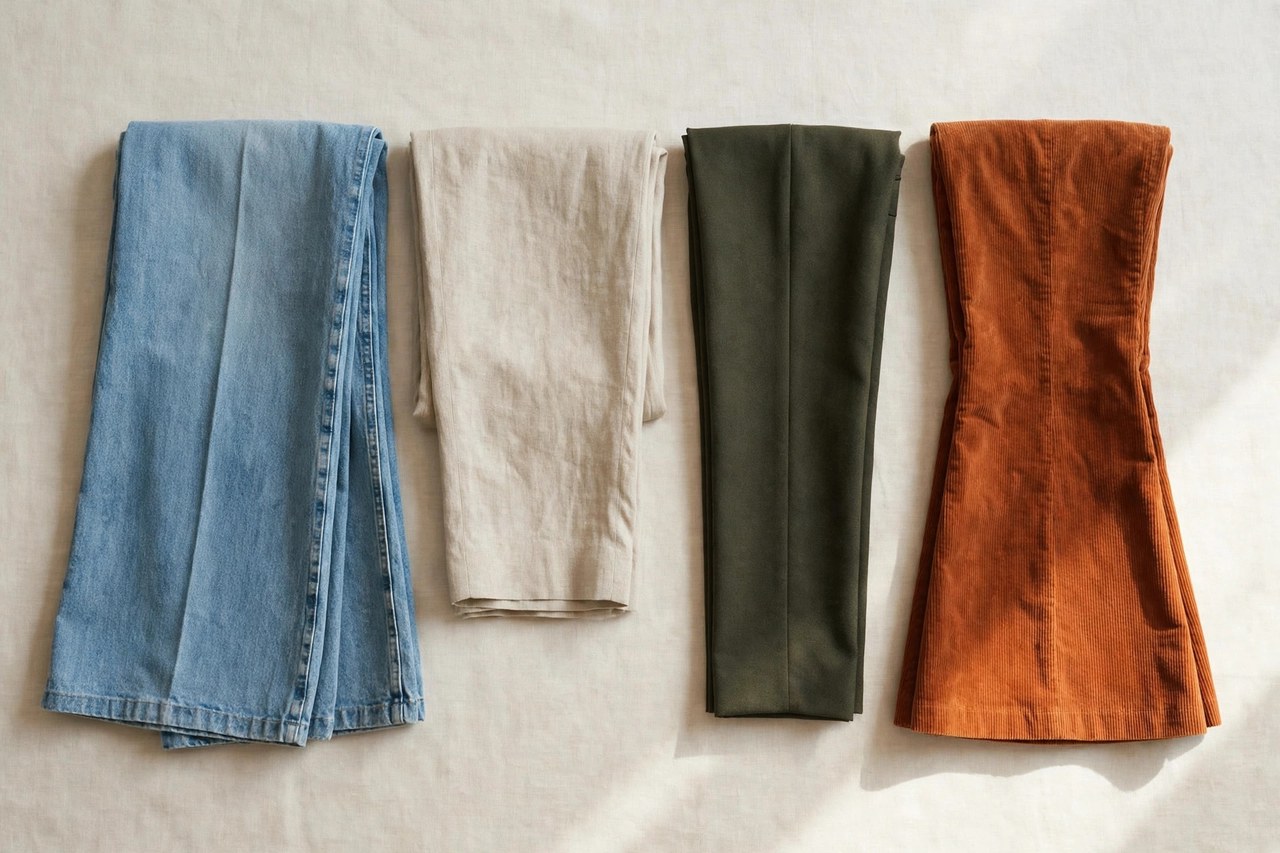
Trousers were the last garment to become ordinary women's wear, which makes their history unusually readable: each decade's retro pants mark a step in what women were allowed, expected and delighted to wear. In the 1930s wide-legged trousers were daring resort wear; by the 1940s slacks were practical necessities; the 1950s made cropped pants a leisure uniform; and from the 1960s onward, pants in every cut from cigarette to flare became fashion itself. This guide follows the trouser, in cloth rather than denim.
Denim trousers have their own guides on this site; here the subject is tailored and casual pants in wool, cotton, corduroy, linen and synthetics. The vocabulary is worth learning first, because sellers use it loosely: slacks are soft tailored trousers, capris end mid-calf, pedal pushers end just below the knee, cigarette pants are very slim and ankle-length, and palazzo pants are extremely wide from the hip. Each name belongs to a decade, and each decade's cut fits a different way.
Thirties to Fifties: Wide Legs, Slacks and Capris
The 1930s introduced elegant wide-leg trousers and beach pajamas — flowing, high-waisted pants in crepe, linen and printed cotton, worn at resorts and on yachts in the photographs that made them famous. The 1940s sobered the line: slacks became working and home-front clothing, cut straight or slightly tapered in wool gabardine and cotton twill, with high waists, side zips or button flies and cuffs. A good pair of forties slacks remains one of the most wearable of all vintage garments, because the tailoring was excellent and the line is classic.
The 1950s invented leisure pants. Capri pants, ending mid-calf and often with a small side slit, and their shorter cousins the pedal pushers and clamdiggers, turned trousers into holiday and suburban clothing in bright cottons, gingham and stretch fabrics. Slim, flat-fronted and worn with ballet flats, loafers or sandals, they were scandalously informal by earlier standards and utterly normal by the decade's end. Fifties pants sit high and close, with little ease; vintage pairs should be fitted standing and sitting, since period fabrics have almost no stretch.
Sixties to Eighties: Cigarettes, Flares and Pleats
The 1960s cigarette pant sharpened the fifties line to its limit: very slim, ankle-bone length, in stretch cotton, brocade and later bold prints, paired with tunics and shifts. The 1970s then widened the leg into flares and palazzos, dropped the rise to the hip for casual styles while keeping tailored trousers higher, and ran through corduroy, brushed denim, polyester knits and flowing crepe evening pants. Seventies trousers are frequently very long, cut for platform shoes, so check inseams against the shoes you actually wear.
The 1980s brought back tailoring with volume: high waists, deep pleats, tapered legs, peg tops and cuffed hems in wool, linen and bold suiting checks, alongside paperbag waists and relaxed cargo and parachute styles in cotton and nylon. Pleated eighties trousers are currently among the easiest retro pants to style, because the high waist and tapered leg suit modern tucked shirts and loafers. Across all three decades, remember that rises differ radically — measure from front waist through to back waist on a pair you own before ordering any vintage trousers.
Fit, Fabrics and Care for Vintage Trousers
Vintage pants fail at predictable points: the seat seam, the inner thigh, the waistband button and the hem. Inspect all four, hold wool trousers to the light for moth damage and thinning, and check that zips — often metal on older pairs — run smoothly. Period fabrics behave differently from modern blends: wool gabardine and cotton twill press crisply and wear for decades, while 1970s polyester double-knit barely wrinkles at all but can hold odors and snag, so it rewards a gentle wash before first wear rather than dry cleaning.
Fit by measurement, not label: waist, rise, hip and inseam, taken flat, compared against your best-fitting modern trousers. A tailor can take in a vintage waist or shorten a hem cheaply, but cannot add fabric that is not there, so buy for the hip and thigh and adjust the waist. Store wool pants folded over a padded hanger or rolled to protect the crease, keep cedar nearby for moths, and you will own trousers whose cut quietly announces its decade every time you wear them.
Related Women's Retro Guides
Photos

Looking for Women's Clothing Stores?
This guide helps you choose women's retro pants. To browse where to buy, visit our women's clothing store directory, where you can find retailers that carry them.