Women's Parachute Pants Guide
Parachute pants are the shiny, swishing emblem of the 1980s: baggy nylon ripstop trousers cinched at the ankle, born in breakdancing circles and revived every time fashion rediscovers volume.
Shop Women's Parachute Pants Now
Shop Women's Parachute Pants on Amazon Shop Women's Parachute Pants on eBayThe Amazon and eBay links on this page are affiliate links. If you make a purchase through them, Apparel Search may earn a commission.
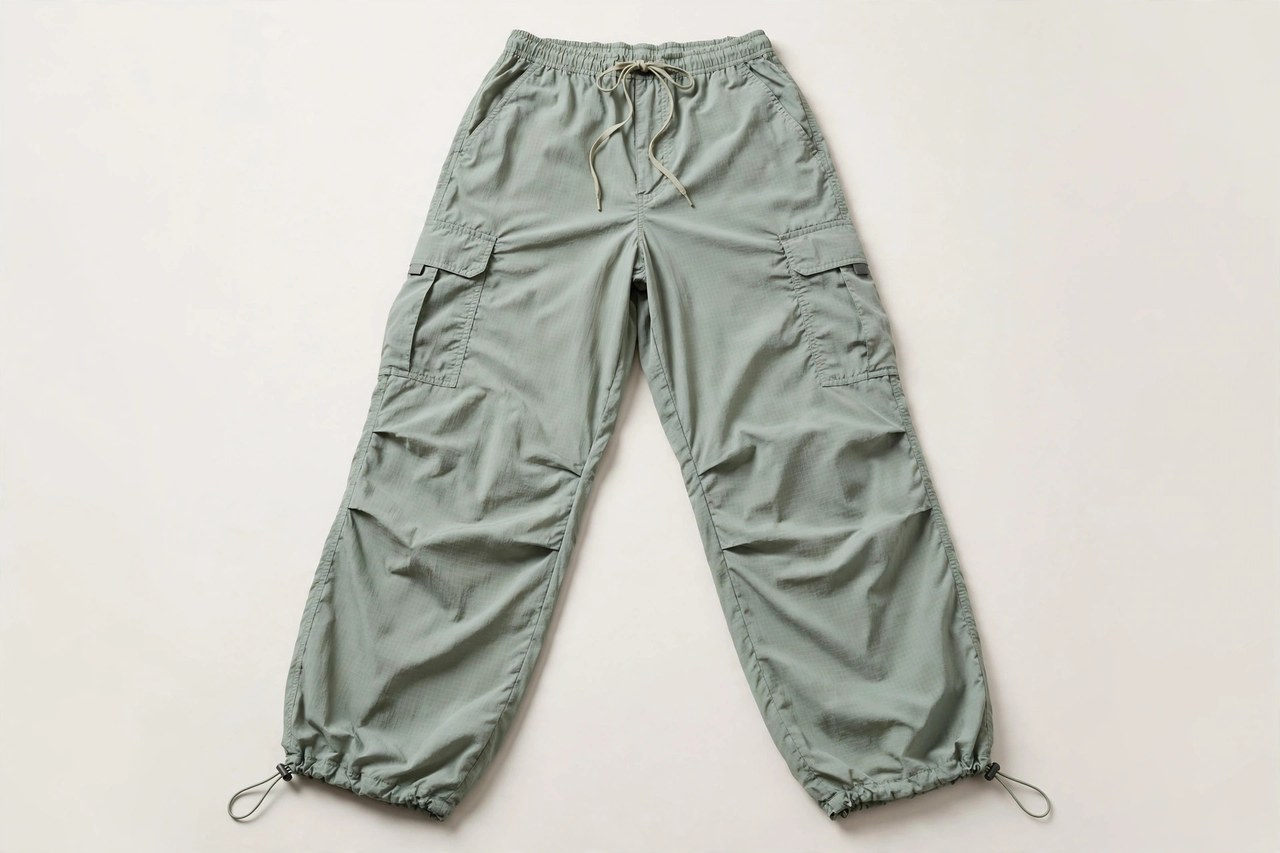
Parachute pants are loose, lightweight trousers made from nylon — traditionally ripstop nylon, the same family of fabric used for actual parachutes and sport parachute gear — cut baggy through the leg and gathered, zipped or elasticated tightly at the ankle. The contrast is the whole design: maximum volume above, a close cuff below. The name comes from the fabric, not from any military issue, and the pants became one of the most recognizable garments of the 1980s.
This guide traces where they came from, why dancers made them famous, and how the modern version differs from the vintage original. It covers the construction details that define an authentic pair — ripstop fabric, ankle zippers, multiple pockets and bungee or elastic hems — how the baggy fit should actually sit, and how to style and care for a garment whose fabric needs slightly different handling from cotton trousers.
Origins: Breakdancing and the 1980s
Parachute pants emerged in the late 1970s and exploded in the early 1980s alongside hip-hop and breakdancing culture in New York. For b-boys and b-girls, the pants were practical equipment: the slick nylon slid across floors during spins and freezes, the loose cut allowed total freedom for acrobatic moves, and the tight ankle kept fabric out of the way.
From the dance floor the pants moved into pop — worn by chart acts, featured in films and videos, and copied at every price in bright and metallic nylon. By the late 1980s they were shorthand for the decade itself, which is why they later became costume-party shorthand too. The modern revival, arriving with the broader return of cargo details, wide legs and Y2K styling in the 2020s, keeps the volume and the cinched ankle but cuts the pants lower- or higher-rise for current tastes and often swaps harsh shine for matte technical nylon.
Construction: Ripstop, Zippers and Cuffs
Ripstop nylon is woven with a grid of slightly heavier threads at regular intervals, so a small tear stops at the grid instead of ripping across the garment — hence the name. It is feather-light, wind-resistant, quick-drying and has the characteristic slight rustle and sheen of the original pants. Modern versions also appear in polyester technical fabrics and cotton-nylon blends, which trade some authenticity for softness and quietness. Check the ankle first when judging a pair: vintage-style pants use zippers at the ankles to open the cuff for putting on and to adjust the taper.
Other defining details include a drawstring or elastic waist (often both), roomy pleats or plain fronts, and pockets — slant, cargo or zip pockets, sometimes in profusion, since the style absorbed utility influences. The cuff itself may be zippered, elasticated, or finished with a bungee cord and toggle that lets the wearer adjust how much fabric blouses above the ankle; that adjustable bunching is the signature of the current revival cut. Seams on good pairs are clean and strong, because thin nylon shows poor stitching immediately.
Fit and How to Style Them Now
Parachute pants should be genuinely roomy through the thigh and leg — if they fit like ordinary trousers with a cuff, the point is lost — but the waist must sit securely and the length must blouse just above the ankle rather than pooling over it. Petite wearers should look for cropped or petite cuts, since excess length in a baggy nylon leg overwhelms quickly. The volume is balanced by keeping the top half closer: a fitted tee, a cropped jacket, a tucked-in tank or a slim knit lets the pants be the statement without the whole outfit going shapeless.
Footwear anchors the revival look: chunky sneakers, retro trainers and combat-style boots all hold up visually against the wide leg, while a heeled sandal can dress the matte versions up for evening. Keep color strategy simple — black, olive, stone and khaki nylon pairs work as near-neutrals and get the most wear, while bright or metallic pairs are occasion pieces. The styling rule from the 1980s still applies: let the swish and the silhouette do the work, and do not compete with them using equally loud pieces everywhere else.
Care and Buying Tips
Nylon is durable but heat-sensitive. Wash parachute pants cool, inside out, with zippers closed so they do not snag the fabric, and air dry or tumble very low — high heat can glaze or melt synthetic fibers and damage elastic cuffs and bungee cords. Avoid ironing directly; if needed, use the lowest setting or steam lightly. The ripstop grid makes small damage repairable: a tiny puncture can be stabilized with a matching repair patch on the inside before it spreads to the grid boundary.
When buying, decide whether you want vintage authenticity or modern wearability. True vintage pairs offer the original fabrics and details but come with forty-year-old elastic and zippers — test every zip and cuff before buying. New pairs offer better waists, more forgiving blends and current rises. Either way, check that both ankle closures match, that the drawstring is present and un-frayed, and that the seat seams are sound. A good pair is nearly weightless, packs to nothing, and dries overnight — which is why, beyond fashion, parachute pants also make genuinely excellent travel trousers.
Related Women's Guides
Looking for Women's Clothing Stores?
This guide helps you choose women's parachute pants. To browse where to buy, visit our women's clothing store directory, where you can find retailers that carry them.