Women's Retro Vests Guide
Retro vests are women's sleeveless waistcoats and vests in period styles — tailored waistcoats, denim and suede vests, crochet vests and 1980s statement layers.
Shop Women's Retro Vests Now
Shop Women's Retro Vests on Amazon Shop Women's Retro Vests on eBayThe Amazon and eBay links on this page are affiliate links. If you make a purchase through them, Apparel Search may earn a commission.
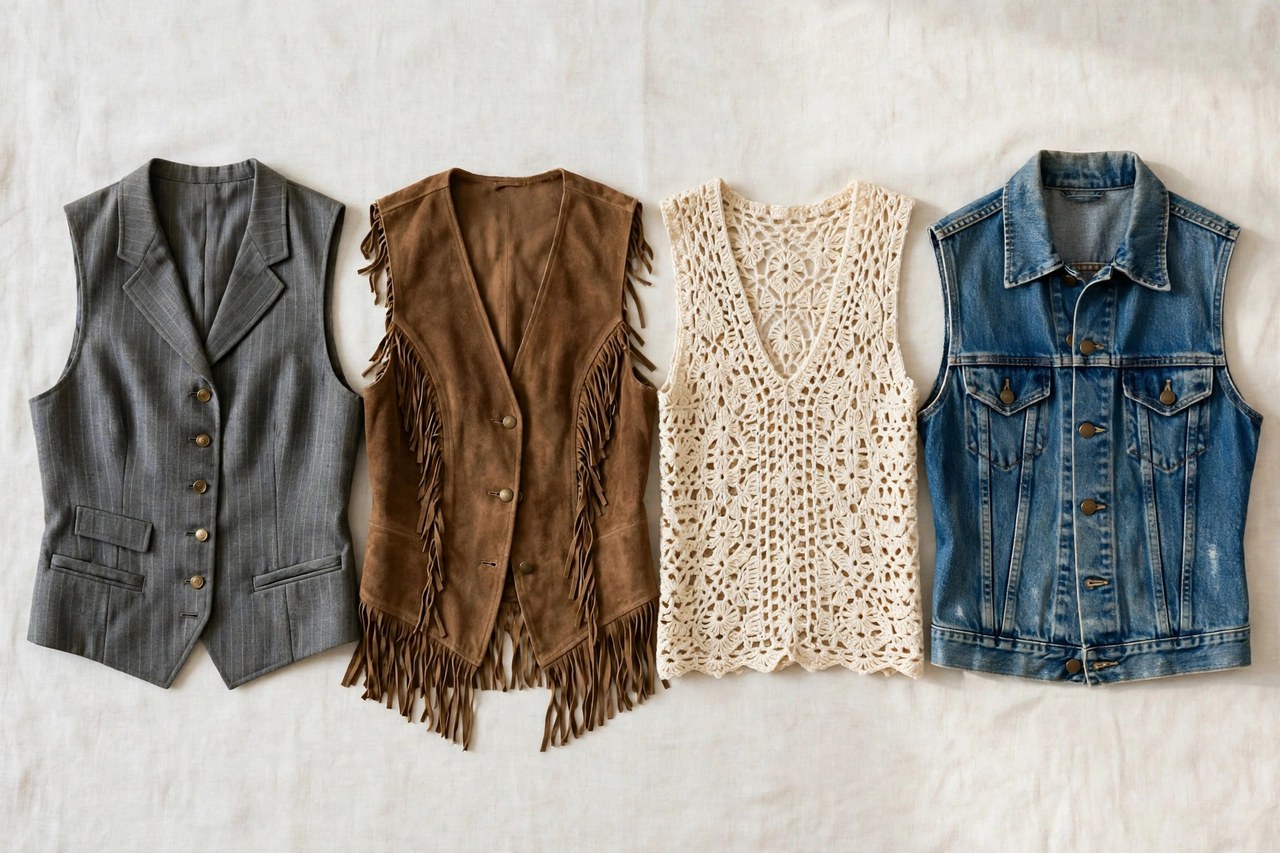
A vest is the smallest garment that can change an entire outfit, which is why it keeps returning to fashion in a new material each decade. Women's retro vests — the British term is waistcoat — divide into two families: the tailored waistcoat borrowed from menswear, fitted and buttoned in suiting fabrics, and the casual vest in denim, suede, leather, crochet and knit, worn open as a layer. This guide traces both families through the sixties, seventies and eighties, when the vest had its richest retro life.
Because a vest has no sleeves and little structure, it is the easiest vintage garment to fit and to alter, and one of the cheapest to collect. Its details date it quickly: the number and material of buttons, the presence of a buckle-back adjuster, fringe, patch pockets, embroidery and the fabric itself. A single good vest — a fringed suede piece over a peasant top, a sharp pinstripe waistcoat over a white shirt — can carry the whole retro impression of an outfit whose other pieces are plain and modern.
Tailored Waistcoats: The Menswear Borrow
Women borrowed the waistcoat whenever fashion borrowed menswear: in the riding and sporting clothes of the early century, in the sharp suits of the 1940s, and most famously in the 1970s three-piece suit, when a matching waistcoat under a trouser suit became a symbol of the working woman's new wardrobe. Tailored retro waistcoats are fitted, often with a satin or lining-fabric back, an adjustable buckle strap at the back waist, welt pockets and a full button front in wool, pinstripe, tweed, velvet or brocade.
Fit is the waistcoat's whole art: it should close without pulling, end near the waistband of its trousers or skirt, and sit smooth across the back with the adjuster taking up any slack. Vintage waistcoats were often part of a suit whose other pieces are long gone, which makes single waistcoats plentiful and affordable. Watch for moth damage on wool, worn buttonholes, and missing buttons — a matched set of period buttons is hard to replace, though a deliberate full change to new buttons is an honest and easy alteration.
Suede, Denim and Crochet: The Casual Vest Decades
The 1960s and 1970s made the vest a counterculture emblem. Suede and leather vests, often fringed, laced at the sides or decorated with conchos and beadwork, layered over peasant blouses, T-shirts and denim; denim vests, many of them jackets with the sleeves cut off — a genuine period habit — collected patches and pins. Crochet and knit vests, handmade and shop-bought alike, came in long, hip-length and cropped forms in cotton and acrylic yarns, meant to be seen over dresses and tops as texture rather than warmth.
The 1980s restyled the casual vest at larger scale: oversized denim, quilted and puffer vests from outdoor wear, long sweater vests, and dressy brocade, tapestry and beaded evening vests worn over blouses and dresses. Tapestry and carpet-look fabrics are a strong eighties tell, as are giant buttons and dropped armholes. When dating a casual vest, look at its making as much as its material — hand-crochet, home sewing finishes and cut-off jacket construction are all authentically of their moment, and part of the charm rather than defects to hide.
Wearing and Caring for Vintage Vests
Style a retro vest by contrast: a fitted waistcoat sharpens soft modern separates, a fringed or crochet vest softens plain ones. Leave casual vests open over a simple top, button tailored waistcoats fully unless the bottom-button-undone tradition of menswear appeals, and let a long vest define the waist with a belt over it. Because vests are small, they are the ideal first vintage tailoring project: taking in side seams or replacing a back adjuster is quick work for any alterations shop.
Care by material: brush suede and leather and keep them dry, conditioning leather lightly; wash denim and cotton vests as jeans; treat crochet as knitwear, washing gently and drying flat so the openwork does not stretch; and store wool waistcoats clean with moth protection. Check fringe for tangles and missing strands, and conchos and laced joins for loosening, before each season. Small, sturdy and endlessly layerable, a good retro vest earns its drawer space by finishing outfits that nothing else in the wardrobe quite completes.
Related Women's Retro Guides
More to Explore on Apparel Search
Looking for Women's Clothing Stores?
This guide helps you choose women's retro vests. To browse where to buy, visit our women's clothing store directory, where you can find retailers that carry them.