Women's Retro Levi Jeans Guide
A guide to women's retro Levi jeans as history — the 501 and the women's styles that followed it, and how Levi's cuts changed across the decades.
Shop Women's Retro Levi Jeans Now
Shop Women's Retro Levi Jeans on Amazon Shop Women's Retro Levi Jeans on eBayThe Amazon and eBay links on this page are affiliate links. If you make a purchase through them, Apparel Search may earn a commission.
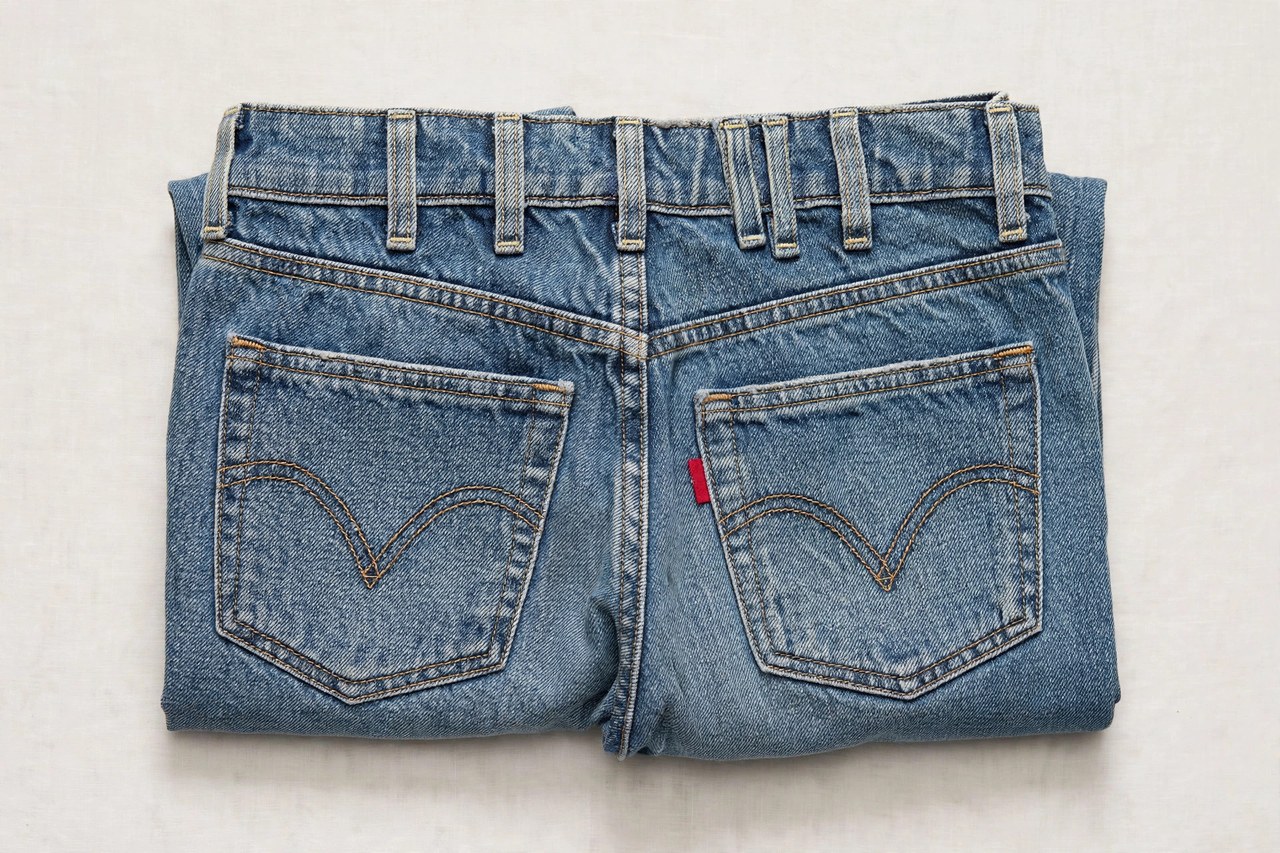
No single maker is woven into the history of jeans the way Levi Strauss & Co. is. Founded in San Francisco, the company patented riveted work trousers with Jacob Davis in 1873, and its waist overalls for miners and ranch hands became, over the following century, the template almost every other jeans maker followed. This guide covers women's retro Levi jeans as heritage: the famous 501, the women's lines that grew from it, and the small construction details collectors use to place a pair in its decade.
A note on scope: this is a historical guide to one brand's women's jeans, not a shopping catalogue for any single store, and it deliberately stands apart from our general retro jeans guide, which covers period cuts across all makers. Here the pleasure is in the specifics — lot numbers, tabs, stitching and labels — because Levi's kept its core design so consistent for so long that tiny changes in those details are exactly how a pair tells you when it was made.
From Waist Overalls to Lady Levi's
For its first sixty years the company made trousers for men, and women who needed work denim simply wore men's overalls, as ranch and farm photographs of the era plainly show. That changed in 1934 with Lady Levi's, among the first jeans designed for women, made in the famous Lot 701 with a high, shaped waist and a slimmer cut for the dude-ranch and western holiday market. Through the 1940s and 1950s, women's Levi's jeans remained closely tied to that western and leisure world, worn cuffed with plaid shirts and boots.
The men's 501, the original button-fly jean descending from the 1873 patent, became the women's retro icon by adoption rather than design: from the 1960s onward, women bought small men's 501s for their straight leg, shrink-to-fit denim and durability, and the worn-in men's 501 became a unisex fashion staple. Later decades added women's-specific cuts, rises and finishes, but the secondhand market still prizes the classic five-pocket, button-fly pattern above all, and a well-faded vintage 501 remains the reference pair against which other retro jeans are judged.
Details Collectors Read: Tabs, Stitching and Labels
Levi's long consistency makes its details a dating system. The arcuate stitching on the back pockets, the two-horse leather patch, copper rivets and the small red tab added in 1936 are the long-running signatures. Collectors pay close attention to the tab's lettering: tabs reading LEVI'S with a capital E — the famous big E — generally predate the early 1970s, when the tab changed to a lowercase e, so that one letter can separate a valuable older pair from a later one of identical cut.
Other clues stack up beside it: selvedge denim edges and single-stitch hems on older pairs, the wording and artwork of the back patch, care labels that only appear from the 1970s, and the later orange tab used on fashion lines from the late 1960s. Women's styles add their own markers, from the Lady Levi's name and Lot 701 numbering to the zips, rises and colored denim of later fashion ranges. None of this requires expertise to enjoy — it simply means a vintage pair carries its biography on its pockets, for anyone who learns to read it.
Wearing and Caring for Vintage Levi's
Fit is the first challenge, because vintage Levi's were sized honestly and often shrank: shrink-to-fit denim can lose meaningful length and waist size in its first hot wash, and decades of wear mold a pair to its first owner. Buy by measured waist and inseam laid flat, allow for the button fly's unforgiving front, and expect stiff vintage denim to ease with wear rather than with washing. The high, straight fit of a classic 501-style jean suits tucked shirts, fitted sweaters and boots, and reads unmistakably retro beside modern stretch skinnies.
Care for a collectible pair as you would any good vintage denim: wash rarely, cold and inside out, with mild detergent, and dry on a line out of fierce sun to protect both indigo and the leather patch, which stiffens and cracks with heat. Mend worn thighs and hems early, and store folded. A vintage pair in sound condition is both clothing and artifact — wear it, enjoy the fades that are already a stranger's history and the ones you add yourself, and pass it on in better shape than fast fashion ever allows.
Related Women's Retro Guides
More to Explore on Apparel Search
References & Further Reading
Looking for Women's Clothing Stores?
This guide helps you choose women's retro levi jeans. To browse where to buy, visit our women's clothing store directory, where you can find retailers that carry them.