Women's Retro Eyewear Guide
Retro eyewear is a decade on the face: upswept cat-eyes, round wire frames, oversized 1970s squares and tinted lenses that finish a vintage outfit faster than any other accessory.
Shop Women's Retro Eyewear Now
Shop Women's Retro Eyewear on Amazon Shop Women's Retro Eyewear on eBayThe Amazon and eBay links on this page are affiliate links. If you make a purchase through them, Apparel Search may earn a commission.
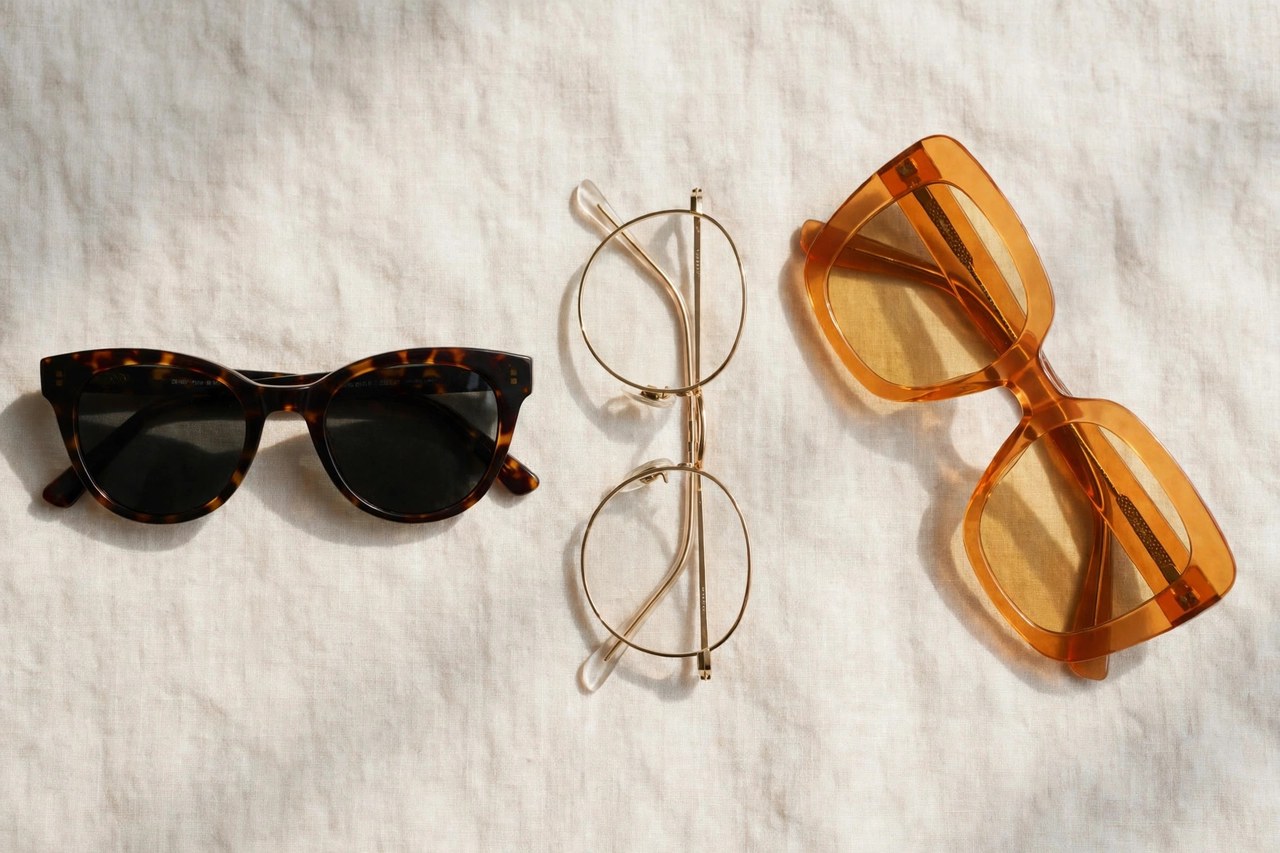
Eyewear is the smallest garment with the largest effect. A pair of frames sits at the center of the face, dates an outfit within a few years in either direction, and takes up almost no wardrobe space — which is why retro eyewear is where many vintage wardrobes start and where collectors accumulate happily. The cat-eye frame alone has been revived so often, in so many materials, that it now functions as a permanent option that simply waxes and wanes with fashion.
This guide covers women's retro frames decade by decade: the upswept shapes of the 1950s, the round and oval frames of the 1960s, the oversized squares and gradients of the 1970s, and the older wire and rimless styles revived from the early twentieth century. It also covers the practical side of the category — acetate versus metal construction, lens tints and protection, how frame sizing numbers work, and what to check when buying genuine vintage frames that may need new lenses and professional adjustment.
Frame Shapes by Decade
The cat-eye, upswept at the outer corners, is the definitive 1950s and early 1960s women's frame, made glamorous in sunglasses and everyday optical versions alike, often with rhinestone or star accents at the brow corners in evening styles. The same years offered the browline, with its heavy top bar, and neat oval acetate frames. The later 1960s moved to round and soft-square shapes, worn large by the fashionable and small and wire-rimmed by the counterculture — two opposite ideas that both remain in the retro catalog today.
The 1970s scaled everything up: oversized square and rounded frames in tortoiseshell and gradient-tinted acetate, with lenses tinted amber, rose or smoke and fading darker at the top. The 1980s added angular geometry and bright color before the 1990s shrank frames to narrow ovals. Earlier revivals reach further back: round wire frames quote the 1920s and 1930s, and pince-nez and rimless styles appear in period dressing. When choosing, let the frame's decade argue with your outfit as little as possible — a 1950s dress and 1970s frames each date the other wrong.
Materials, Lenses and Sunglasses
Retro-style frames are made in acetate, a plant-based plastic that takes deep color, tortoiseshell patterning and polish, and in metal, from stainless steel to titanium and gold-filled wire on premium reproductions. Genuine mid-century frames were made from earlier plastics that can grow brittle with age, one reason surviving unworn deadstock frames are prized: they can still be glazed with modern lenses, while a tired frame with cracked hinges may be display-only. Hinges, bridge fit and temple length decide comfort more than looks do.
For sunglasses, the retro look and modern protection can coexist: quality reproductions carry full ultraviolet protection in period tints, including gradient lenses dark at the top and clear below, a 1970s signature. Genuine vintage sunglasses often predate reliable UV standards, so treat their lenses as fashion rather than eye protection and have an optician replace them if you will wear them in real sun. Polarized lenses are a modern option that slightly changes the period look not at all and the glare a great deal, making retro-styled driving sunglasses a practical purchase.
Fit, Buying Vintage and Care
Frames are sized in millimeters, stamped inside the temple: lens width, bridge width and temple length, in that order. A frame that matches the total width of your face, centers your eyes in the lenses and rests on the nose without pinching will work across decades, because faces have not changed as much as fashions have. Round frames flatter angular faces, upswept cat-eyes lift round ones, and oversized 1970s frames need a wearer willing to let the glasses be the outfit's headline — sizing courage matters as much as measurement here.
Buying true vintage frames, insist on examining the hinges, checking for cracks at the bridge and screw points, and confirming an optician is willing to glaze them; some will decline fragile early plastics. Budget for new lenses and a professional fitting as part of the price. Care is simple and often skipped: keep frames in a hard case, clean with lukewarm water and a drop of dish soap rather than clothing hems, use both hands to take them off so the temples stay aligned, and never leave sunglasses on a car dashboard, where heat warps acetate out of true.
Related Women's Guides
Photos

Looking for Women's Clothing Stores?
This guide helps you choose women's retro eyewear. To browse where to buy, visit our women's clothing store directory, where you can find retailers that carry them.