Women's Sequined Swimwear Guide
Sequined swimwear is swim fabric embellished with small, shiny disks — this guide covers how the embellishment is attached, where it works, and how to care for it.
Shop Women's Sequined Swimwear Now
Shop Women's Sequined Swimwear on Amazon Shop Women's Sequined Swimwear on eBayThe Amazon and eBay links on this page are affiliate links. If you make a purchase through them, Apparel Search may earn a commission.
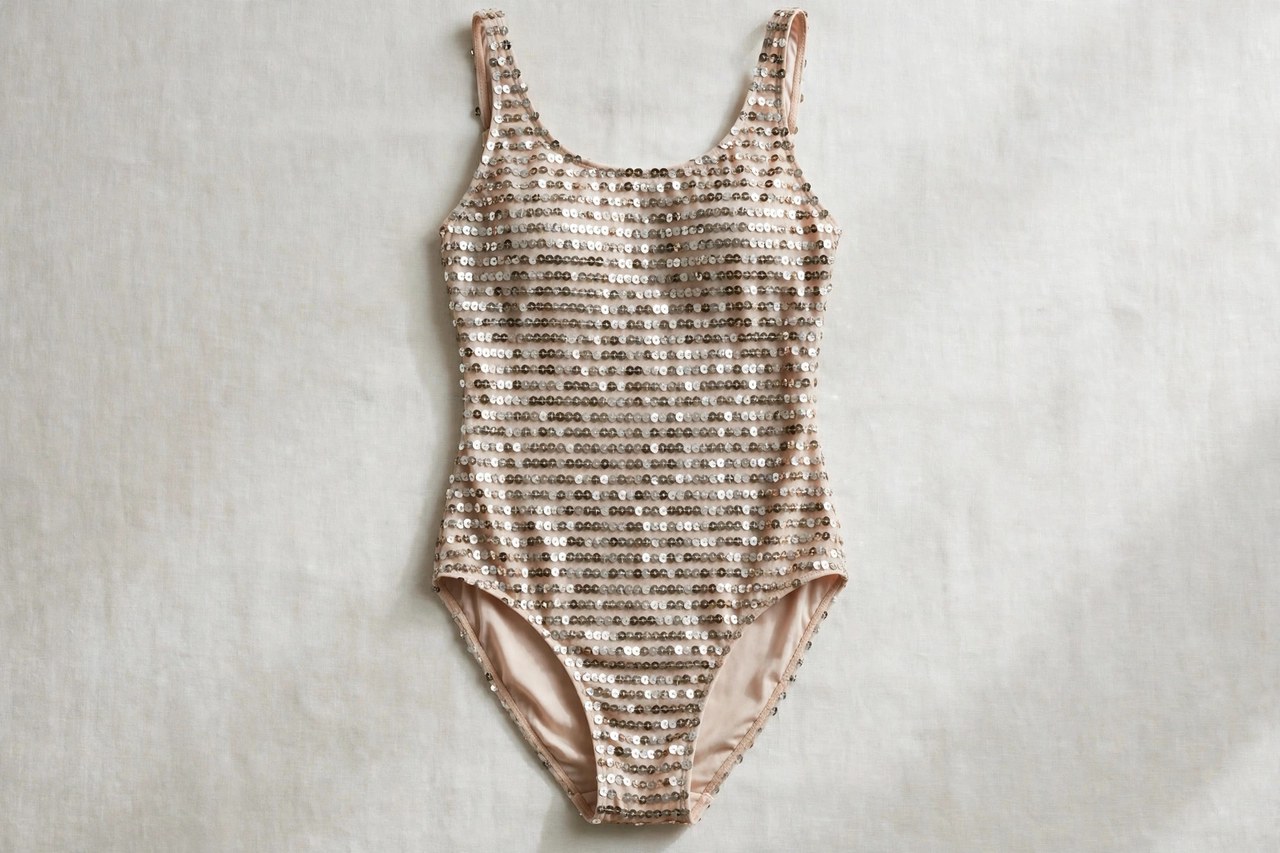
A sequin is a small, shiny disk sewn as one of many onto clothing for decoration, and that embellishment can be used for women's swimwear. More fully, a sequin is a small, disk-shaped, shiny bead. This guide treats sequined swimwear strictly as a product: how sequins are made and attached, which swim constructions carry them well, what water use they tolerate, and what care they require. Embellished swimwear asks more of its owner than plain swimwear, and buying it with that maintenance in mind is the difference between a garment that lasts and one that sheds.
Terminology helps you read listings accurately. Sequins are also referred to as paillettes, spangles or diamante. Although sequins, paillettes and spangles can be used interchangeably, diamante specifically refers to diamond-shaped sequins and can also mean artificial diamonds serving the same decorative purpose. Paillettes are typically the larger disks, spangles the looser, dangling form — a distinction that matters in water, where large, loosely attached pieces move, flip and detach far more readily than small, flat, firmly stitched ones.
How Sequins Are Attached
Sequins reach a swimsuit three ways: hand- or machine-stitched individually, stitched in overlapping rows on a mesh or fabric panel, or adhered. Stitched attachment is the most secure and the most repairable; a single thread run through a row, however, means one break can loosen its neighbors, so better garments knot or backstitch at intervals. Adhesive-only embellishment is the least tolerant of heat, chlorine and flexing, and belongs on pieces intended for brief, occasional wear rather than regular swimming.
Placement predicts survival. Sequins across low-flex, low-friction areas — a top's front panel, a strap, a waistband detail — endure far better than sequins at side seams, under straps, or anywhere a cover-up, bag strap or pool edge rubs. On the inside, check for a soft backing or full lining behind embellished areas: stitch knots and disk edges against skin are a comfort problem in a garment worn wet, close-fitting and for hours at a time, and good makers shield them.
Base Fabrics and Fit
The base is ordinary swim fabric — nylon or polyester with elastane — carrying extraordinary weight and stiffness on its surface. That mismatch is the central fitting issue: embellished panels stretch less than plain panels, so a sequined top or suit should be sized by the embellished area's give, not by the plain fabric's. Try the garment, move in it, and check that disks lie flat without curling at the panel edges, which signals a panel cut too small for its decoration.
Polyester bases tolerate chlorine better than nylon for pool use, but the sequins themselves are usually the limiting factor, not the base. Metallic finishes can dull with chlorine and salt, and colored disks can lose finish with sunscreen and abrasion. Read the product description for its intended use: many sequined pieces are honestly described as suitable for poolside and brief dips rather than lap swimming, and that is a construction fact, not a lack of ambition. Match the piece to that use and it will perform as promised.
Wearing, Water and Realistic Use
For active swimming, choose small, flat, densely stitched sequins in limited areas, and test the garment in water you own before a trip: wet sequined fabric is heavier, dries slower and can chafe at panel edges once the base fabric softens. For occasional and poolside wear, larger paillettes and fuller coverage are reasonable, provided straps, closures and lining still do their ordinary swimwear jobs — embellishment is an addition to a swimsuit, never a substitute for its support and fit.
Pack and transport embellished swimwear protected: turn it inside out or wrap it so disks do not snag other garments or themselves, and keep it away from hook-and-loop fastenings, rough towels and bag zippers. At the beach or pool, rinse sand out gently rather than shaking or brushing, because grit under disks acts as an abrasive with every movement. These small habits, applied consistently, are what the category's care labels are trying to say in four words or fewer.
Cleaning, Storage and Repair
Hand-wash sequined swimwear promptly after wear in cool water with mild detergent, inside out, without wringing or scrubbing the embellished areas; rinse in clean cool water and dry flat in shade, reshaping the garment while damp. Never machine-wash, tumble-dry or iron it — heat warps disks and melts finishes, and mechanical action strips rows of sequins in a single cycle. Chlorine and salt left unrinsed will dull metallic finishes even in storage, so the rinse is not optional.
Store the garment flat or loosely rolled with tissue at folds, away from other embellished or delicate pieces it could snag. Keep spare sequins if the maker supplies them; a tailor or careful hand sewer can replace a few stitched disks invisibly, while adhesive losses usually cannot be matched. Inspect attachment threads each season and secure a loose row early. Cared for this way, an embellished suit keeps its finish for the occasional wear it was built for — which is the honest contract of decorated swimwear.
Related Women's Guides
Photos


More to Explore on Apparel Search
Women’s Clothes Guide by Letter: Women's Apparel Directory N · Women's Clothes Directory O · Women's Clothing Directory P · Women's Apparel Directory Q · Women's Fashion Directory R · Women's Clothes Directory T
Looking for Women's Clothing Stores?
This guide helps you choose women's sequined swimwear. To browse where to buy, visit our women's clothing store directory, where you can find retailers that carry them.