Sequin
Fashion Terms — the Apparel Search fashion terminology directory
A sequin is a small, disk-shaped, shiny bead, normally round but sometimes shaped or faceted to increase its reflective ability, used to embellish a wide assortment of clothes and footwear — dresses, tops, shoes, purses, skirts and sneakers. Sequins are also called paillettes, spangles or diamanté. Gold sequins were used as decoration on clothing in the Indus Valley as early as 2500 BC, metal sequins were worn by nobility from the 17th to 19th centuries, and sequin dresses became very popular in the 1920s with flapper fashion.
In summary a sequin is essentially a small, disk-shaped, shiny bead. They come in a wide assortment of colors. They are normally round but can have shape variations.
Some sequins are made with multiple facets, to increase their reflective ability.
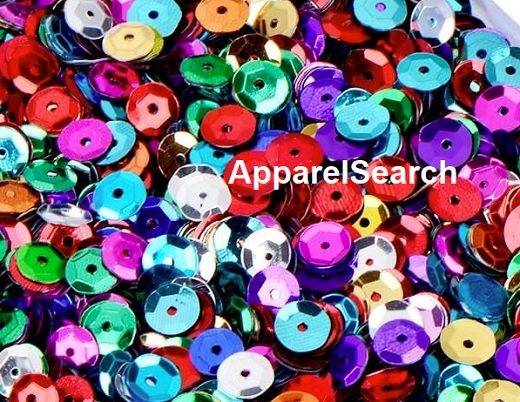
Using sequins on clothing is a way to embellish the garment.
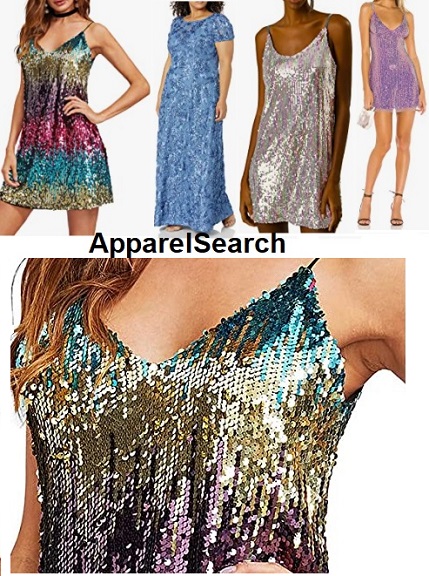
Sequins can be used on a wide assortment of clothes & footwear.
Here are only a few of the popular categories:
- Sequin Dresses
- Sequin Tops
- Sequin Shoes
- Sequin Purse
- Sequin Skirts
- Sequin Sneakers
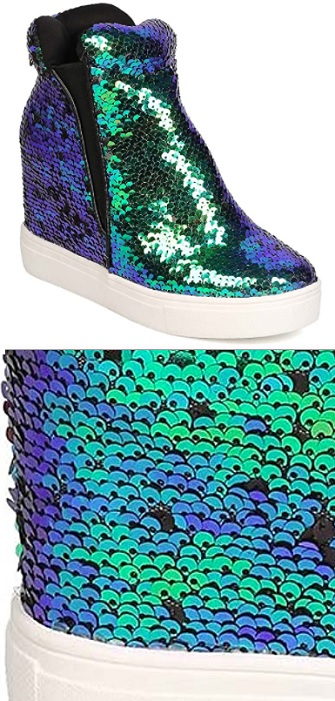
Sequins are also referred to as paillettes, spangles, or diamanté (also spelled diamante). Although the words sequins, paillettes, and spangles can be used interchangeably, diamanté (literally "set with diamonds") is both an adjective and a plural-only noun, which specifically refers to diamond-shaped sequins and can also be used to mean "artificial diamonds", which serve the same purpose as sequins.
What is the difference between a sequin and a spangle?
- Sequins have a center hole.
- Spangles have the hole located at the top.
Sequins may be stitched flat to the fabric, so they do not move, and are less likely to fall off; or they may be stitched at only one point, so they dangle and move easily, catching more light.
Paillettes are typically very large and flat.
Who was the first fashion designer to use sequins?
Good luck finding an answer to that question. Evidence exists that gold sequins were being used as decoration on clothing or paraphernalia in the Indus Valley as early as 2500 BC, during the Kot Diji phase.
Sequins in Fashion History
Sequins (mainly made out of reflective bits of metals) sewn into jackets, bonnets, and dresses were popular among the nobility and wealthy during the 17th to 19th centuries.
The use of sequins on dresses became very popular in the 1920's. The usage of sequins (typically made out of metal) were widely popularized as a fashion statement by flapper girls during this period.
In the late 1960s, sequins began to be widely used by popular musicians like The Supremes. Sequins continued to be popular into the 1970s and early 1980s.
- Learn more fashion history.
You may want to view our women's sequin swimwear guide section.
Fun Fact: Solid gold sequins sewn into royal garments were found inside the tomb of Tutankhamun.
|
|
Sequins are trendy from time to time but they are not always in style. If you think they are trendy this season, that means they probably are because you are always the best judge of trends.
We hope that you have found this page to be educational. If you can think of ways that we can improve, please share your thoughts.
Sequins as Embellishment
Sequins belong to the embellishment family: decoration applied to a garment's surface rather than built into its structure. Their entire function is optical. A small disk of reflective material catches light as the wearer moves, and faceting the disk multiplies the effect by presenting several angles to the light at once. That is why sequins concentrate where movement and attention concentrate — dresses, evening tops, stage clothing, shoes and accessories such as purses — and why a single sequined category, from swimwear to sneakers, exists in almost every part of the wardrobe.
The attachment choice is a design decision with practical consequences. A sequin stitched flat sits still, reflects steadily and survives wear and cleaning better. A sequin stitched at one point swings, flashes and creates the shimmering surface associated with performance costumes — the look musicians such as The Supremes carried into the late 1960s mainstream — but each swinging sequin is also working its thread loose. Designers choose per garment: flat for durability in clothing meant to be worn and washed, dangling for maximum light play in occasion and stage pieces.
The vocabulary around sequins records their forms. Paillettes are the large, flat version; spangles move the hole to the top so the disk hangs; diamanté names the diamond-shaped form and, by extension, artificial diamonds used the same way. Knowing which word a pattern or product description is using tells you the size, shape and attachment to expect before you ever see the garment — a small example of why precise terminology matters in an industry that buys decoration by description.
Common Questions
What is the difference between a sequin and a spangle?
The hole position: sequins have a center hole, while spangles have the hole located at the top. Paillettes are typically very large and flat. The words are often used interchangeably, though diamanté specifically refers to diamond-shaped sequins or artificial diamonds.
How are sequins attached to clothing?
Two ways: stitched flat to the fabric, so they do not move and are less likely to fall off, or stitched at only one point, so they dangle and move easily, catching more light. The dangling method trades durability for sparkle and motion.
When did sequins become popular in fashion?
They have a long history — gold sequins decorated clothing in the Indus Valley as early as 2500 BC, and metal sequins were sewn into jackets, bonnets and dresses for the nobility and wealthy during the 17th to 19th centuries. Mass popularity came in the 1920s on flapper dresses, then again through musicians in the late 1960s, 1970s and early 1980s.