Women's Wetsuits Guide
Women's wetsuits are neoprene suits worn for surfing, diving, swimming and paddling: foamed neoprene insulates by trapping a thin layer of water warmed by the body, in thicknesses and cuts matched to water temperature.
Shop Women's Wetsuits Now
Shop Women's Wetsuits on Amazon Shop Women's Wetsuits on eBayThe Amazon and eBay links on this page are affiliate links. If you make a purchase through them, Apparel Search may earn a commission.
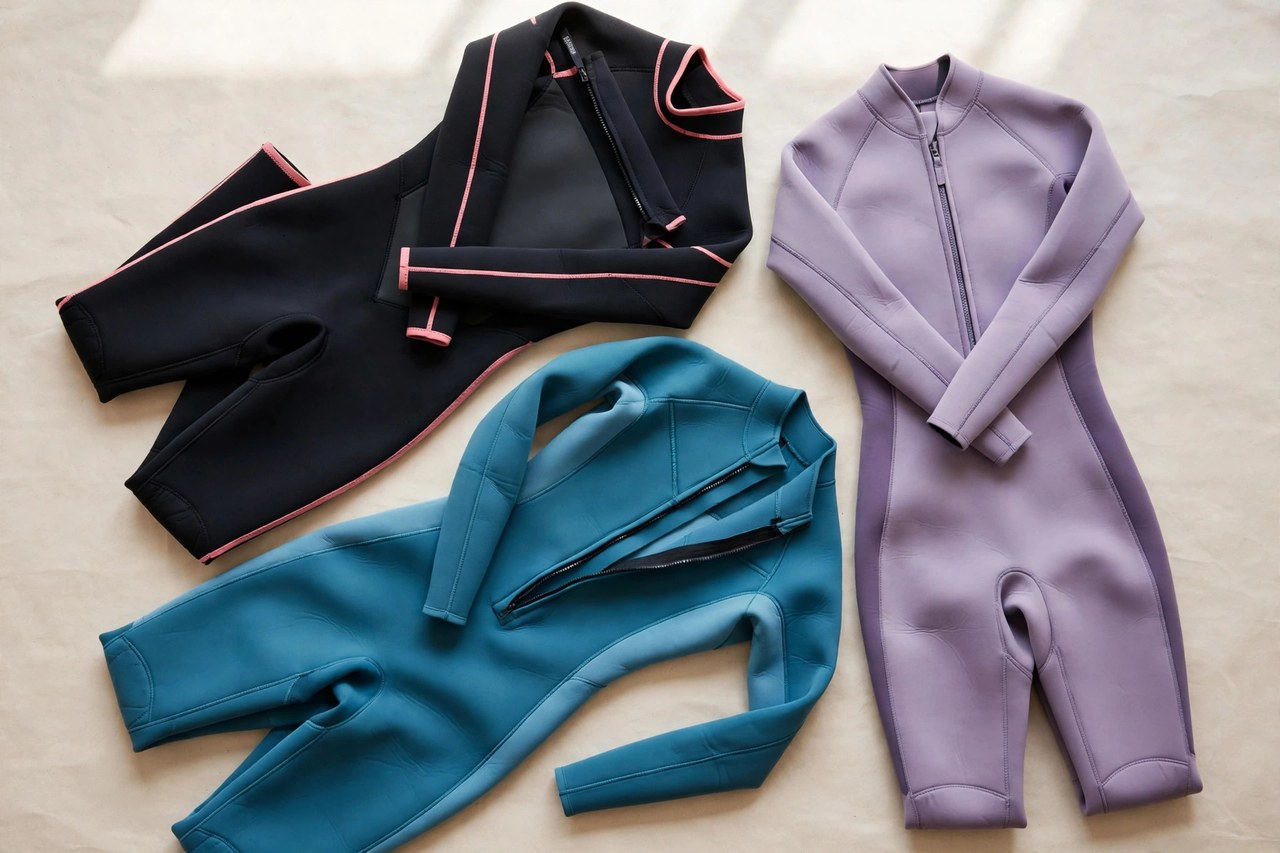
Women's wetsuits are neoprene suits worn for surfing, diving, swimming and paddling: foamed neoprene insulates by trapping a thin layer of water warmed by the body, in thicknesses and cuts matched to water temperature. A wetsuit is thermal equipment sized like a second skin, so this guide covers neoprene thickness by temperature, seam construction (flatlock versus sealed), zip systems, and the close fit that decides whether the suit insulates or flushes with cold water.
This guide covers wetsuits in the order a careful buyer needs it: what the product is made from, how it is constructed, how it should fit, how to choose it for real use, and how to care for it so it lasts. The focus here is on measurable details, named materials and checks you can perform in a shop or on a parcel's arrival, rather than general fashion language.
Materials That Work Wet
Water gear is built from materials chosen for behaviour when soaked: neoprene foam that insulates while wet, mesh and synthetic uppers that drain and dry, rubber outsoles cut with siping for wet grip, and hardware that will not rust. Cotton and ordinary foam are the enemies — both absorb water, stay heavy and degrade.
Construction is about water's paths: drainage ports placed where water pools, seams positioned away from flex points, closures that work with cold, wet hands. Neoprene thickness is written as two or three numbers — 3/2 mm means 3 mm on the torso and 2 mm on the limbs, trading a little warmth in the arms and legs for the flexibility to paddle and swim. Judge water gear by holding it up to its working condition in your mind — every feature should answer the question of what happens in the water, not on the shelf.
Fit for the Water
Water gear fits closer than its dry-land equivalents, because water finds every gap: suits must seal without restricting breathing or circulation, and footwear must hold the foot when its materials are slick and the foot is wet. Fit in the state of use — wet, or over the socks and layers that will be worn.
Sizes run by measurement more honestly here than in fashion: torso length decides a suit more than dress size, and foot length in a water shoe matters with and without neoprene socks. Between sizes, water gear usually rewards the closer fit, within the limit of full movement and deep breaths.
Choosing by Water Temperature and Sport
Choose wetsuits in a fixed order: the coldest water temperature honestly expected, the sport's demands (flexibility, abrasion, grip), fit and sealing, and only then colour and style. In practice, rank these checks in the order your own use demands — frequency of wear first, then weather, washing facilities and budget — because that order differs by wardrobe, and it is the real reason two careful buyers can correctly choose differently from the same rail.
Judge price by neoprene quality, seam construction and outsole compound: flexible, well-sealed gear costs more and works in colder water for more seasons. Cheap water gear fails in the direction of cold and lost footing — the two failures that matter in the water.
Rinsing, Drying and Storage
Rinse everything in fresh water after use: salt and chlorine degrade neoprene, rot stitching and corrode hardware. Dry in shade, inside out then right side out for suits, away from the sunlight that perishes rubber and neoprene alike.
Store suits hung on wide hangers or folded loosely, never compressed under weight, which creases neoprene permanently at the folds. Check seals, zips and drainage ports at the season's start; neoprene cement repairs small tears cheaply if they are caught before they run.
Common Questions
What thickness wetsuit do I need?
Match the torso thickness to your water: roughly, 2 mm springsuits for warm water around 20°C and up, 3/2 mm for cool water, 4/3 mm for cold, and 5 mm or more with boots and gloves for winter seas. When in doubt between sizes of thickness, colder water rewards the warmer suit; overheating is cured by flushing the neck.
How tight should a wetsuit fit?
Close everywhere with no air pockets or loose panels, especially at the lower back and neck, because loose areas flush cold water through the suit. It will feel restrictive standing in a shop — neoprene relaxes in the water — but it should never restrict breathing or circulation.
Flatlock or sealed seams — what is the difference?
Flatlock stitching lies flat and comfortable but lets water through the needle holes, so it belongs on warm-water suits. Glued and blind-stitched (sealed) seams keep water out and are the standard on cold-water suits, at higher cost and slightly stiffer feel.
Related Women's Guides
What a Wetsuit Actually Does
A wetsuit is usually made of foamed neoprene and is worn by surfers, divers, windsurfers, canoeists and other women engaged in water sports. It provides thermal insulation, but it may also assist with buoyancy and protection from abrasion, ultraviolet exposure and stings from marine organisms.
The insulation depends mainly on bubbles of gas enclosed within the neoprene foam, which reduce the material's ability to conduct heat; the same bubbles give the suit a low density, providing buoyancy in the water. When shopping, look for stretch and durability, a back-zip system for easy entry and exit, and a watertight seal, and consider flatlock stitching, breathable seams, and sleeveless versus sleeved cuts.
Photos

More to Explore on Apparel Search
Looking for Women's Clothing Stores?
This guide helps you choose women's wetsuits. To browse where to buy, visit our women's clothing store directory, where you can find retailers that carry them.