Polyolefin
Fiber Definitions — textile fibers, yarn fibers and fiber properties from Apparel Search
A polyolefin is a polymer produced from a simple olefin, or alkene, as a monomer. Polyethylene is the polyolefin produced by polymerizing the olefin ethylene, and polypropylene is another common polyolefin, made from propylene. An equivalent term is polyalkene, a more modern name, although polyolefin is still used in the petrochemical industry.
A more specific type of olefin is a poly-alpha-olefin (or poly-α-olefin, sometimes abbreviated as PAO), a polymer made by polymerizing an alpha-olefin. An alpha-olefin (or α-olefin) is an alkene where the carbon-carbon double bond starts at the α-carbon atom, i.e. the double bond is between the #1 and #2 carbons in the molecule. Common alpha-olefins used as co-monomers to give a polymer alkyl branching groups are similar to 1-hexene or may be longer (see chemical structure below).
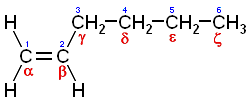
1-hexene, an example of an alpha-olefin.
Many poly-alpha-olefins have flexible alkyl branching groups on every other carbon of their polymer backbone chain. These alkyl groups, which can shape themselves in numerous conformations, make it very difficult for the polymer molecules to line themselves up side-by-side in an orderly way. Therefore, many poly-alpha-olefins do not crystallize or solidify easily and are able to remain oily, viscous liquids even at lower temperatures. Low molecular weight poly-alpha-olefins are useful as synthetic lubricants such as synthetic motor oils for vehicles used in a wide temperature range.
Even polyethylenes copolymerized with a small amount of alpha-olefins (such as 1-hexene, 1-octene, or longer) are more flexible than simple straight chain high density polyethylene, which has no branching. The methyl branch groups on a polypropylene polymer are not long enough to make typical commercial polypropylene more flexible than polyethylene.
| The above article is licensed under the GNU Free Documentation License. From Wikipedia, the free encyclopedia (https://en.wikipedia.org/wiki/polyolefin). Modified by Apparel Search 4/10/07 |
Branching Decides Behaviour
The chemistry of the polyolefin family is a lesson in how small structural changes steer big physical differences. Even polyethylenes copolymerized with a small amount of alpha-olefins such as 1-hexene, 1-octene, or longer chains are more flexible than simple straight-chain high density polyethylene, which has no branching: the short branches keep the chains from packing tightly into crystals, softening the material. The methyl branch groups on a polypropylene polymer, by contrast, are not long enough to make typical commercial polypropylene more flexible than polyethylene — a single carbon branch stiffens rather than loosens the structure. At the far end of the scale, low molecular weight poly-alpha-olefins are useful as synthetic lubricants such as synthetic motor oils for vehicles used in a wide temperature range, precisely because their branched chains refuse to solidify when cold or thin out excessively when hot.
Polyolefins in Fiber Form
For apparel and textiles, the important polyolefins are the fiber-forming ones. Polypropylene and polyethylene spun into filament and staple give the olefin family of textile fibers: very light — polypropylene floats in water — resistant to moisture, staining and mildew, and difficult to dye by ordinary methods because the polymer has no dye sites, so colour is usually added to the melt before spinning. Those properties place polyolefin fibers in ropes and nets, carpet backing and indoor-outdoor carpeting, upholstery, disposable nonwoven fabrics, thermal underwear and athletic base layers that move perspiration away from the skin. The same simple feedstocks — ethylene and propylene from the petrochemical industry — thus end up both as the world's most common plastics and as a working family of textile fibers, with the polymer's branching and molecular weight deciding whether the result is a rigid container, a flexible film, a lubricant, or a yarn.
Common Questions
What is a polyolefin?
A polyolefin is a polymer produced from a simple olefin, or alkene, as a monomer. Polyethylene, produced by polymerizing ethylene, and polypropylene, made from propylene, are the two best-known examples in textiles and industry.
What is a poly-alpha-olefin?
A poly-alpha-olefin, or PAO, is a polymer made by polymerizing an alpha-olefin — an alkene where the carbon-carbon double bond starts at the alpha carbon, between the number 1 and number 2 carbons in the molecule. Common alpha-olefins used as co-monomers include 1-hexene and longer chains.
Why do many poly-alpha-olefins stay liquid?
Many poly-alpha-olefins have flexible alkyl branching groups on every other carbon of the polymer backbone. These groups can shape themselves in numerous conformations, making it very difficult for the molecules to line up side by side in an orderly way, so many do not crystallise or solidify easily and remain oily, viscous liquids even at lower temperatures.