Panniers (Side Hoops)
Clothing Definitions — definitions of garments and clothing terms from Apparel Search
Search Apparel Search
At a Glance
Definition: Panniers, or side hoops, are eighteenth-century undergarments that extended the width of a skirt at the sides only, leaving the front and back flat.
Also known as: Side hoops
Pronunciation: PAN-ee-erz
Category: Clothing Definitions
Word Origin
From French panier, a basket. Panniers were the wicker baskets slung on either side of a pack animal, and the paired hooped frames, one basket-like structure on each hip, took their name from that resemblance in shape and position.
Panniers or side hoops are women's undergarments worn in the eighteenth century to extend the width of skirts at the side while leaving the front and back flat. At their most extreme, in the French court of Marie Antoinette, panniers could extend the skirt several feet at each side. This page explains how panniers were constructed, how such a wide silhouette was worn and managed, and how the fashion declined.
Building Width at the Hips Only
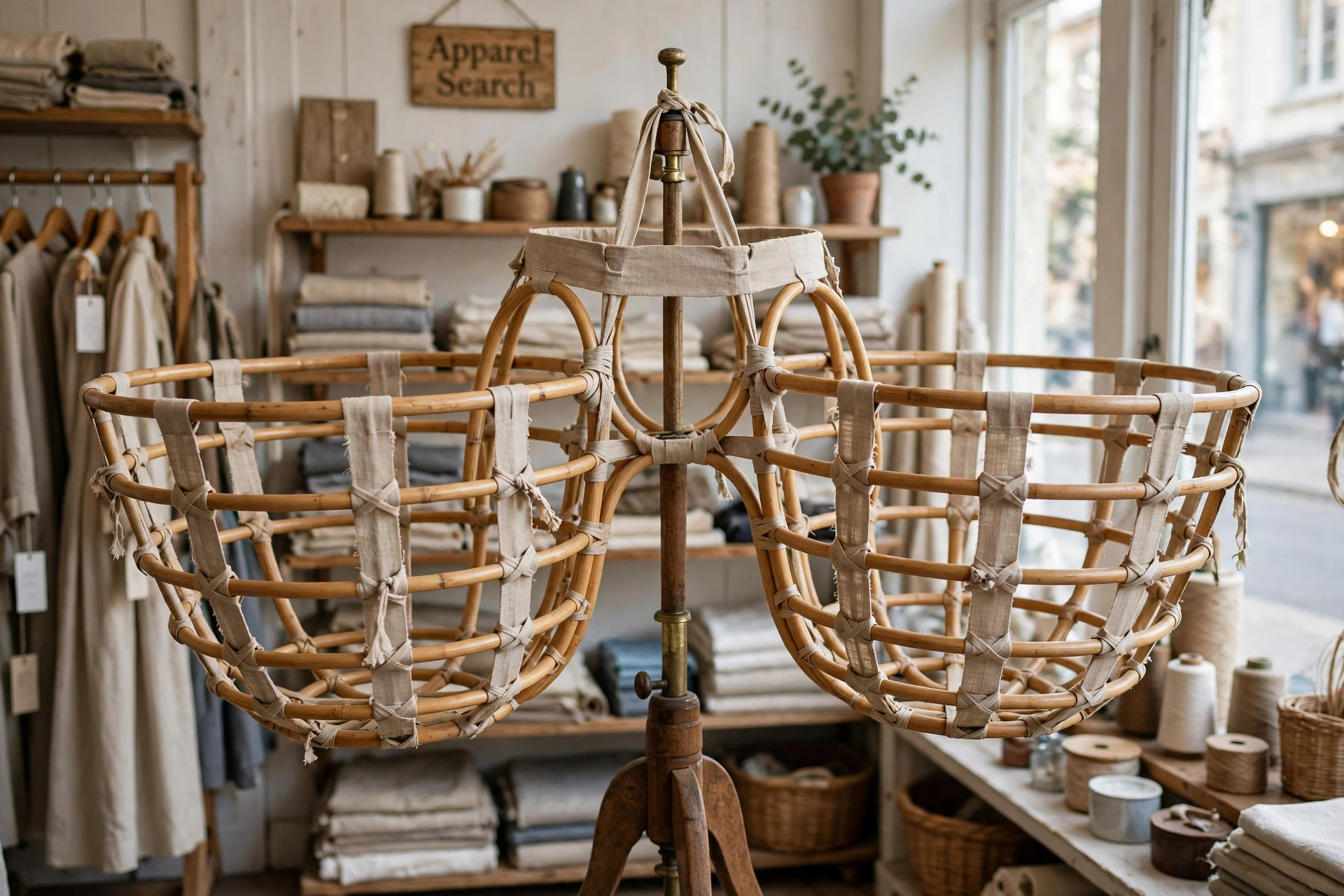
Panniers are the specialists of the skirt-support family. The farthingale before them spread a skirt in a cone all round, and the later crinoline and hoop skirt spread it in a bell. Panniers do something more deliberate: their hoops push the skirt out sideways from the hips and nowhere else. Seen from the front, a woman in panniers presented the full spectacular width of the fashion; seen from the side, she was surprisingly slim.
That flat front was not wasted. It displayed the decorated stomacher and the front panel of the skirt, the parts of an eighteenth-century dress that carried its embroidery, trim and finest fabric, framed by the width at each side. The silhouette was a piece of presentation as much as of fashion, which is why its extreme form belonged to court dress, where the width was a measure of ceremony and of the costly cloth it took to cover the frame.
Construction: Hoops, Hinges and Tapes
Construction was light engineering. A pannier frame was made of hoops, of whalebone, cane or, in later versions, steel, joined by tapes and cloth into two hinged baskets, one for each hip, or into a single joined frame. It was tied or fastened at the waist over the shift and the stays, and the dress skirt was arranged over it, often draped and trained to show the width to advantage, with a petticoat between frame and skirt to smooth the hoops' lines.
Hinged and folding versions existed precisely because the garment was impractical at full width. The hoops could be lifted, pressed in or folded to pass through a doorway, sit in a carriage or take a chair, and wearers learned to approach doors sideways and to manage the frame with their hands when sitting down. The pannier was, in effect, collapsible architecture: rigid enough to carry several feet of silk in public, flexible enough, just barely, to live in.
Width came in grades, and most panniers were nothing like the court extreme. Ordinary dress used modest frames that gave the skirt a fashionable breadth at the hip without impeding daily life, and smaller forms, sometimes called pocket hoops, were made as two separate small hooped pockets tied on at the waist, one over each hip, which could be worn under narrower skirts and even did duty as pockets. The full joined frame was reserved for formal dress, and the width a woman wore rose and fell with the formality of the occasion, the size of the rooms she would move in, and the amount of silk her household could put over the frame.
Rise, Extreme and Decline
The fashion rose with the court dress of the early eighteenth century and reached its famous extreme at the French court in the time of Marie Antoinette, when the widest panniers belonged to formal court presentation and display mattered far more than convenience. Width was rank made visible: the frame, and the fabric needed to cover it, were expensive, and the space a wearer took up in a room announced her place in it.
After the extreme, the fashion shrank steadily, first to smaller hip pads and rolls that kept only a suggestion of width, then out of fashion altogether as the high-waisted, narrow silhouette of the 1790s arrived and the whole architecture of the wide skirt was abandoned. The change was as much social as stylistic: the wide skirt had belonged to a court culture of ceremony and display, and the simpler dress that replaced it belonged to a different age, one that prized a natural line and ease of movement over engineered magnificence. Panniers survive in museum collections and in the study of the eighteenth-century silhouette, where exhibitions on the period, such as the Metropolitan Museum of Art's material on eighteenth-century silhouette and support, show the frames beside the dresses they carried. Their logic also survives at smaller scale whenever padding or structure is placed at the hip to shape a modern garment, the same idea reduced from several feet to a few centimetres.
Not to Be Confused With
Every skirt support holds cloth away from the legs, but each places the width in a different place, and the names are told apart by where the width goes. Panniers put the width at the sides only, over the hips, leaving front and back flat. A hoop skirt puts the width all round, in a bell or dome. A bustle puts the fullness at the back only, and a crinoline is the stiffened petticoat or cage that spreads a skirt in a cone or bell all round. Side, all round, back, all round: the silhouette from above names the support beneath it.
Common Questions
What are panniers?
Panniers, or side hoops, are eighteenth-century undergarments that extend the width of a skirt at the sides while leaving the front and back flat. They were worn under court and formal dresses to produce the wide-hipped silhouette of the period.
Why are they called panniers?
The name comes from panniers, a French term for wicker baskets slung on either side of a pack animal. The hooped frames sat one on each hip like the paired baskets, and took their name from that resemblance.
How wide could panniers make a skirt?
At their most extreme, in the French court of Marie Antoinette, panniers could extend the skirt several feet at each side. Everyday and later versions were much narrower, and the widest forms belonged to court dress, where display mattered more than convenience.