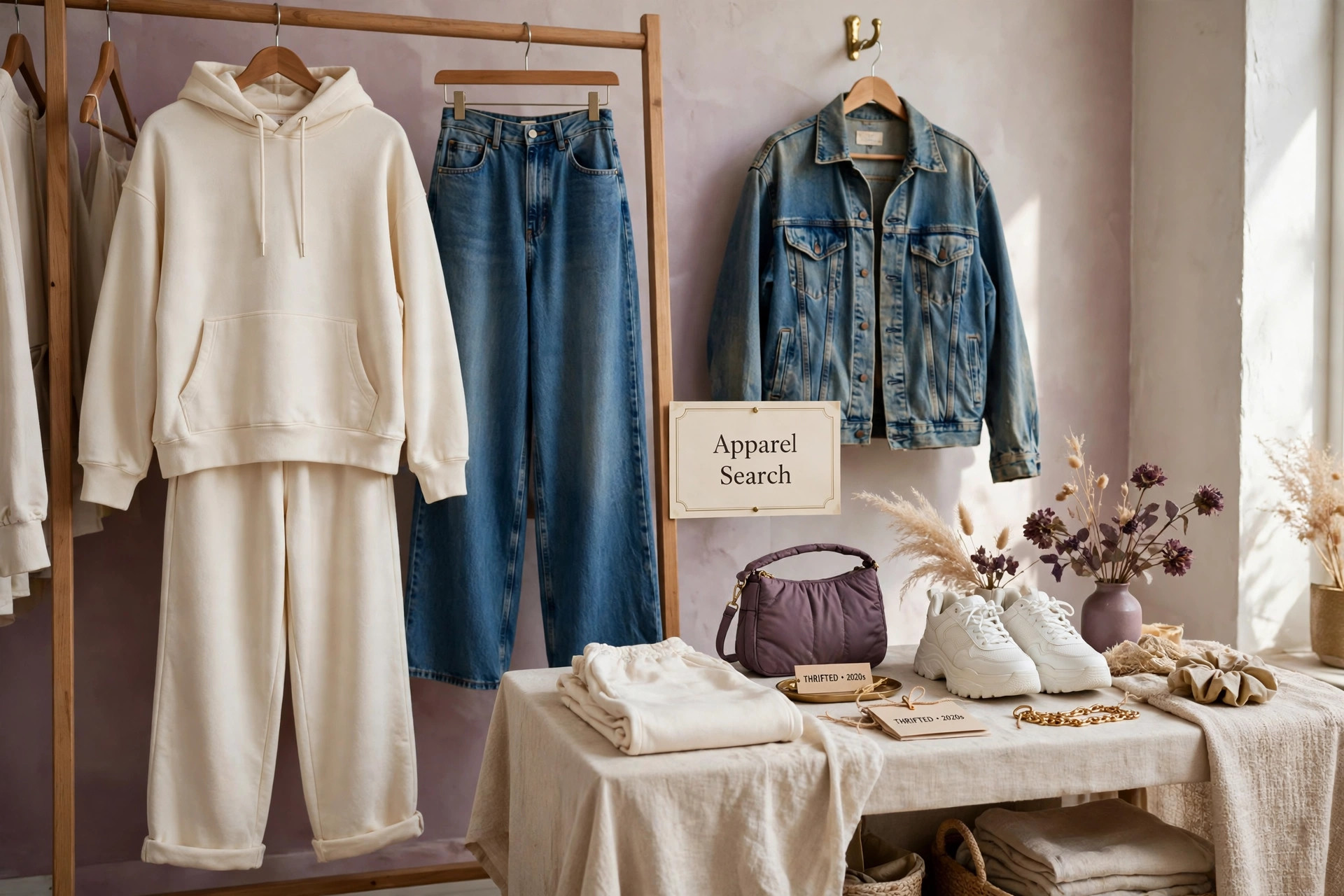
The 2020s began with the world's wardrobes turned upside down. Lockdowns in 2020 made sweatpants, hoodies, and dressing from the waist up for video calls the global uniform almost overnight, and comfort never fully gave the stage back. As the decade unfolded, trends began moving at social-media speed: TikTok revived Y2K styles barely twenty years old, resale and thrifting became mainstream shopping, and quiet luxury answered the microtrend churn with stealth-wealth neutrals. It is the first decade in which a trend can be born, peak, and be declared over within a single season - and the first in which artificial intelligence helps design, market, and model the clothes.
Defining Looks
- Pandemic comfort dressing - matching sweat sets, leggings, and slippers defined 2020, and comfort stayed in the wardrobe long after offices reopened.
- The Y2K revival - Gen Z raided the early 2000s: low-rise jeans, baguette bags, butterfly motifs, and baby tees returned, filtered through thrift hauls and social feeds.
- TikTok microtrends - cottagecore, coastal grandmother, Barbiecore (boosted by the 2023 Barbie film), and dozens of short-lived aesthetics cycled in months rather than years.
- Quiet luxury - in 2023, logo-free neutrals, careful tailoring, and stealth-wealth dressing - amplified by television dramas about the very rich - pushed back against a decade of logos and hype.
- Resale goes mainstream - thrifting became a first choice rather than a fallback: thredUp went public in March 2021, Etsy bought Depop for about $1.6 billion the same year, and brands launched resale channels of their own, as our thrifting and secondhand fashion guide explains.
- AI enters fashion - from design assistance and virtual try-on to AI-generated models and campaigns, artificial intelligence moved from experiment to everyday tool; our AI tools guide tracks where it is used.
Why It Mattered
The 2020s compressed fashion's clock. A silhouette that once took a decade to rise and fall can now complete its cycle in a season, and the decade's history is being written by algorithms and comment sections as much as by designers. At the same time, secondhand shopping, repair, and rental moved from the margins toward the mainstream, and the industry began reckoning in public with waste and overproduction. The decade is still young - its second half will show which of these shifts were moments and which were permanent - but it has already changed who sets trends, how fast they travel, and what shoppers expect clothing to be.