Couturier
Fashion Definitions — fashion history and style definitions from Apparel Search
Search Apparel Search
At a Glance
Definition: A couturier is someone who is involved in the haute couture business and aids in the design, manufacturing, or sales of fashionable clothing.
Pronunciation: koo-TOOR-ee-ay
Category: Fashion Definitions
Word Origin
Couturier is French in origin, and the word carries the standing of the Paris couture houses with it — which is why it is reserved for the haute couture level of the trade rather than used as a general synonym for designer.
A couturier is someone who is involved in the haute couture business and aids in the design, manufacturing or sales of fashionable clothing. The definition is deliberately narrow: a couturier is not simply anyone who designs clothes, but a participant in haute couture specifically. Some famous couturiers include Christian Dior, Gabrielle Chanel, Karl Lagerfeld and Yves Saint-Laurent.
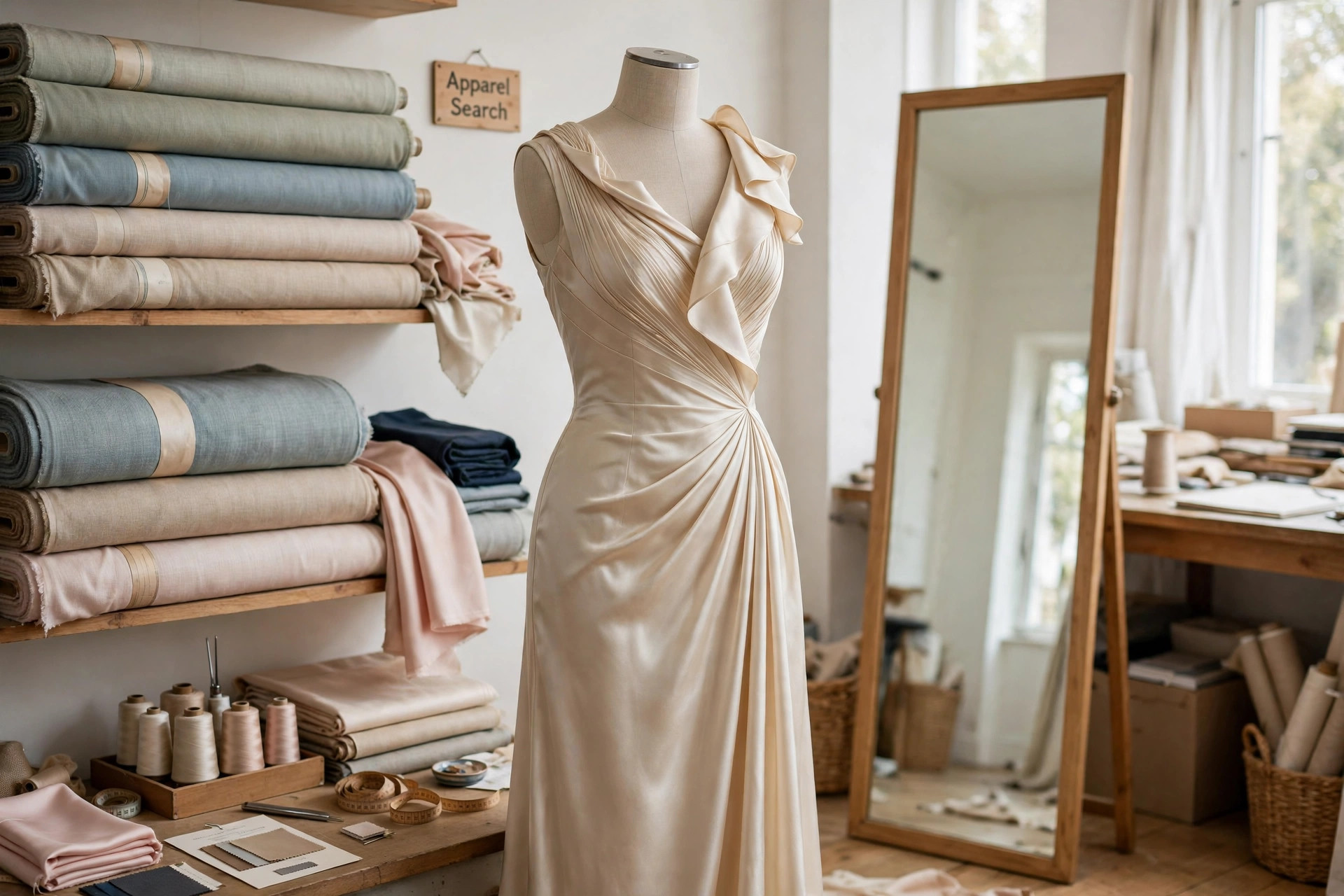
Design, Manufacturing and Sales
All three activities in the definition matter. The word covers the people who make and sell haute couture as well as the named designer at the head of a house, because that is how haute couture actually works: a garment reaches a client through design, through the atelier that manufactures it, and through the salon that sells it, and participation in any of those stages is part of the couturier's world.
The term is French in origin and carries the standing of the Paris couture houses with it, which is why it is reserved for this level of the trade rather than used as a general synonym for designer. Its natural companions in this section are ready to wear — the production clothing couture stands above — and the catwalk, where couture collections are shown.
The Names That Carry the Term
Four famous couturiers are named in the definition: Christian Dior, Gabrielle Chanel, Karl Lagerfeld and Yves Saint-Laurent. Each represents a different route through the same business. Dior founded his Paris house in 1946 and defined post-war couture with the 1947 New Look. Chanel built her house on expensive simplicity, the Chanel suit and the little black dress. Saint-Laurent began as Dior's assistant and successor before opening his own maison de couture.
The four names together span the founding generation of modern couture and the generation that inherited it — and Dior and Chanel have their own full definitions among the designer and brand pages in this section, where the careers behind the title are set out in detail.
The Standard the Word Implies
Charles Frederick Worth, whose own definition appears in this section, is described there as the first of the couturiers — dressmakers considered artists rather than mere artisans — because he displayed model dresses at shows four times a year and let patronesses choose models to be sewn in fabrics of their choice and tailored to their figures.
That is the standard the word still implies: original models, luxurious materials, meticulous fit, and a clientele who come to the house rather than a house that follows the customer. Set against the designer definition in this section — drawn from the U.S. Department of Labor, describing designers across every field, from automobiles and publications to interiors and clothing — couturier is the opposite kind of word: one narrow, senior corner of one of those fields.
Not to Be Confused With
A couturier is not simply a designer by another name. Designer is the broad occupational term, covering design in every field and clothing design at every level. Couturier is narrower: it names someone involved in the haute couture business specifically — in its design, manufacturing or sales. Every couturier works in design; most designers are not couturiers.
Common Questions
What is a couturier?
A couturier is someone who is involved in the haute couture business and aids in the design, manufacturing, or sales of fashionable clothing.
Which famous couturiers are named in this definition?
The famous couturiers named are Christian Dior, Gabrielle Chanel, Karl Lagerfeld and Yves Saint-Laurent.
How does a couturier differ from a fashion designer in general?
The term is tied specifically to the haute couture business, rather than to clothing design at every level. A couturier works in haute couture — in its design, manufacturing or sales — while designer is the broader occupational term.