Street Fashion
Fashion Definitions — fashion history and style definitions from Apparel Search
Search Apparel Search
At a Glance
Definition: Street fashion is fashion that originates with the general public rather than with designers or fashion studios, typically emerging from youth culture in major urban centres before influencing mainstream fashion.
Category: Fashion Definitions
Street fashion is fashion considered to have emerged not from popular fashion designers or fashion studios, but from the consumers: the general public sets the trend, and people in the streets start the fashion trends. The trends are spotted by people walking around neighbourhoods, and in modern times they are also viewed on social media, news and blog posts. Mainstream fashion is often influenced by street fashion trends: as designers and retail store buyers recognise them, they incorporate the trend into their own collections, which expands its influence. Street fashion is generally associated with youth culture and is most often seen starting in major urban centres.
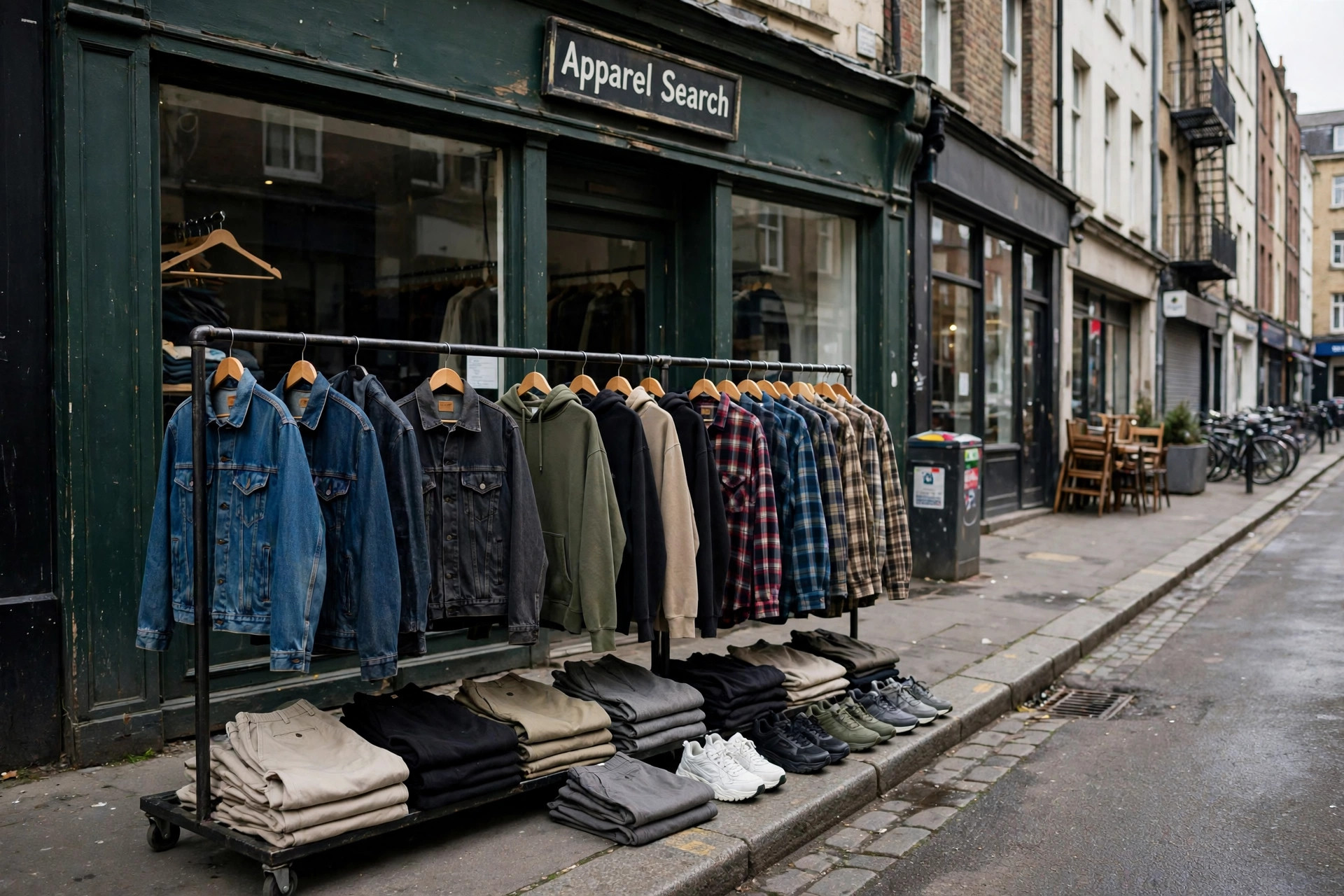
The Direction of Influence Runs Upward
Most fashion is described as flowing downward, from a designer's studio to a store to a customer. Street fashion runs the other way. A look is assembled by people who are not selling it, usually young people in a major urban centre, from garments already available — workwear, sportswear, second-hand clothing, military surplus and the ordinary stock of local shops — combined in a way no merchandiser planned. Because the look signals membership, taste and difference from the mainstream around it, it is worn consistently enough to become visible.
Visibility is the turning point. Magazines, newspapers and blogs commonly feature candid photographs of individuals wearing urban, stylish clothing, and the media, once they catch on to the strength of a youthful trend, publicise what they see, which helps the trend grow further. Commercial adoption follows recognition: designers and retail buyers are professional trend spotters, and a street trend arrives with its testing already done, because real people are wearing it in combinations that work. Incorporating it into a collection translates it into standard sizes, reliable fabrics and quantities, spreading it to customers who would never have seen the neighbourhood it came from. Something is usually lost in that translation — the specificity that made the look a badge — which is why originators often abandon a style at the moment it becomes widely available and start the cycle again. Origination, recognition, commercialisation and abandonment are not a corruption of the process; they are the process.
A Vocabulary of Subcultures
Most major youth subcultures have had an associated street fashion, and the examples read as a compact history of post-war youth dress. Hippies wore denim, bohemian styling, long hair, flower power and psychedelic imagery, and flared trousers. Teddy Boys wore drape jackets, drainpipe trousers and crepe shoes. Punk fashion used ripped clothing, safety pins, bondage elements, provocative T-shirt slogans and the Mohican hairstyle. Skinheads wore short-cropped hair, fitted jeans, button-up shirts, polo shirts, Harrington jackets and Dr. Martens boots.
Gothic fashion used black clothing, heavy coats, poet shirts, big boots and makeup. Preppy fashion ran in the opposite direction — argyle sweaters, chinos, madras, Nantucket Reds, button-down Oxford cloth shirts and boat shoes — borrowing the dress of elite schools rather than rejecting respectability. Hip hop fashion brought ultra-baggy pants and a roster of labels worn as badges of the scene.
Later groupings kept the same system-like character. Hipster or indie style combined glasses, jeans, beanies, sneakers, ties, suspenders, checked shirts and beards. Trendies wore androgynous big hair, bright neon colours, skinny jeans, printed hoodies and keffiyehs. Urban style used colourful apparel, large accent jewellery, skinny jeans, jackets and T-shirts. Set side by side, the lists show that a subculture's fashion is a system, not a garment: footwear, hair, jewellery and silhouette all change together, and a single item taken alone reads as fashion rather than membership. Japanese street fashion is noted for sustaining multiple simultaneous, highly diverse fashion movements at any given time — a city district holding several complete style systems at once, each with its own shops, magazines and rules.
Bloggers, Graffiti Art and Streetwear
Documentation is the recognition stage of the cycle, and it has its own specialists. Street fashion bloggers photograph and publish what neighbourhoods produce, and street-inspired graffiti art fashion carries the visual language of the street itself into clothing. Their role grew as candid photography moved from magazines to blogs to social media, shortening the distance between a look appearing on a street and a buyer on another continent seeing it.
The commercial category that feeds on all of this is streetwear: clothing designed and sold by brands, drawing on skate, surf, hip hop and casual sportswear. The speed of the cycle has changed beyond recognition, but its direction has not — the trend still begins with the person wearing it.
Not to Be Confused With
Street fashion is sometimes confused with streetwear, but the two are different kinds of thing. Streetwear is a commercial category of clothing, designed and sold by brands. Street fashion is the wearer-led phenomenon that category draws on: dress behaviour that begins with the people wearing it. A brand can manufacture streetwear; it cannot manufacture street fashion, though it can spot it early.
Common Questions
Where does street fashion come from?
Street fashion emerges from consumers rather than from designers or studios. People in the streets start the trends; they are spotted by people walking around neighbourhoods, and today they are also viewed on social media, news and blog posts.
How does a street trend become mainstream fashion?
Designers and retail store buyers recognise a street fashion trend and incorporate it into their own collections, which expands its influence. The media also take notice of youthful trends, and publicising what they see helps the trend grow further.
Which subcultures have had a street fashion?
Most major youth subcultures have had an associated street fashion, including hippie, hip hop, punk, gothic and preppy fashion, as well as Teddy Boys, skinheads, hipster or indie style, trendies and urban style.