Outlet Mall (Outlet Centre)
Miscellaneous Definitions — the shopping centre where manufacturers sell directly to the public through their own stores, from Apparel Search
Search Apparel Search
At a Glance
Definition: An outlet mall, or outlet centre, is a type of shopping mall in which manufacturers sell their products directly to the public through their own branded stores, alongside off-price and closeout tenants selling returned and discontinued goods at reduced prices.
Also known as: Outlet centre (British term)
Category: Miscellaneous Definitions
An outlet mall (or outlet centre) is a type of shopping mall in which manufacturers sell their products directly to the public through their own branded stores. Other stores in outlet malls are operated by retailers selling returned goods and discontinued products, often at heavily reduced prices, and clothing, sporting goods, electrical products, cosmetics and toys are among the types of items sold. This page covers how the format grew out of the single factory outlet, why its sites sit out of town, and how it spread from the United States to Europe and beyond.
The Factory Store, Multiplied
An outlet mall begins with a simple multiplication: take the factory outlet — one manufacturer's own shop selling its goods directly — and put a hundred of them side by side in one planned centre. Outlet malls first appeared in the United States as a development of that traditional factory outlet: a store attached to a factory or warehouse, selling surplus stock at discounted prices. An outlet mall places several such outlets under one roof in a convenient location, usually an out-of-town site. The shopper gains a day's worth of brand-direct bargain hunting in one trip, and each manufacturer gains traffic drawn by all the others — exactly the mutual benefit that powers any shopping mall.
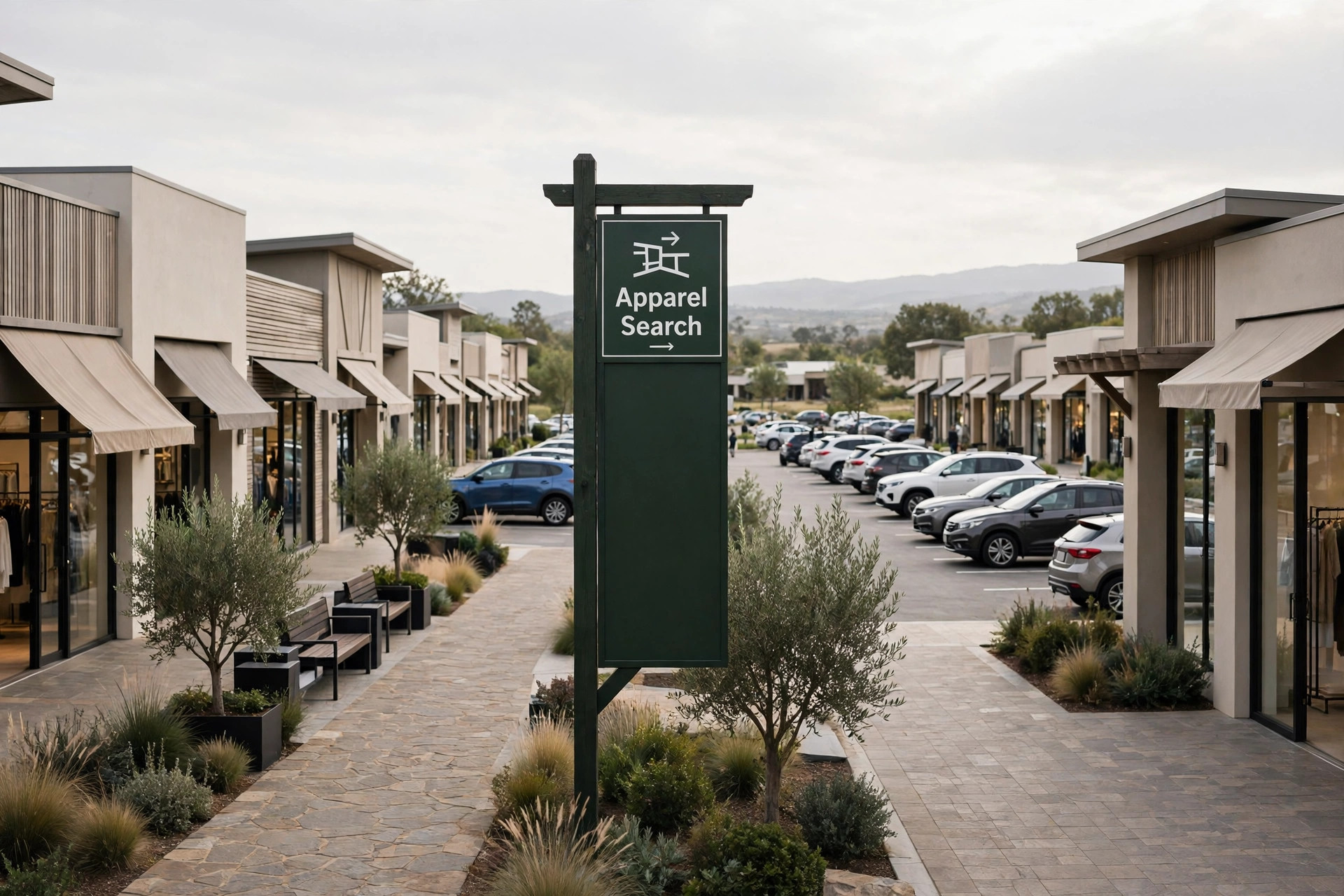
The format usually announces itself in the architecture: outlet centres are commonly open-air, arranged as a village, a strip or a loop of storefronts with surface parking, built more cheaply than enclosed regional malls because the draw is price rather than spectacle. The tenant mix rounds out the factory stores with the off-price locations of department stores and closeout retailers, all speaking the same language of marked-down merchandise — but the defining tenants remain the manufacturers' own stores, whose presence distinguishes an outlet mall from an ordinary shopping centre of independent retailers.
What the Stores Sell: Surplus, Seconds and Past Seasons
The merchandise model has layers. The historic factory outlet sold what its name says: overruns, seconds with minor flaws, samples, and stock left over when the regular retail season ended. As outlet malls grew from a clearance channel into a major retail sector, most large brands began treating their outlet divisions as businesses in their own right, sourcing some goods specifically for outlet sale while continuing to flow clearance and past-season products through the same stores. Shoppers learned to read the difference in quality and in the labels, and the value question — how much of the full-price article the outlet article really is — became part of outlet shopping literacy.
That literacy matters because the centre's promise is a price promise. Tenants pay lower rents than in prestige malls and move volume; landlords fill a format that thrives in both strong economies, when brands expand, and weak ones, when shoppers trade down to discounts. The goods on the rails — clothing first among them, with sporting goods, electrical products, cosmetics and toys — are there because a manufacturer or an off-price retailer can sell them for less than full retail, and the centre exists to gather enough of those offers in one place to justify the trip.
Location Logic and the Day Trip
The out-of-town site is not an accident. It minimises overhead costs, and it may be legally necessary, as conventional retailers may have contractual restrictions on the manufacturer on the location of the factory outlets so as to minimise competition with the traditional retailer. Therefore factory outlets are usually located at least 20 kilometres outside of major cities, and consumers must account for gasoline costs and driving time when calculating their net savings. In the format's mature form the distance became a feature: highway sites near tourist routes turned the largest centres into destinations in themselves, with tour buses and international visitors treating a day at the outlets as an itinerary item.
Outlet malls have since spread to the European Union and to many other parts of the world. During the early 2000s the U.K. company McArthurGlen opened the first outlet malls in Italy (Milan and Rome) and Portugal (Lisbon). The British term outlet centre names the same format. As a definition, the outlet mall stays distinct from its parts and its neighbours: an outlet store is the single shop, an outlet mall is the centre that groups manufacturers' own stores together, and an off-price mall tenant is not by itself an outlet in the strict sense. Together with the factory store tradition it descends from, the outlet mall is the physical home of manufacturer-direct discount retailing — a mall where the middleman is not merely discounted but absent, because the maker is the merchant. See the retailer and retailing definitions for the general trade this format specialises.
Not to Be Confused With
An outlet mall is the centre; an outlet store is one shop inside it. An outlet store is a single retail store in which one manufacturer sells its irregular, surplus or old-season stock directly to the public. An outlet mall is the planned shopping centre that groups many such manufacturers' stores together, usually out of town, alongside off-price and closeout tenants. One brand's shop is a store; the whole destination is the mall.
Common Questions
What is an outlet mall?
An outlet mall, or outlet centre, is a type of shopping mall in which manufacturers sell their products directly to the public through their own branded stores. The stores are typically factory outlet stores offering discounted prices.
How is an outlet mall different from a regular mall?
A regular mall's stores are retailers selling goods made by others at full retail markup. In an outlet mall the anchor tenants are manufacturers selling their own products directly, historically surplus, seconds and past-season stock, at lower prices.
Why are outlet malls often located outside city centres?
The out-of-town site minimises overhead costs, and conventional retailers may have contractual restrictions on where manufacturers may place factory outlets so they do not compete with traditional retail. Factory outlets are usually located at least 20 kilometres outside major cities.
What is an outlet centre?
Outlet centre is the British term for an outlet mall: the same format of a planned centre grouping manufacturers' own direct-to-public stores. The format spread from the United States to the European Union and many other parts of the world.