Product Development
Product Development is the Apparel Search Design Studio’s making service: concept boards and mood boards, product renderings, style guides, tech specs, textile designs and fabric repeats, and product graphics and badges.
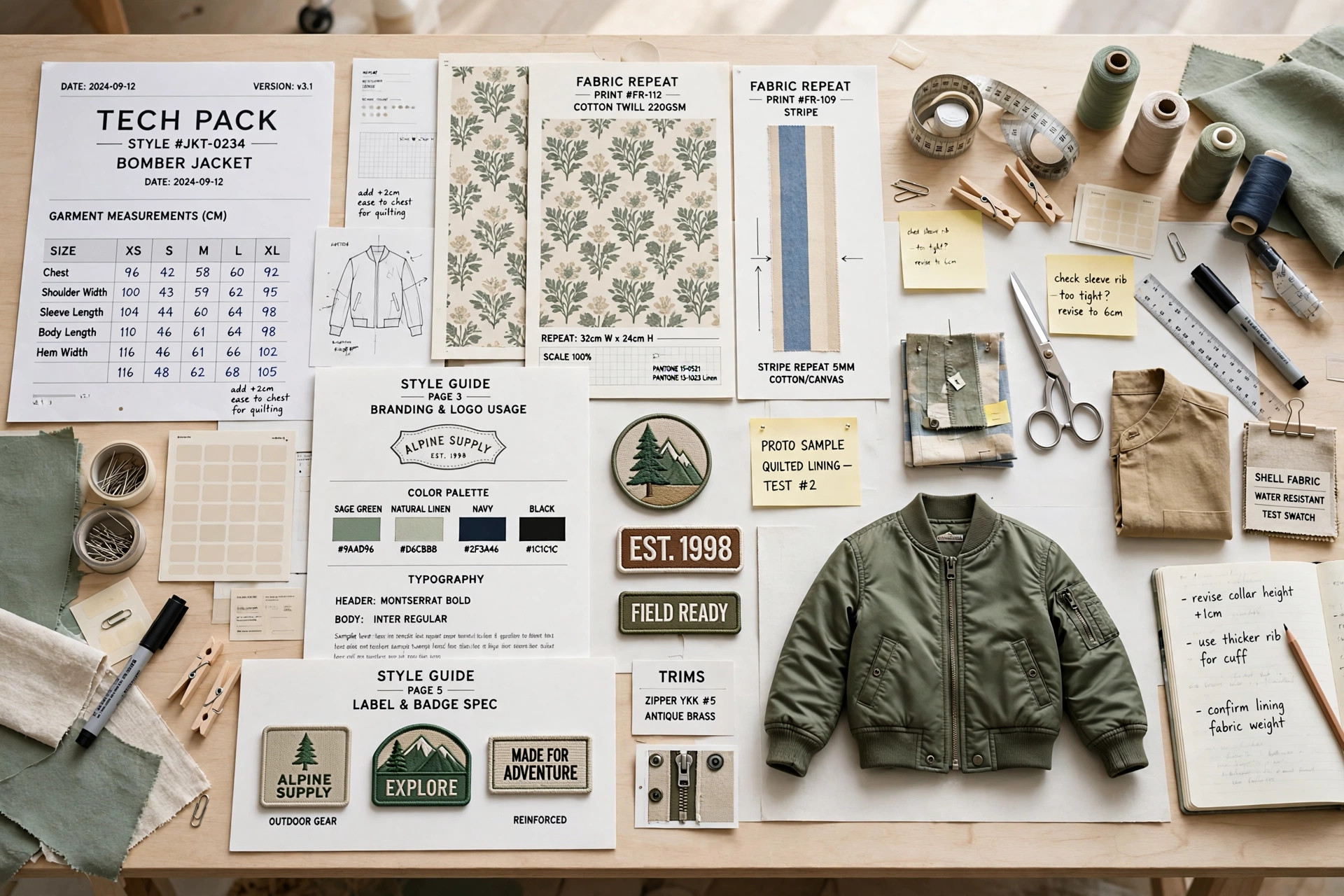
Concept Boards and Mood Boards
Product development starts on the board. Concept boards and mood boards set the visual world of a product or a range before development money is spent: the colors, fabrics, references and mood that every later decision is checked against. In the studio’s Fashion Design Studio Services, board work is the shared starting point for design, merchandising and client approval, because an argument about direction is cheap at board stage and expensive at sample stage.
The two boards do different jobs. A mood board captures feeling: photography, texture and references that say what the product should evoke. A concept board is tighter and more commercial, tying that mood to categories, key items and color stories that a range can actually be built from. Together they give the renderings, style guides and specifications that follow a fixed reference, so a product developed over months still matches the idea that was approved at the start.
Product Renderings, Style Guides and Tech Specs
Product renderings turn the board’s direction into specific garments: drawn and rendered views of each style, clear enough to cost, range and sell before a sample exists. Renderings are the working currency between designer, buyer and factory, and their accuracy decides how few surprises the first prototype holds. The studio’s services hub describes the companion drawing work in the same terms: technical drawings with dimensions and written instructions, and high quality renderings and fashion illustrations.
Style guides and tech specs carry the product the rest of the way. A style guide records how a style is to look and be presented consistently across colors, sizes and seasons. A tech spec, the tech pack, is the production contract: measurements, construction, materials, trims and tolerances in a document a factory can price and make from. Brands feel the absence of good specs as sampling delays, corrections and disputes; the document is unglamorous and decisive in equal measure.
Textile Designs, Fabric Repeats and Product Graphics
Surface design is the third strand of the service: textile designs and fabric repeats. A textile design becomes a fabric repeat when its motif is engineered to tile seamlessly at the right scale for the product, in colorways matched to the season’s palette, the process the studio’s pattern example pages show in finished form. Print and pattern can carry a basic garment, which is why development treats the repeat as a product decision, not a decoration added at the end.
Product graphics and badges complete the set: the placed artwork, logos-as-graphics, patches and badges that give tees, fleece, caps and accessories their identity at arm’s length. Graphics work follows the same discipline as fabric work, sized and separated for its print method and placed against the garment’s measurements. For additional service details and pricing, email the studio through the pricing request form with the product categories involved, and the development scope can be set style by style.
How the Development Pieces Fit Together
The deliverables on this page are a sequence, not a menu. A season or a product starts with the concept and mood boards, which fix the direction everyone works to. Renderings then explore the specific styles inside that direction, so choices about silhouette, fabric and detail are made on paper, where they are cheap to change. The chosen styles move into style guides and tech specs, the documents a sample room or factory prices and prototypes from, and the textile repeats and product graphics are developed in parallel so the surfaces arrive with the garments rather than after them.
Working in that order is what keeps development economical. Each stage approves one layer of decisions before money is spent on the next: direction before styles, styles before samples, samples before production quantities. A brand developing a single hero product can enter the sequence at the rendering stage; a brand building a full range uses all of it, and the boards at the start are what keep a range developed over months reading as one collection when it finally hangs together in a store.
Photos

The studio photograph carried with the Fashion Studio service pages.
Common Questions
What does the Product Development service include?
Concept boards and mood boards, product renderings, style guides, tech specs, textile designs and fabric repeats, and product graphics and badges - the document set that turns an idea into a producible product.
What is a tech spec?
A tech spec or tech pack is the production document for a style: measurements, construction details, materials, trims and tolerances, set out clearly enough for a factory to price the garment and make a correct prototype from it.
What is a fabric repeat?
A repeat is a textile motif engineered to tile seamlessly across cloth at a chosen scale, so a print continues without visible seams. Repeats are built in the season's colorways and sized for the product they will cover.
Design Studio Services
The Apparel Search Design Studio is a full-service fashion industry design resource. This page is one part of its Fashion Design Studio Services; the Design Studio Pricing page gives the estimated pricing scale for studio work, and the studio hub links its people, pattern examples and project pages.