Recycling Clothing with No Sewing Skills Needed
An Ohio State Extension fact sheet on reusing clothing without a sewing machine
Recycling clothing does not have to mean long hours at a sewing machine. This Ohio State Extension fact sheet (HYG-5505-92, by Barbara H. Drake) is the no-sewing companion to the series: recombining garments you already own into new outfits, reusing pieces in creative roles — a shirt as a layer, a dress belted differently, scarves and accessories changing the read of a whole outfit — and passing still-good clothing along where it will be worn. It is aimed at households with little time, no machine, or no interest in sewing.
Recycling Clothing with No Sewing Skills Needed Fact Sheet from Ohio State
Fact Sheet Directory Fashion Education Directory Recycle Directory Apparel Research Fashion Schools
Recycling Clothing with No Sewing Skills Needed
HYG-5505-92
Barbara H. DrakeWhen we think about recycling clothing, we often envision long hours at the sewing machine remaking garments. However, recycling need not require sewing skills or a huge time commitment. Through recombining, reusing in creative ways and accessorizing, we can continue to wear old favorites.
Recombining
Evaluate clothes that have not been worn in a year or more. If the garments fit, are in good condition (not worn out or without permanent stains or damage) or are still in style, they may be candidates for recombining.
The idea is to look at your wardrobe in a fresh way. Recombining is simply rearranging wardrobe pieces and putting different items together. Separate "outfits," coordinates or suits. Try with other wardrobe pieces, recombining into new outfits. Try on these new combinations and see how they look. Accessorize them. If you like the look, write down the descriptions of the new outfits so you don't forget how the recycled pieces are to be used.
If you are stuck for ideas, look at fashion magazines. Today, a variety of colors, textures and fabrics combine for fashionable and exciting looks. Don't be afraid to experiment!
Reusing
Put your creativity to work by inventing new ways to wear garments.
Here are some ideas:
- Wear a shirt dress unbuttoned as a long jacket or coat. Roll up the sleeves and turn up the collar.
- Wear a shirt as a jacket or beach coverup.
- Wear a worn shirt under a crew neck sweater.
- Use a scarf as a belt.
Recycle men's/boy's clothes into women's/girl's clothes
- Wear a man's shirt as a "big" top. Roll up the sleeves and knot at the waist. Wear over a turtleneck, by itself, or under a vest.
- Men's sweaters look great belted or wear them as big tops over stirrup pants or leggings.
- Wear men's ties with big shirts and vests.
- Dye men's T-shirts or undershirts and wear alone or with overshirts.
- Dye boxer shorts for great jams or shorts.
Accessorize
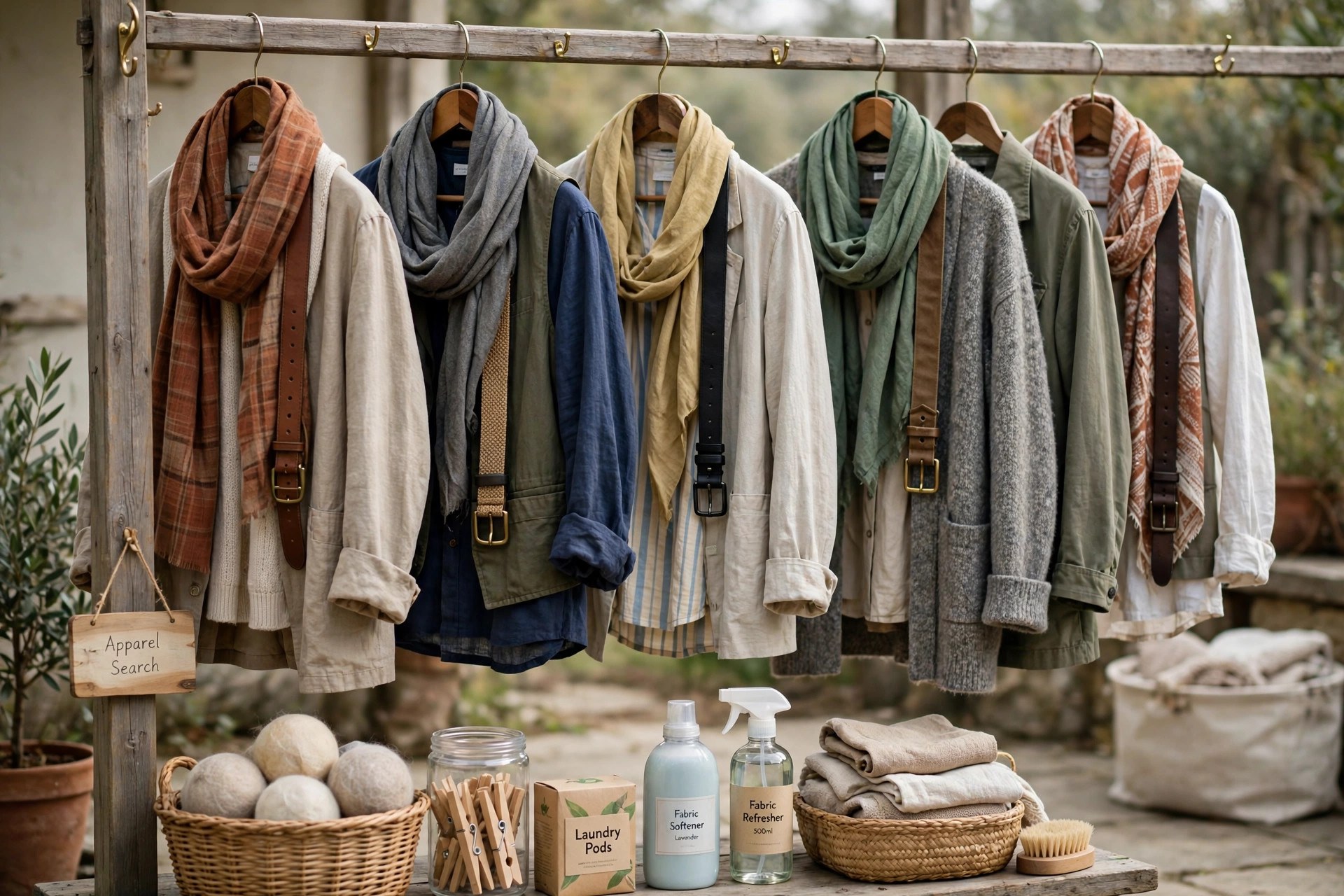
Accessories provide a quick and inexpensive way to update an outfit, extending its wear. One way of doing this is through hosiery and shoes. Look at fashion magazines to determine proportion as it relates to leg color, shoe color and heel height. What is being shown? What is most flattering to you? Scarves, belts and jewelry are good items to collect. These items don't take much storage room and can be recycled into the wardrobe to add spark to an outfit. Consider purchasing an accessory which can add life to several recycled wardrobe pieces.
If All Else Fails
If the recycling ideas mentioned are not appropriate, you don't have sewing skills to remake the garment, but the garment is still in good condition, consider selling the item through used clothing consignment stores or donating the item to a charity. Take an income tax write-off for your donation by assigning a value to clothing items for what they would sell for at a thrift shop. Guidelines are attached to this fact sheet. For charitable contributions of non-cash items, such as clothes, you will need to complete the IRS form #8283 if the value of the items is over $500.00, but does not exceed $5,000.00.
Garments or other textile items that are no longer useable can also be donated to charitable organizations for textile recycling. These organizations sell unusable textiles to commercial recyclers who are able to recycle over 93 percent of textile materials into products such as wiping cloths, roofing materials, patio furniture, box spring padding, and automobile insulation. Some textiles, especially wool, can be recycled into new garments and blankets. Recycling is better than discarding textiles with the trash and having them deposited in landfills.
Depending on condition and original retail price:
| Clothing | Price Paid $ |
|---|---|
| All misc. infants | .00 - 3.00 |
| Child's - age 2 to 20 | 1.00 - 3.00 |
| Child's coats and jackets | 3.00 - 5.00 |
| Junior Child's 10 and up | 3.00 - 15.00 |
| Clothing | Price Paid $ |
|---|---|
| Blouses | 1.00 - 5.00 |
| Coats - Average | 5.00 - 15.00 |
| Coats - Better Winter | 15.00 - 40.00 |
| Dresses - Summer | 3.00 - 15.00 |
| Dresses - Winter | 8.00 - 20.00 |
| Skirts | 1.00 - 10.00 |
| Slacks | 1.00 - 7.00 |
| Ladies Suits | 5.00 - 25.00 |
| Pant Suits | 5.00 - 25.00 |
| Sleepwear | 1.00 - 3.00 |
| Shoes | .50 - 5.00 |
| Ladies Boots | 2.00 - 10.00 |
| Purses | .50 - 20.00 |
| Gowns/formals | 8.00 - 25.00 |
| Sweaters | 2.00 - 8.00 |
| Blazers | 5.00 - 10.00 |
| Scarves, Hats, Gloves | .50 |
| Costume Jewelry and Watches | .50 and up |
| Raincoats | 1.00 - 20.00 |
| Knit Tops | .50 - 5.00 |
| Robes | 1.00 - 5.00 |
| Jeans | .50 - 4.00 |
| Warm-up Suits | 2.00 - 15.00 |
| Clothing | Price Paid $ |
|---|---|
| Suits | 10.00 - 40.00 |
| Raincoats | 8.00 - 20.00 |
| Winter Coats | 8.00 - 40.00 |
| Windbreakers | 3.00 - 15.00 |
| Sport Jackets | 5.00 - 15.00 |
| Golf Jackets | 3.00 - 5.00 |
| Trousers | 2.00 - 9.00 |
| Dress Shirts | 1.00 - 6.00 |
| Outer Jackets | 3.00 - 15.00 |
| Knit Tops/sports Shirts | .50 - 5.00 |
| Pajamas | .50 - 2.00 |
| Warm-up Suits | 1.00 - 5.00 |
| Sweaters | 2.00 - 6.00 |
| Cashmere/ultrasuede | 25.00 - 50.00 |
| Tux | 15.00 - 40.00 |
| Sox | .10 - .50 |
| Ties | .50 - 2.00 |
| Hats, Scarves, Gloves | .50 - 4.00 |
| Belts | .50 - 3.00 |
| Shoes/boots | .50 - 5.00 |
| Robes | 1.00 - 5.00 |
| Sport/knit Tops | .50 - 5.00 |
| Swimwear/shorts | .50 - 3.00 |
| Jeans | 1.00 - 4.00 |
| Vests | 1.00 - 5.00 |
Designer Clothes
Label - For example: Anne Klein, Calvin Klein, Oscar De La Renta, Perry Ellis, Valentino
Depending on Condition and original retail price:
Clothing Price Paid $
Sweaters 18.00 - 35.00
Vests 12.00 - 20.00
Blouses
Silk 18.00 - 35.00
Cotton/poly/misc. 8.00 - 18.00
Skirts 20.00 - 45.00
Blazers 25.00 - 45.00
Slacks 20.00 - 40.00
Dresses
Evening 85.00 - 200.00
Daytime 75.00 - 150.00
Coats/outdoor Jackets
Regular 50.00 - 80.00
Rain 25.00 - 40.00
Suits 50.00 - 100.00
Suede and Ultra Suede Clothing
Dresses 65.00 - 85.00
Jumpers 55.00 - 75.00
Suits 65.00 - 125.00
Skirts 30.00 - 45.00
Vests 40.00 - 65.00
Coats 75.00 - 125.00
Blazers 30.00 - 50.00
Average - For example: Anne Klein II, Ellen Tracy, Evan Picone, Helen Sidell, Liz Claiborne
Depending on Condition and original retail price:
Clothing Price Paid $
Sweaters 10.00 - 20.00
Vests 6.00 - 10.00
Blouses
Silk 6.00 - 15.00
Cotton/poly/misc. 6.00 - 10.00
Skirts 8.00 - 15.00
Blazers 18.00 - 30.00
Slacks 8.00 - 15.00
Dresses
Evening 35.00 - 75.00
Daytime 25.00 - 65.00
Coats/outdoor Jackets
Regular 20.00 - 40.00
Rain 15.00 - 20.00
Suits 20.00 - 40.00
Designer Sportswear
Tennis and Golf Skirts, Shorts 4.00
T-Shirts 3.00 - 8.00
Jogging Suits 15.00 - 45.00
Miscellaneous Designer
Robes 10.00 - 20.00
Nightgowns 6.00 - 10.00
Belts 2.00 - 35.00
Hats 5.00 - 15.00
Purses 8.00 - 45.00
Skin Purses 25.00 - 65.00
Gloves 2.00 - 8.00
Scarves 2.00 - 10.00
Note: Check your local area concerning appraisal of used clothing. Prices may vary from one locale to another.
Sources
Smith, Joyce and Pitts, Norma. Revitalize Your Wardrobe - Recycling Clothes for the Family, Teaching Outline, Ohio State University Cooperative Extension Service, June 1983.
Weiland, Barbara and Wood, Leslie, Clothes Sense, Palmer Pletch Associates, 1983.
Also, see article on Recycling Clothing Using Your Sewing Skills The information found on the pages in this section are provided by Ohio State University for educational purposes. Apparel Search is not associated in anyway with Ohio State University. Apparel Search is simply providing viewers of the fashion industry with easy access to the helpful educational material that has been developed by Ohio State University. Please visit the Ohio State University web site to learn more about the wonderful educational opportunities that they provide.
Recombining Is the First Recycling
Most wardrobes contain unworn outfits hiding in plain sight: separates that have only ever been worn in one pairing. The fact sheet starts there, because recombining costs nothing and needs no skill beyond trying combinations deliberately — changing which top meets which bottom, adding a layer, or moving a 'dressy' piece into everyday rotation with casual companions. Accessories do disproportionate work in this system: a belt, scarf or different shoe changes an outfit's category more cheaply than any alteration.
Reuse Beyond the Wardrobe
When a garment truly leaves the rotation, reuse continues without sewing: soft worn pieces become cleaning cloths and padding, buttons and trims are salvaged for mending jars, and presentable clothing goes to resale, swap or donation while it still has wear in it. The sheet's ordering matters — wear it differently first, repurpose second, discard last.
Common Questions
Can clothing really be recycled without sewing?
Yes — recombining separates into new outfits, restyling with accessories and layers, and repurposing or passing along garments all recycle clothing with no sewing at all.
What is the easiest first step?
Shop your own closet: pair separates in combinations you have never worn together and use belts, scarves and layers to change how familiar pieces read.
What should happen to clothes that are still wearable but unwanted?
Pass them on while they have wear left — resale, clothing swaps and donation all keep a wearable garment in use, which the fact sheet treats as the best outcome.