What a Bachelor’s Degree in Fashion Is
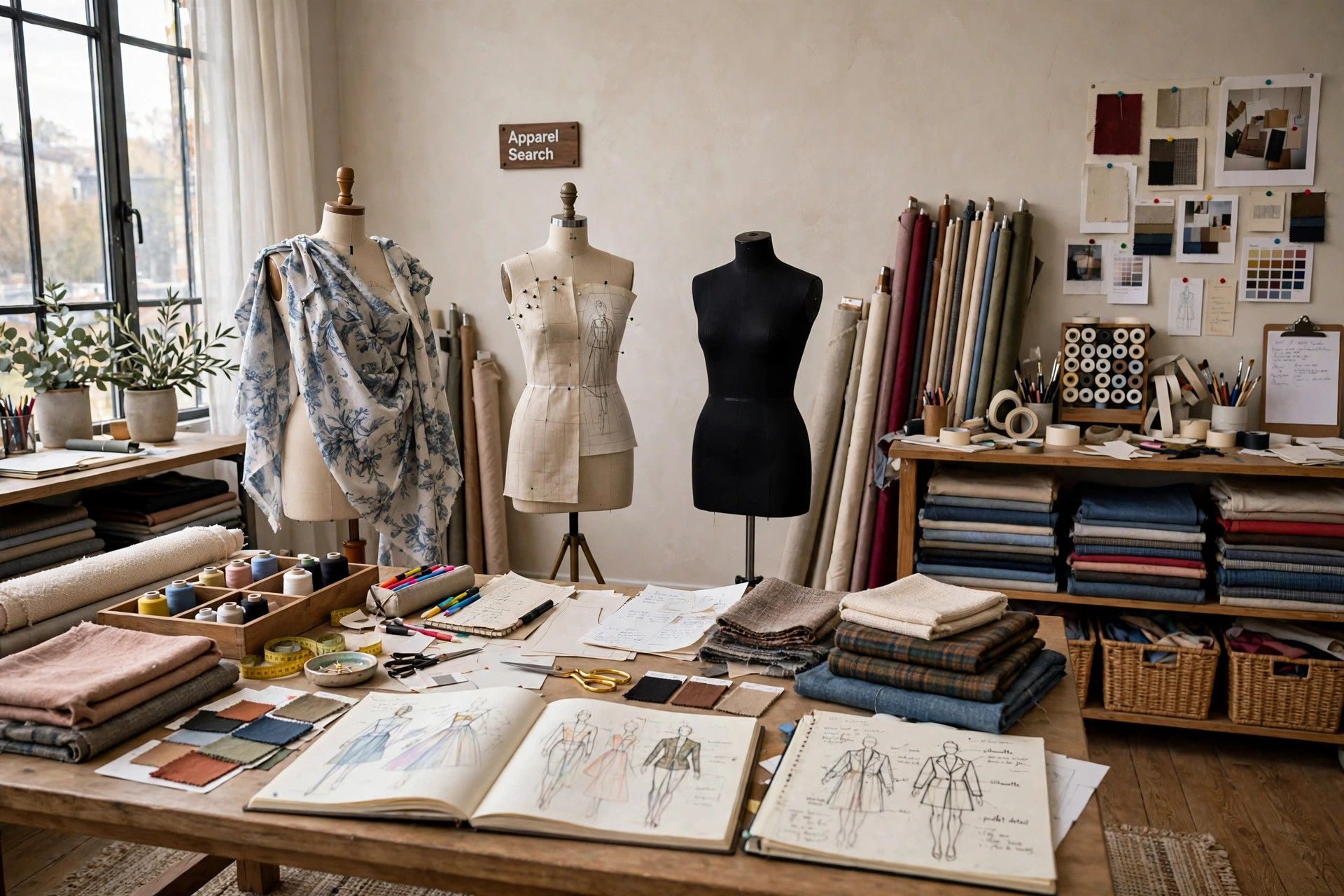
A bachelor’s degree in fashion is a four-year undergraduate degree that prepares you for professional work in designing, making, buying, developing and marketing clothing and related products. It is the standard degree for a complete fashion education: creative or business specialisation, textiles and industry knowledge, general education, and a portfolio or body of project work to show employers. Graduates use it to enter the industry directly or as the required stepping stone to a master’s degree.
The degree is not one single course. A design-led degree fills your timetable with studio classes, fittings and collection projects; a merchandising-led degree fills it with buying, planning, consumer research and retail operations; a textiles-led degree adds fibre and fabric science, testing and product development. Reading real curricula, module by module, is the most reliable way to choose between programs that all use the word fashion in their titles.
BFA vs BS vs BA, and Design vs Merchandising Tracks
Bachelor of Fine Arts (BFA)
The BFA is the professional studio degree. Expect the heaviest concentration of fashion design subjects: drawing and illustration, draping, pattern making, garment construction, textile and print design, computer-aided design, collection development and a final portfolio or graduate collection. General education is present but smaller than in a BA. Choose a BFA if you want to work as a designer and are ready for critique-based studio teaching, long making hours and repeated portfolio reviews.
Bachelor of Science (BS)
The BS emphasises analytical, scientific or business preparation alongside fashion. It is the common form for fashion merchandising, retail, textiles and apparel science and product development degrees, where coursework can include statistics, economics, consumer behaviour, textile testing, supply chain and sourcing. Choose a BS if your target roles are buying, planning, merchandising, product development, quality or technical and commercial management — or if you enjoy the science of fibres and fabrics.
Bachelor of Arts (BA)
The BA places a fashion major inside a broad liberal arts education, with more room for languages, history, media, business minors or a second major, and in some universities for dual degrees combining design with marketing or entrepreneurship. Studio or business depth can be slightly lighter than in a BFA or BS, but flexibility is greater. Choose a BA if you want fashion plus another field, or if you are aiming at communication, styling, journalism, curation or entrepreneurial roles where breadth helps.
Design tracks and merchandising tracks
Across all three degree letters, the decisive split is design versus merchandising. Design tracks assess you mainly through garments, portfolios and visual projects; merchandising tracks assess you through analysis, plans, presentations and commercial projects. Many students discover their real preference only after foundation year, so programs that allow switching tracks after shared first-year classes are worth a close look. Hybrid routes — product development, fashion business, textile design for industry — sit between the two and combine pattern and product knowledge with commercial planning.
What You Study
Although titles vary, bachelor’s curricula in fashion are built from recognisable blocks. Design students typically study fashion drawing and digital illustration, design development, draping and flat pattern making, sewing and garment construction, textile knowledge for designers, fashion history, computer-aided design and pattern software, and collection planning, finishing with a portfolio and often a final collection or show. Merchandising students typically study textiles for buyers, consumer behaviour, fashion marketing, retail buying and mathematics for merchandising, assortment planning and control, sourcing and supply chain, visual merchandising and e-commerce. Textiles and product students add fibre science, fabric structure and testing, colour and print, sustainability and compliance, and technical specification.
Shared learning matters as much as the specialism. Good programs teach sustainability and responsible sourcing as working practice, teach costing so designers understand price and buyers understand construction, and require professional experience through internships, live briefs or industry projects. By the final year you should be completing self-directed projects that resemble real industry briefs, with deadlines, budgets and public presentation.
Portfolio requirements
Design applicants and continuing design students should expect portfolio scrutiny. A strong undergraduate portfolio shows drawing from observation, design development from research to final idea, garment making with clear photographs, textile experimentation and honest process pages. Quality beats quantity: a smaller set of well-explained projects convinces reviewers more than many unexplained images. Merchandising applicants rarely submit art portfolios, but a short, thoughtful analysis of a store or brand can demonstrate the commercial eye programs are looking for. Confirm each school’s format, page or file limits and review dates, and keep editable copies of everything you submit.
Careers
A bachelor’s degree opens the main graduate entry routes in fashion. Design graduates become assistant designers, design room assistants, pattern assistants, textile and surface print designers, stylists and costume assistants, progressing with experience toward designer, senior designer and creative leadership. Merchandising graduates become assistant buyers, merchandise planners and allocators, visual merchandisers, showroom and sales staff, retail managers and e-commerce merchandisers. Product and textiles graduates become product development assistants, technical and quality staff, sourcing assistants and specification writers. The degree also supports adjacent careers in fashion communication, public relations, social media, events and education support roles.
Employers hire the evidence around the degree as much as the degree itself: internships, a coherent portfolio or project record, fluency in industry software, and the ability to explain commercial decisions. Keep project files, photograph garments properly, and learn the standard tools of your track before you graduate.
How It Differs From Associate and Master’s Degrees
An associate degree usually takes about two years and concentrates on immediate, practical entry skills in design or merchandising. It is a sound, lower-commitment start and credits may transfer, but it offers less depth, less general education and fewer routes into graduate-entry schemes. A bachelor’s degree roughly doubles that study, adds specialisation and independent project work, and is the usual minimum for trainee buyer, management and many product roles. A master’s degree, by contrast, assumes a bachelor’s degree first and is for advanced specialisation, research, teaching preparation or career change at a higher level. If you already hold a bachelor’s in another subject, compare a fashion master’s with a second bachelor’s carefully — the master’s is normally the faster, more focused route.
How to Evaluate Programs
- Accreditation and standing: check institutional accreditation, and for art and design programs whether the school holds accreditation from the National Association of Schools of Art and Design (NASAD) or an equivalent recognised body.
- Curriculum in detail: read the year-by-year module list, studio hours and software taught — not just the marketing summary.
- Faculty and facilities: look for teachers with industry experience and for sewing rooms, pattern studios, textile labs and computer suites you will actually be timetabled to use.
- Internships and industry links: ask how placements are found, whether they are required, and which employers took interns recently.
- Outcomes questions: ask what proportion of graduates are in fashion work, which roles they entered, and whether you may speak with recent graduates.
- Student work: judge a program by its graduate shows, portfolios and exhibitions — the standard of ordinary student work matters more than a single star graduate.
Costs and Financing
Bachelor’s costs vary widely by country, by public versus private institution and by whether you live at home or move away, so treat any single figure with caution and build your own budget from official sources. Beyond tuition and fees, budget for housing and food, transport, fabric and materials, pattern paper and notions, printing, portfolio production, software or equipment the program expects, and travel to internships and industry visits. Design students in particular should expect recurring materials costs every term.
Financing usually combines family resources, part-time work that does not damage studio deadlines, scholarships and grants, and student loans where appropriate. Apply for aid early, renew it on schedule, and compare offers on total degree cost and repayment burden rather than on the first year alone. Start with the fashion school financial aid guide, then use each university’s official cost and aid pages for current figures before you accept a place.
Related Guides
Common Questions
What is the difference between a BFA, a BS and a BA in fashion?
A BFA (Bachelor of Fine Arts) is the studio-intensive degree, with the largest share of design, making and portfolio work, and is common for fashion design. A BS (Bachelor of Science) usually carries more mathematics, science, business or technical coursework and is common for merchandising, textiles and product development. A BA (Bachelor of Arts) is a broader liberal arts degree with a fashion major inside it, leaving more room for other subjects. All three are bachelor’s degrees; what matters most is the actual curriculum behind the letters.
Do I need a portfolio for a bachelor’s degree in fashion?
For fashion design tracks, usually yes at some stage — either for admission, for entry to the major after foundation classes, or for progression reviews. Merchandising, textiles and business-focused tracks typically do not require an art portfolio and instead assess academic readiness. Check the exact stage at which your chosen program reviews a portfolio, because preparing one takes months, not weeks.
How long does a bachelor’s degree in fashion take?
A bachelor’s degree is normally designed as a four-year, full-time program, although part-time study, transfer credits, combined bachelor’s and master’s pathways and dual degrees can change the total time. Design programs are difficult to compress because studio sequences build term by term, so plan on the full published length unless an adviser confirms otherwise in writing.
What jobs can I get with a bachelor’s degree in fashion?
Design graduates work as assistant designers, pattern and product development assistants, textile and print designers and stylists, while merchandising graduates work in buying, planning, allocation, visual merchandising, retail management and e-commerce. Textiles and product-focused graduates also enter quality, sourcing and technical roles. Your internship record, portfolio or project evidence and software skills usually matter as much as the degree title itself.
Is a bachelor’s degree better than an associate degree in fashion?
Neither is automatically better — they serve different goals. An associate degree is a shorter, focused route into entry-level work and can transfer into a bachelor’s program. A bachelor’s degree gives broader education, deeper specialisation and access to graduate study and to employers that require a bachelor’s degree for trainee schemes. Choose by the roles you want, the time and cost you can commit, and whether you may want a master’s degree later.