Plus Size Buyer Job Description
Buying extended-size women's ranges — graded properly, styled honestly, priced fairly
A plus size buyer plans women's clothing in extended sizes — typically from size 16 or 18 upward — for customers who have historically been offered narrower choices, later trends and poorer fits than the rest of the market. The work is equal parts technical and commercial: grading every style so it flatters a larger body rather than merely enlarging a smaller pattern, selecting fabrics that drape and support, and deciding the strategic question that defines the department — a dedicated plus label, or extended sizes integrated into the main brand. This description covers that craft in full.
More Buying Job Descriptions by Letter:
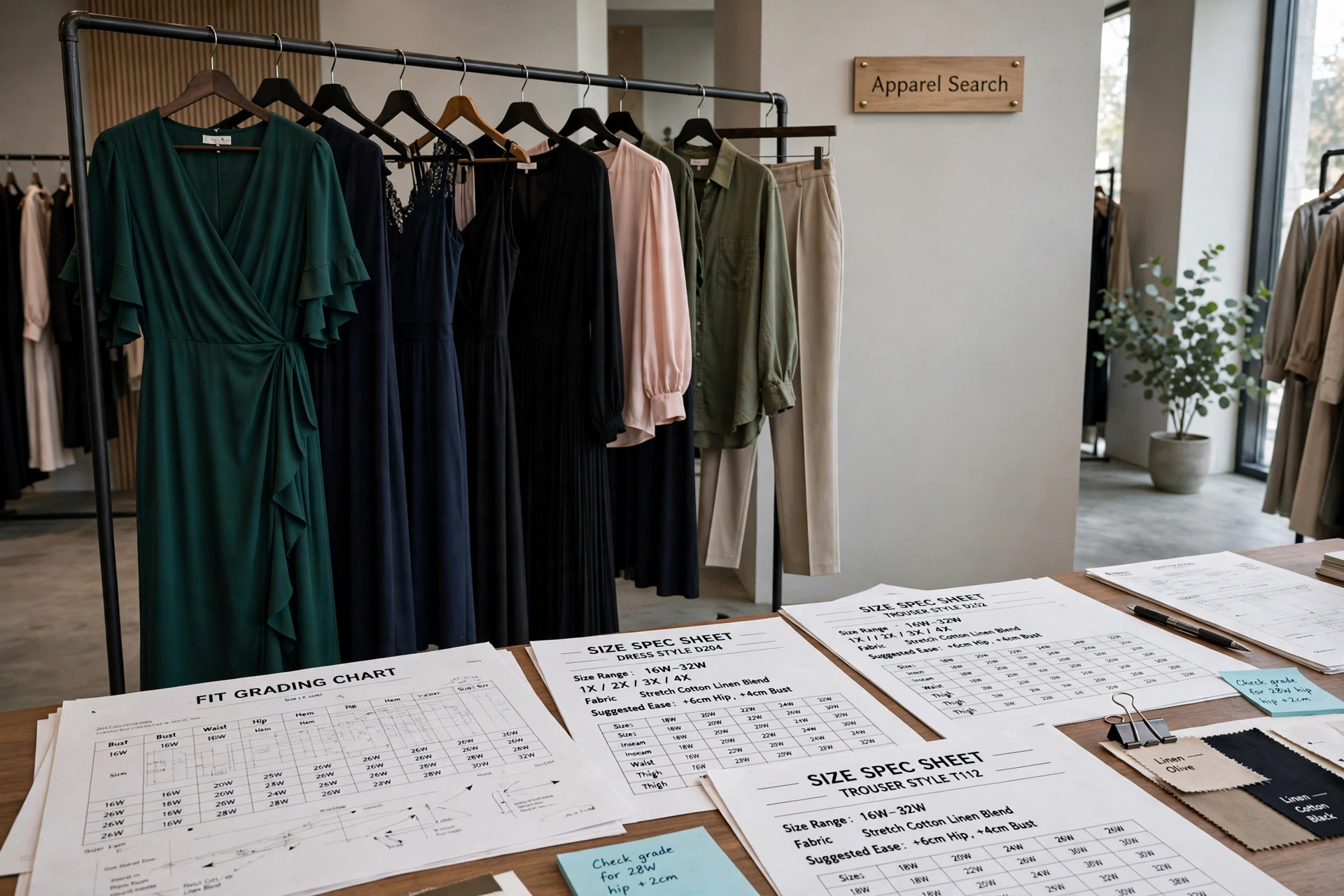
Grading: Why Extended Sizes Are Not Small Patterns Scaled Up
The central technical truth of this role is that bodies do not scale uniformly. As sizes rise, proportions change — bust-to-waist ratios, arm circumference, hip depth and torso length shift in ways a straight percentage grade-up cannot capture. The plus size buyer therefore approves dedicated grade rules and insists on fit models across the full size range, checking that armholes do not bind, that darts sit where a larger bust actually falls, and that trouser rises accommodate a longer torso.
Sample approval is slower and more rigorous than in straight-size buying, and rightly so. A style is not signed off until it has been tried at several size points, not merely the smallest and largest, because fit breaks often appear mid-range. The buyer maintains written fit standards for the department and audits suppliers against them, since a brand's reputation in plus sizes is built almost entirely on whether its customers can trust the fit of the next order.
Dedicated Label or Integrated Range: The Strategic Decision
Every plus size buyer inherits or makes a structural choice. A dedicated label gives the customer a clear destination, dedicated design, marketing in which she sees herself, and sizing logic uncompromised by the main range — but it risks ghettoising the customer and duplicating design costs. An integrated range, where extended sizes sit inside the main brand, offers the same trends at the same moment and removes the stigma of a separate department, yet it demands that every main-range style be genuinely re-engineered for larger sizes rather than merely extended on paper.
Many businesses run hybrids: core fashion integrated into the main brand, with dedicated labels for occasionwear, swimwear or workwear where fit complexity is greatest. The buyer evaluates this structure by customer evidence — where plus customers actually shop within the business, which structure returns fewer fit complaints, and where margin survives the extra pattern and sample costs. The answer is revisited as the customer base grows, not fixed once.
Fabric, Drape and Designing for Real Bodies
Fabric selection in plus ranges prioritises drape and recovery over novelty. Ponte, scuba and stretch crepe that hold shape through a day, jerseys with genuine recovery rather than sag, and structured wovens that skim rather than cling are the workhorses; flimsy fabrics that reveal underwear lines or collapse under their own weight are rejected regardless of trend. Lining is specified more generously — a lined plus garment hangs correctly where an unlined one pulls — and closures are engineered for larger circumferences, from bra-friendly strap widths to reinforced buttons.
Style selection follows the same honesty. The buyer stocks the full wardrobe — work, occasion, casual, swim — rather than assuming plus customers want only cover-up shapes, and avoids the condescension of shrinking the fashion offer while expanding the size offer. Trend translation is deliberate: a season's key silhouette is adapted, with proportions adjusted, instead of being copied or withheld.
Pricing, Size Curves and Customer Loyalty
Extended sizes cost more to make — more fabric, more pattern work, more samples — and the buyer must defend a pricing policy that reflects that without penalising the customer. Transparent value communication matters: where a price step exists, staff can explain the fabric and construction behind it, and promotional strategy avoids the trap of training plus customers to wait for sales the way straight-size customers are trained. Margin modelling includes the cost of extended fit trials explicitly, so they are never the first budget cut.
Size-curve planning is less predictable than in straight sizes, because demand concentrates unevenly — often around the middle of the extended range, with long tails at both ends — and because the customer base is still growing into categories it was previously denied. The buyer therefore protects depth in proven core sizes, tests new categories shallowly, and treats repeat purchase rate as the headline loyalty metric: a plus customer who trusts a brand's fit becomes one of the most loyal customers in retail.
Background and Career Direction
Plus size buyers usually arrive from womenswear buying, garment technology or fit-focused roles, where pattern and grading knowledge was acquired hands-on. Lived familiarity with extended-size clothing is valued by employers, though never asked about inappropriately; what matters demonstrably is fit literacy, supplier management and the commercial judgement to run a growing department. Textiles or fashion-business study supports the technical vocabulary, but fit-session competence is the interview differentiator.
Advancement leads to senior womenswear and divisional buying, product-development leadership for plus brands, or consultancy and brand-launch roles as the extended-size market continues to expand. Buyers who built a department from integrated afterthought to dedicated strength carry a story of genuine commercial change, and that story is increasingly sought after.
Common Questions
Why can't plus sizes just be graded up from straight sizes?
Because body proportions change as sizes rise — bust, arm, hip and torso ratios shift, not just overall measurements. Proper plus ranges use dedicated grade rules and fit models across the full size range, or fit breaks appear, often mid-range.
Is a dedicated plus label better than integrated extended sizes?
Neither is universally better. Dedicated labels offer focused design and marketing; integrated ranges give plus customers the same trends at the same time. Many businesses use a hybrid, and the buyer judges the structure on fit complaints, customer behaviour and margin.
What fabrics work best in plus size ranges?
Fabrics with drape and recovery — ponte, stretch crepe, quality jersey and structured wovens — plus generous lining. Thin, sagging fabrics are rejected, and closures and strap widths are engineered for larger circumferences.