Young Men's Buyer Job Description
Buying for the young men's customer — streetwear, denim and fast-moving trends ahead of the main menswear range
A young men's buyer selects clothing for younger male customers — the teen and young-adult market sometimes labelled teenwear — where fashion moves faster than anywhere else in menswear. The original Apparel Search description reduced the difference from the menswear buyer to one word: style. The young men's customer adopts trends early, drops them quickly, and builds outfits from streetwear, denim, graphic tees and branded casual pieces rather than from tailoring. The buyer who serves him must live at that speed, comparison shopping the market constantly and backing new looks before the evidence is comfortable, while still running the numbers like any other buyer. This page explains the role and how it differs from the main men's desk.
More Buying Job Descriptions by Letter:
What a Young Men's Buyer Does
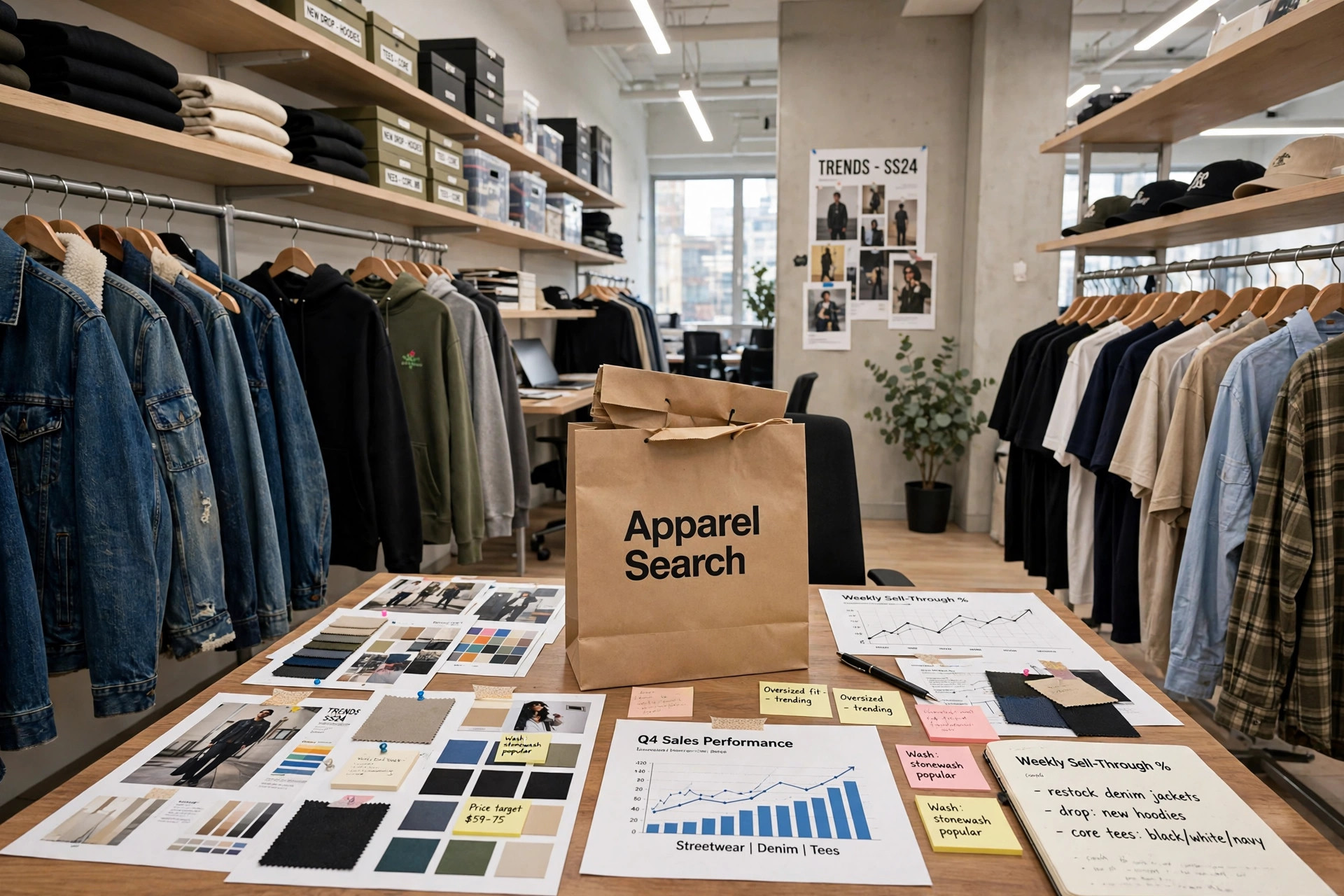
The young men's buyer builds a range around the categories this customer actually wears: denim in current fits and washes, streetwear staples such as hoodies, sweatshirts, cargo and relaxed trousers, graphic and branded T-shirts, casual shirts, jackets and the sneakers-and-accessories edge where clothing meets youth culture. Range planning starts from trend evidence gathered everywhere — the street, social media, music and skate and sport culture, competitors' drops — and is tested in small, fast orders where possible, because a look can peak within the season it arrives. The buyer decides which categories to expand, which to exit, and how the department's short-term trading and long-term direction fit together.
Once ranges are set, the buyer owns the process end to end: pre-season and in-season ordering, delivery into stores on time, and, with the marketing and merchandising teams, the promotional strategy that presents new trends to young customers. Travel is a working reality of the desk — market weeks, supplier visits, store and competitor checks — and it can be required at short notice when a trend or a supplier issue will not wait, so flexibility to travel is a genuine practical requirement employers look for, not a perk.
Streetwear, Denim and the Speed of the Young Customer
Denim is the category's anchor. Fit cycles — skinny, slim, straight, relaxed, wide — and wash treatments signal currency to this customer, and last cycle's fit at full price reads as old stock. The young men's buyer therefore plans denim as a rotating fit-and-wash matrix over a dependable core, reads sell-through by fit within weeks, and is prepared to move depth decisively toward the silhouette the customer is adopting. Streetwear adds a second tempo: branded and graphic product sells on identity and timing, with drops and collaborations creating demand spikes that reward buyers who committed early and punish those who arrive after the moment.
That speed changes the buying maths. Compared with the main menswear desk, the young men's desk accepts shorter product lives, shallower initial buys on unproven looks, and faster markdown decisions. The skill is knowing which risks are the job and which are waste: proven categories such as core denim, fleece and tees carry the department's volume and deserve depth, while experimental pieces earn small tests and rapid repeats. A buyer who treats the whole range as fashion takes needless losses; one who treats it all as continuity misses the customer entirely.
Skills and Abilities the Role Requires
Genuine immersion in the market is the first requirement — the original description was blunt that interest in young men's fashion must be more than passing, because this customer detects a buyer who is guessing. Alongside it, analytical ability is non-negotiable: sales data, projections and presentations drive decisions on this desk as on any other, and working fluently with the sales, administrative, accounting, design, manufacturing and marketing teams depends on understanding the numbers behind the trends. Comparison shopping is a discipline here, not an errand: systematically walking the market to target age groups and their trends accurately is how the buyer's taste gets calibrated.
Communication and negotiation carry the rest. The buyer negotiates price and delivery with suppliers, agrees selling prices and promotions internally, and leads a small buying team whose enthusiasm and organisation shape how the department performs — the original description noted that a buyer's own initiative and informed approach make or break that team leadership. Juggling many responsibilities at a fast pace is the normal condition of the job, and the buyers who thrive on it are the ones who find a slower desk dull rather than restful.
Qualifications, Training and Career Path
Employers typically look for two to three years of buying experience in men's shirts or casualwear and knitwear before handing over the young men's desk at senior level, because that grounding teaches menswear's sizing, suppliers and seasonality while the candidate proves trend judgement. A background in men's clothing more broadly is valued for the same reason: it gives the buyer the product base from which to recognise what is genuinely new for the younger customer. Fashion buying or business qualifications support entry at assistant level, but on this desk a demonstrable, current feel for the customer is weighed unusually heavily alongside the CV.
Progression runs to senior young men's buyer, then into broader menswear buying or divisional responsibility — the trend and speed skills transfer directly to the main men's desk, where they refresh a continuity-led range — or deeper into youth and streetwear brands, where this customer is the whole business. Buyers from this desk also move into trend-led product and range roles on the brand side. Success here is visible quickly, in sell-through figures that show whether the buyer knew what young men would wear next.
Common Questions
What is the difference between a young men's buyer and a menswear buyer?
Style and speed. The menswear buyer serves the whole men's department, built on proven fit blocks, tailoring and continuity. The young men's buyer serves the younger customer, whose range centres on streetwear, denim and graphic casualwear and turns over with trends far faster — so the buying is shallower, quicker and more trend-led.
What experience is recommended before becoming a young men's buyer?
Two to three years in men's shirts, casualwear or knitwear buying is the preparation the original Apparel Search guidance recommends, giving the product and supplier grounding the desk assumes. A genuine, current interest in young men's fashion is treated as a requirement, not a bonus.
Which categories matter most to a young men's buyer?
Denim — where fit and wash cycles signal currency — streetwear staples such as hoodies and sweatshirts, graphic and branded T-shirts, casual shirts and jackets. Core denim, fleece and tees carry the volume; experimental trend pieces are tested small and repeated fast when they work.