Wool Fabric Prices
Unlike raw wool, finished wool fabric has no single market price, because every cloth differs in fibre, weave, weight and finish. This page explains what a wool fabric price contains and how to obtain quotes you can genuinely compare.
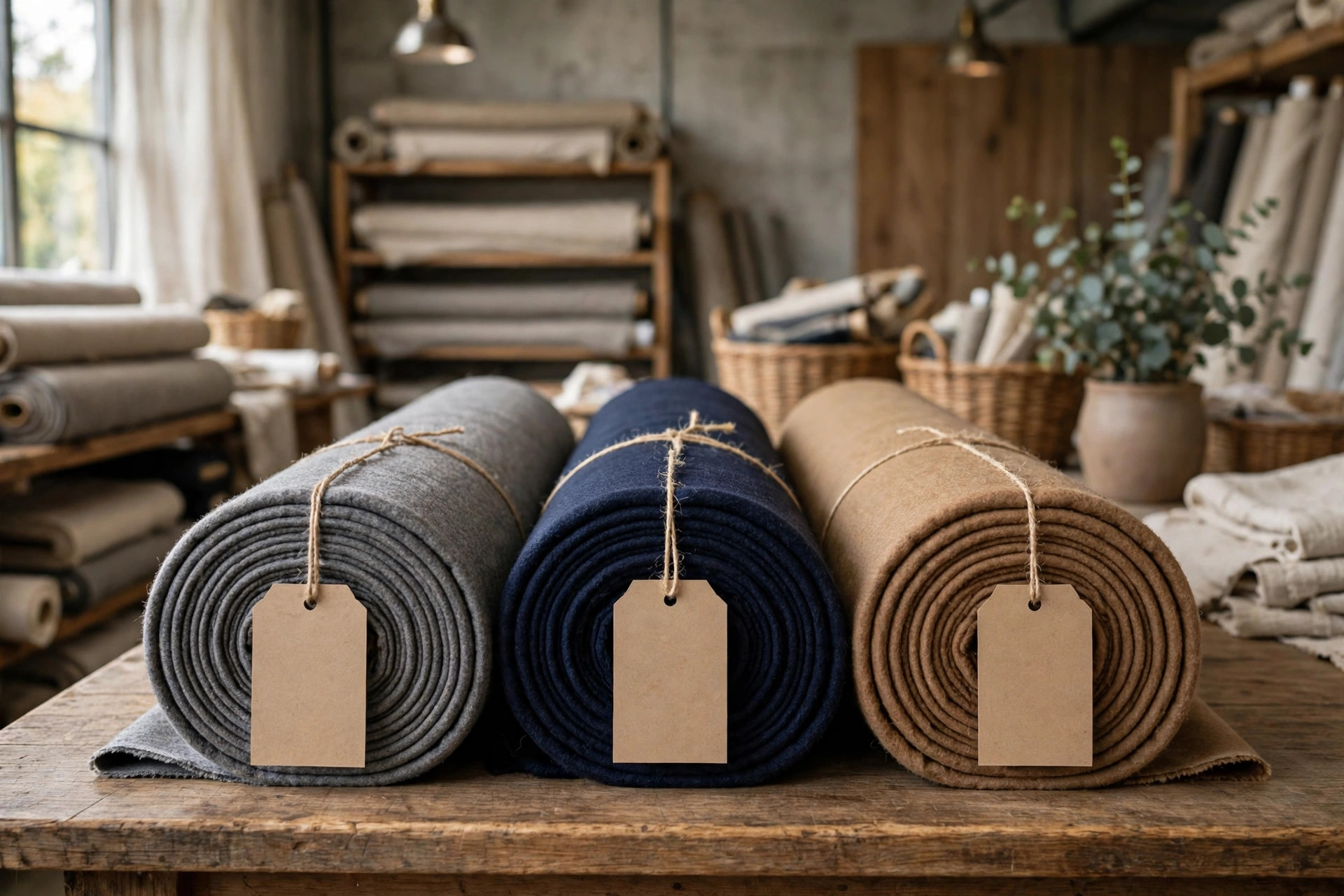
Why Wool Fabric Is Quoted, Not Listed
The original Wool Fabric Prices page was honest about its own limits: it carried no listings and advised readers to consult wool fabric mills directly to request pricing quotes. That remains the practical reality of the trade. Raw wool is traded by graded lot against published market reports, but a finished fabric is a manufactured product with dozens of variables, so mills quote it case by case rather than posting a universal price.
Consider what is inside a single metre of wool cloth. The fibre may be fine Merino, a mid-micron crossbred wool, a blend with polyester or silk, or a lambswool with its own character. The yarn may be worsted, smooth and compact for suiting, or woollen spun, lofty and soft for coating and blankets. The weave, the weight per square metre, the dyeing and the finishing processes each add cost and change performance, so two fabrics both honestly described as wool fabric can differ several times over in price.
That is not a failure of the market; it is information. A mill's quote, given against your specification, is a real price for a real cloth in a real quantity. A published chart could only ever describe an average of unlike things. The skill for a buyer is therefore not finding a magic list, but writing a specification clear enough that two mills are quoting on the same fabric.
What Drives the Price of a Wool Cloth
Fibre fineness is the first driver, because fibre diameter is the single most important factor in raw wool value, and fine apparel wools cost far more per kilo than carpet grades. A lightweight suiting woven from fine Merino starts life with a much more expensive raw material than a heavy coating from a mid-micron wool, before a loom has even been threaded. Blends complicate the comparison in both directions, since a synthetic component can lower cost while adding abrasion resistance, or a silk or cashmere component can raise both cost and handle.
Construction is the second driver. Worsted spinning, which aligns long fibres into smooth yarns, costs more than woollen spinning, and fine, dense weaves consume more yarn and loom time than open, loose ones. Weight matters in the obvious way: a heavy coating uses more fibre in every metre than a tropical suiting. Dyeing and finishing add further layers, from piece dyeing and decating to mothproofing, water resistant treatments and the careful pressing that gives a suiting its final appearance.
Quantity and timing form the third driver. A mill's price for a trial length, a single roll and a season's programme will be three different numbers, because set up costs are spread over very different yardages. Quotes also move with the underlying wool market, so a price held for thirty days may be revised if auction prices shift sharply. Asking how long a quote is valid is as important as asking what it is.
Requesting Quotes You Can Compare
Write the specification before you write the enquiry. State the fibre composition and, if you know it, the micron or quality of wool you need, the intended use, the target weight, the width, the weave or a reference sample, the colours and the quantity per colour. Attach or send a cutting of the cloth you are trying to match whenever one exists. Mills respond faster and more accurately to enquiries that read like a production brief than to a request for the price of wool fabric in general.
Ask each mill the same supporting questions. Is the price ex-mill or delivered, and what does delivery cost to your door? What is the minimum per colour, and the surcharge below it? What is the lead time from order to dispatch, and how long is the quote firm? Are lab dips and a strike-off or sample length included, and what tolerance on weight, width and shade should you expect in bulk? The answers often matter more than a small difference in the headline price.
Finally, connect the fabric quote back to the fibre market. The wool prices and wool yarn prices guides in this section show the upstream costs that mills are working from, and a quick check of them before you negotiate tells you whether a quote movement reflects the market or deserves a question. Buyers who understand both ends of the chain, fibre and finished cloth, consistently buy wool fabric better than buyers who see only one.
Common Questions
Why are there no published wool fabric prices?
Because finished wool fabric is not a standard commodity. Fibre fineness, yarn type, weave, weight, dyeing, finishing and quantity all change the cost, so mills quote against a specification instead of publishing one price.
What should I include when asking a mill for a quote?
Fibre composition and quality, intended use, weight, width, weave or a reference sample, colours, and quantity per colour. Also ask about delivery cost, minimums, lead time and how long the quote stays valid.
Do wool fabric prices follow raw wool prices?
Partly. Fibre is a major cost inside the cloth, so sustained moves in wool auction prices tend to reach fabric quotes, but spinning, weaving, dyeing and finishing costs and the mill's order book also shape the final price.
Looking for Fabric Mills and Suppliers?
Find mills and other fabric suppliers through the Apparel Search fabric directory, and reach the upstream price guides from the Fabric Search hub.