2013 Pantone Color of the Year: Emerald
Emerald 17-5641 — lively, radiant and lush: the gemstone green.
The Pantone Color of the Year for 2013 was Emerald, PANTONE 17-5641. Pantone introduced it in four words: "Lively. Radiant. Lush… A color of elegance and beauty that enhances our sense of well-being, balance and harmony."
Most often associated with brilliant, precious gemstones, the perception of Emerald is sophisticated and luxurious. Since antiquity, this luminous, magnificent hue has been the color of beauty and new life in many cultures and religions — and, as the color of growth, renewal and prosperity, it carried a hopeful brief into 2013: no other color conveys regeneration more than green, and for centuries many countries have chosen green to represent healing and unity.
The Color the Eye Sees Most
"The most abundant hue in nature, the human eye sees more green than any other color in the spectrum," said Leatrice Eiseman, executive director of the Pantone Color Institute. "As it has throughout history, multifaceted Emerald continues to sparkle and fascinate. Symbolically, Emerald brings a sense of clarity, renewal and rejuvenation, which is so important in today's complex world. This powerful and universally-appealing tone translates easily to both fashion and home interiors."
That physiology explains Emerald's confidence. A color the eye is built to register in fine gradations never looks flat: in cloth it shows every difference between a matte wool, a liquid silk and a plush velvet, which is why the same 17-5641 could anchor a whole collection without repeating itself.
Emerald After Dark
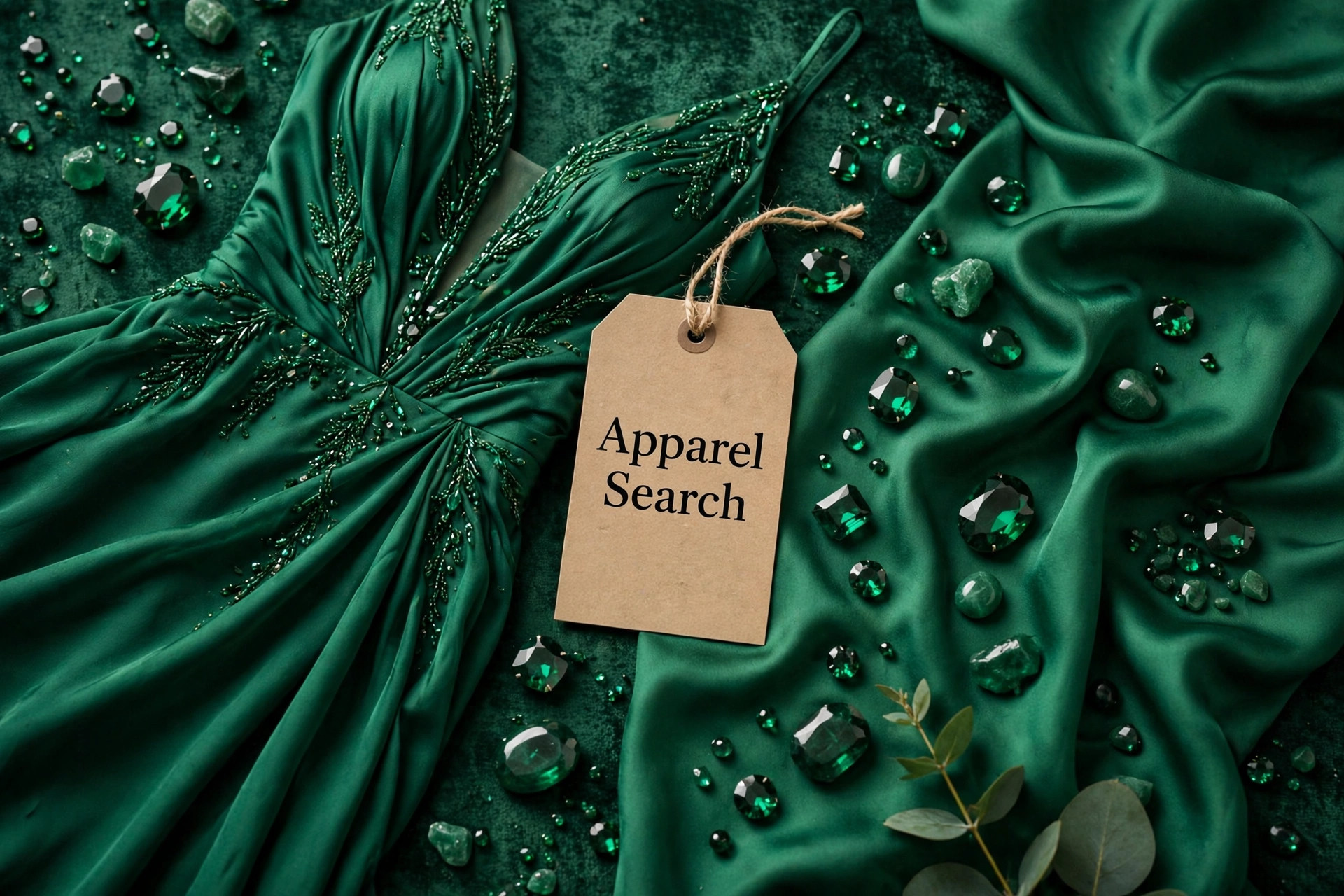
Evening is where the gemstone logic pays off. An emerald silk gown holds light the way a cabochon holds it — moving, deep, slightly mysterious — and emerald velvet deepens the effect further. Gold is its historic partner: the two together are the palette of the gem setting itself, and 2013's red carpets proved the pairing weekly, emerald dresses finished with gold shoes, clutches and earrings.
Black is the sharper alternative, framing the green like a jeweler's tray; white makes it springlike and graphic; navy treats it as a peer rather than a jewel, suitable for tailored day dresses and blazers. The shade also revives the actual gemstone: emerald and green-stone jewelry sold the fantasy at every price level, from precious stones to enamel and glass.
Emerald in the Daytime Wardrobe
Daylight emerald is a different discipline — smaller doses, sturdier fabrics. A fine-gauge emerald sweater against charcoal trousers, an emerald leather tote against a beige coat, emerald suede shoes under denim: each uses the color's saturation as punctuation. In interiors the same punctuation arrived on cushions, painted chairs and glassware, fulfilling Pantone's prediction that the tone translates easily beyond fashion.
What kept 17-5641 from feeling like a costume was restraint. Emerald rewards being the single saturated note in a room or an outfit; surround it with neutrals and it stays a gemstone — surround it with competing brights and it starts a shouting match it did not need.
There is also a historical comfort to the shade. Emerald has signified beauty and new life since antiquity, across many cultures and religions, and healing and unity for centuries of national symbolism. A wearer in 2013 was not adopting an invention; they were joining one of the oldest color traditions there is, cut to a modern silhouette and specified to a modern number.
Photos

Common Questions
Why did Pantone describe Emerald as a color of well-being?
In Pantone's words Emerald is lively, radiant and lush — a color of elegance and beauty that enhances our sense of well-being, balance and harmony. Symbolically it brings clarity, renewal and rejuvenation, qualities Pantone judged especially important in a complex world.
What makes Emerald different from other fashion greens?
Its gemstone depth. Emerald 17-5641 is a saturated blue-green modelled on the precious stone, so it reads luxurious where a leaf green reads casual — the difference between a jewel and a plant, carried in a single swatch of cloth.
Does Emerald suit evening wear better than day wear?
It made its name in evening wear — silk and velvet gowns, gemstone jewelry — but the same shade works in daytime knitwear, a tailored blazer or a leather bag. The formality comes from the fabric and finish more than from the hue itself.