Fashion Industry Network Gadgets
A guide to the fashion industry network gadgets for fashion business readers, bloggers and webmasters.
The Fashion Industry Network gadgets were the business-community members of the Apparel Search gadget family: iGoogle panels carrying fashion industry network content for the trade audience — the manufacturers, suppliers, retailers and service companies who read Apparel Search as a business tool. They could be added to a personalized homepage or embedded in a fashion blog, and they were offered in a range of panel sizes described the gadget way: the first number is the width in pixels, the second the height, so 250 x 500 means a panel 250 pixels wide and 500 tall.
The gadgets were made with the Google Gadgets API for iGoogle, which Google retired on November 1, 2013, after closing the mobile version on July 31, 2012. The gadget code links were removed after that date and the panels no longer function. This page keeps the record of what the network gadgets were, alongside the rest of the gadget family.
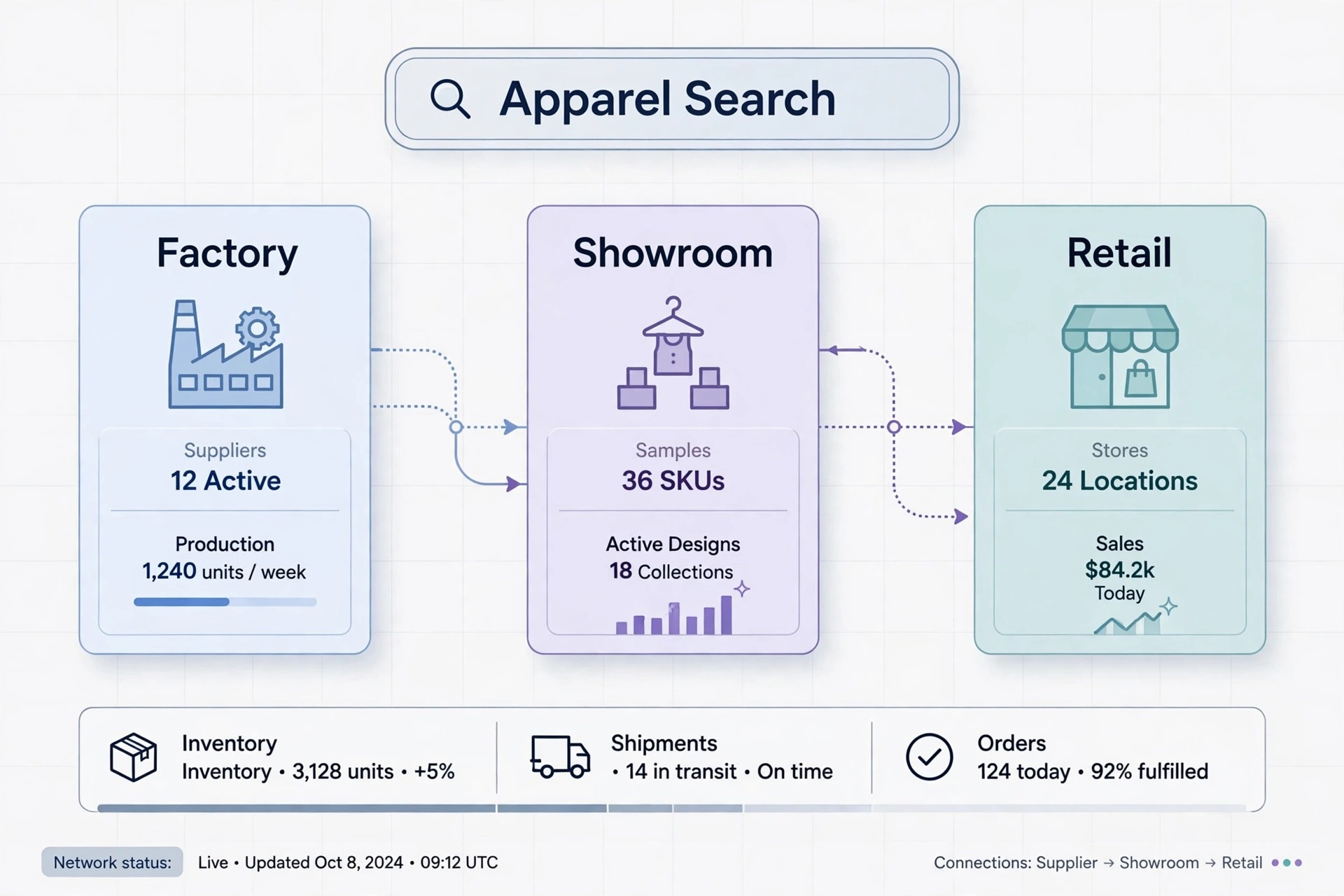
A Gadget for the Trade Side of Fashion
Most of the Apparel Search gadgets served readers as consumers of fashion — designer news, newspaper headlines, shopping search. The network gadgets served the industry itself. Their natural home was the homepage of someone who worked in the trade, or the sidebar of a B2B fashion blog, where a self-updating panel of industry content sat beside mail and market news. It is a small, telling artifact of its period: in the personalized-homepage years, even business-to-business fashion publishing experimented with pushing its content into widgets on other people's screens.
Sizes, Scripts and the Standing Warning
Like the rest of the family, each network gadget was delivered as a script the webmaster pasted into a page, in a choice of widths and heights to fit sidebars and content columns. And like the rest of the family, it carried the program's standing warning in plain language: zero support was offered for adding the script, the script was not guaranteed to always work, and anyone using it did so at their own risk. The gadgets had been created with the Google Gadgets API by a small publisher experimenting with a new format, and the pages said so — an honesty that reads well in hindsight, since the platform risk they disclaimed is exactly what ended the program in 2013.
The Rest of the Gadget Family
The network gadgets sat between the general Apparel Search gadget and the specialist editions for jobs, designers, newspapers and search, and the whole family is documented in the fashion gadgets directory. The surviving Apparel Search services for the trade audience — fashion job search, the employment section and the fashion blog — are linked from this page, together with the fashion widgets and RSS feed pages that describe how Apparel Search content is still syndicated.
Business Readers and Personalized Pages
The network gadgets also record something about their readers: the fashion trade adopted personalized homepages early, because the industry runs on briefings — headlines, listings and market moves checked in spare moments. A panel that refreshed itself fitted a working day built around other people's schedules, from factory time to retail floors.
Common Questions
What do gadget size numbers mean?
The first number is the width in pixels and the second is the height. A 250 x 500 gadget, for example, is a panel 250 pixels wide and 500 pixels tall, sized to fit a sidebar or a column on a homepage.
Who were the Fashion Industry Network gadgets for?
The trade side of the industry — fashion business readers and bloggers who wanted a self-updating panel of fashion industry network content on a personalized homepage or embedded in a fashion blog.
Why are the network gadgets no longer available?
They were built for Google's iGoogle service, which was retired on November 1, 2013. The gadgets stopped working when the platform closed, and the links to their code were removed after that date.