Apparel Search Gadgets
A guide to the Apparel Search industry gadget for fashion industry readers and webmasters.
The Apparel Search gadget was the general-purpose member of the fashion gadget family: a single iGoogle panel assembled from feeds drawn from various Apparel Search Company websites, so a reader's personalized homepage or a webmaster's site could carry a rotating sample of the company's fashion industry content in one place. Rather than following one beat, it represented the whole service — the starting point from which readers discovered the more specialized designer, jobs, newspaper and search gadgets.
Like the rest of the family, it was built with the Google Gadgets API for iGoogle, and it ended when Google ended the platform: the mobile version of iGoogle was retired on July 31, 2012 and the desktop service followed on November 1, 2013. This page keeps the record of what the gadget was, and links onward to the Apparel Search services it once summarized.
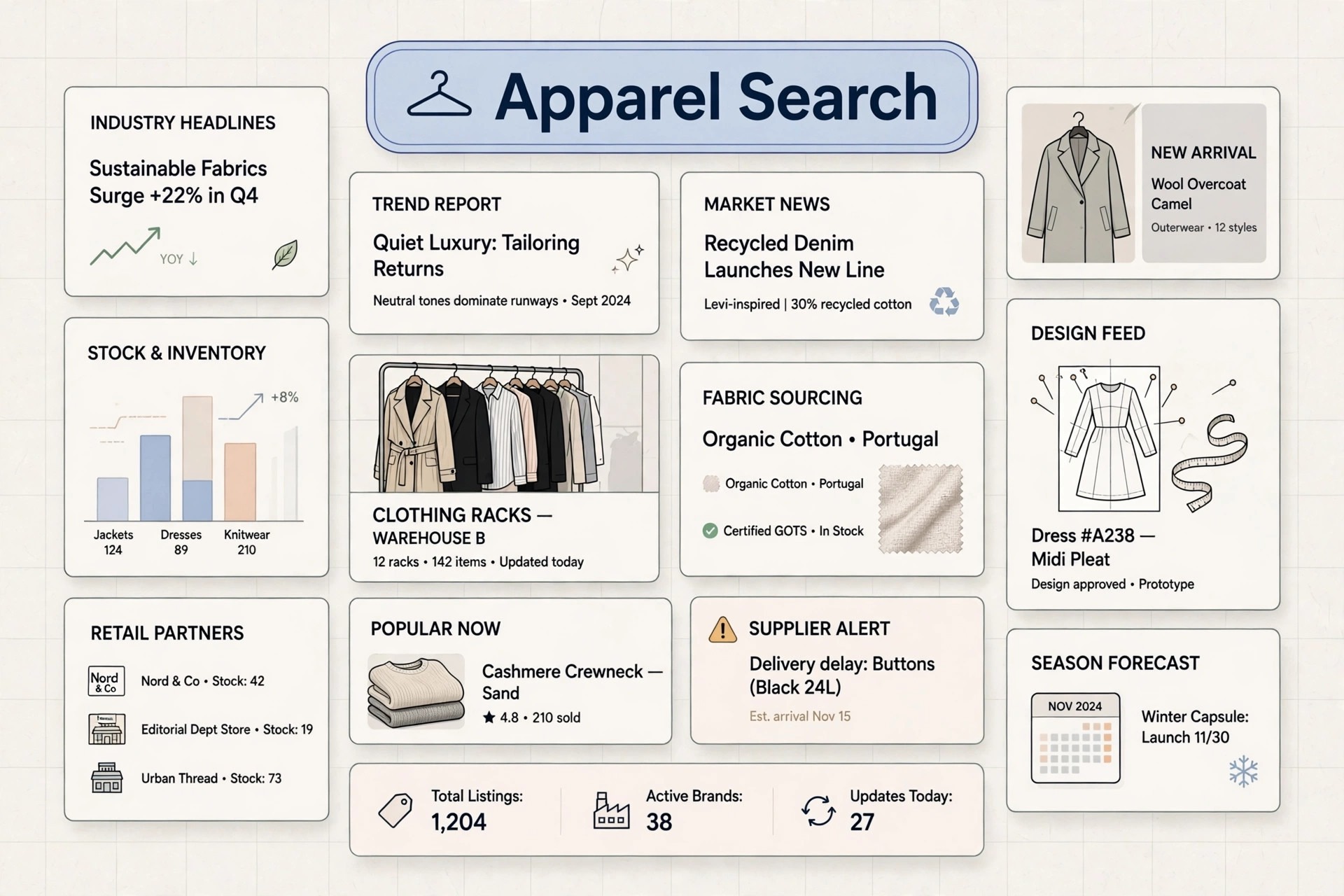
One Panel, Many Websites
Apparel Search has always been a family of connected services rather than a single page: fashion news, an employment section, education and schools coverage, shopping directories and the fashion industry portal. The gadget's job was to compress that breadth into a panel small enough for a homepage column. Its content was assembled from feeds from the various Apparel Search websites, so the mix inside the panel changed as those sites published — a new article, a jobs update or a news item elsewhere in the network surfaced in the gadget without anyone touching it.
Who It Was For
Two audiences used the gadget in two different ways. Individual readers added it to their iGoogle homepages so the fashion industry came to them each morning alongside their mail and weather. Webmasters embedded it in fashion blogs and directory pages, gaining a self-updating industry panel in exchange for a single script paste. Both audiences were really buying the same thing — a feed, dressed as a feature — at a moment when feeds were new enough to need the disguise.
The Services Behind the Panel
Everything the gadget displayed still exists at its own address. Fashion job search and the clothing industry jobs coverage continue in the employment section, fashion schools are covered by the education pages, and fashion news runs on the news pages and the blog. The fashion widgets and fashion RSS pages describe the syndication formats that outlived the gadget program, and the search engines page covers the company's search services. The gadget is retired; the content it carried is not.
The Feed Underneath the Panel
Technically, a gadget was a friendly face on an unfriendly idea: the feed. Behind the panel sat the same RSS technology that let newsreaders poll a website for new items, dressed up so a non-technical reader could use it without knowing feeds existed. That is why gadget content never went stale in the way copied-and-pasted content does — nothing was copied at all. The panel asked the Apparel Search websites what was new each time it loaded, and the answer it displayed was only ever as old as the last visit. When the display layer closed in 2013, the feeds underneath simply carried on serving other readers, which is why the RSS pages remain the closest living relative of this gadget.
Common Questions
What did the Apparel Search gadget show?
It showed a changing mix of fashion industry content drawn from feeds across the Apparel Search websites — news, jobs and other services — gathered into one small panel for an iGoogle homepage or an embedded place on another website.
What happened to iGoogle?
iGoogle was retired on November 1, 2013; its mobile version had been retired earlier, on July 31, 2012. The Apparel Search gadgets were built for that service and stopped working when it closed.
Where can I find the same content now?
At the services the gadget drew from: the fashion news pages, the employment and fashion job search pages, the education pages for fashion schools, and the shopping directory — all linked from this page.