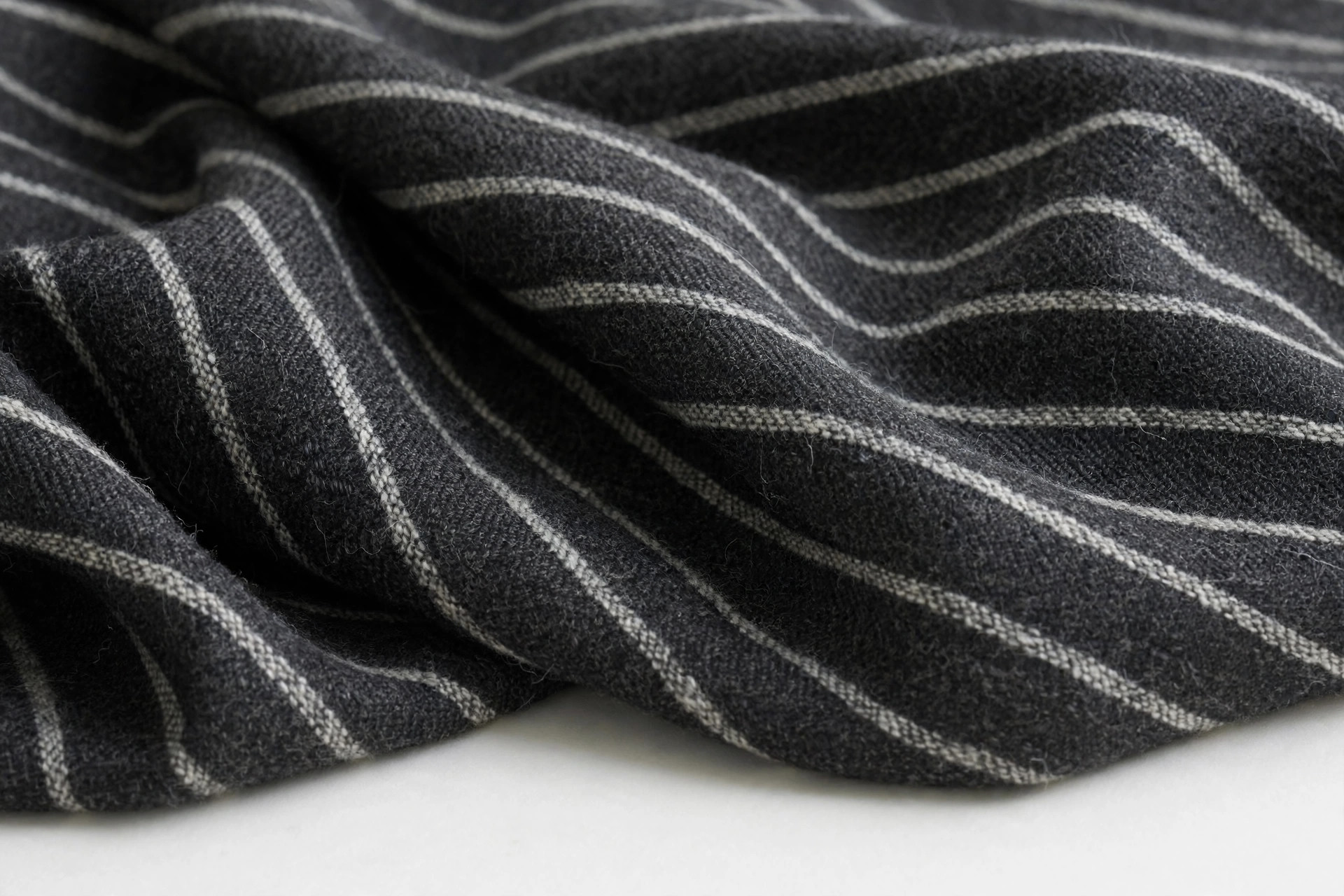
A chalk stripe is a stripe woven into suiting fabric as a soft, slightly fuzzy-edged band — as if drawn on the cloth with tailor's chalk. Unlike the hairline-sharp pinstripe, the chalk stripe is made from a small rope or cluster of yarns, so it reads clearly from a distance, has a broken, chalky texture up close, and usually sits wider apart on flannel and worsted suits. It is the stripe of bold, classic tailoring.
How a Chalk Stripe Is Woven
The stripe is created in the warp: at set intervals, a group of light-coloured yarns — typically a two-ply roving with a soft twist — replaces the ground yarns for the width of the stripe. Because the stripe yarn is bulkier and less tightly twisted than a pinstripe's single fine thread, its edges feather slightly into the ground, producing the chalk-drawn effect that gives the pattern its name.
Chalk stripes are most at home on wool flannel, whose napped surface blurs the stripe further, but they also appear on smoother worsteds for a crisper version. Spacing is generally wider than pinstripes — the suit reads as stripes first, cloth second.
Where Chalk Stripes Are Worn
- Business and city suits — navy or charcoal flannel with a white or pale-blue chalk stripe is the archetype.
- Double-breasted suits — the assertive stripe pairs with the assertive cut.
- Blazers and trousers — chalk-striped flannel trousers are a cold-weather classic.
- Women's tailoring — borrowed for power-dressing suits and coats since the 1980s.
FAQs
- What is the difference between a chalk stripe and a pinstripe?
- Width and edge. A pinstripe is a single hairline thread — sharp and subtle. A chalk stripe is a small cluster of yarns, wider, softer-edged, and bolder, like a line drawn in chalk.
- Is a chalk stripe formal?
- It is classic business dress — confident rather than conservative. Very bold chalk stripes on flannel lean traditional and are usually kept to daytime tailoring, not evening wear.
- What shirt and tie work with a chalk stripe suit?
- Plain shirts (white or pale blue) and small-pattern or solid ties: the suit's stripe is the pattern, everything else supports it.
Detailed Guides: see Chalk Stripe in the glossary A–Z listing of the Apparel Search fashion glossary for related terms.