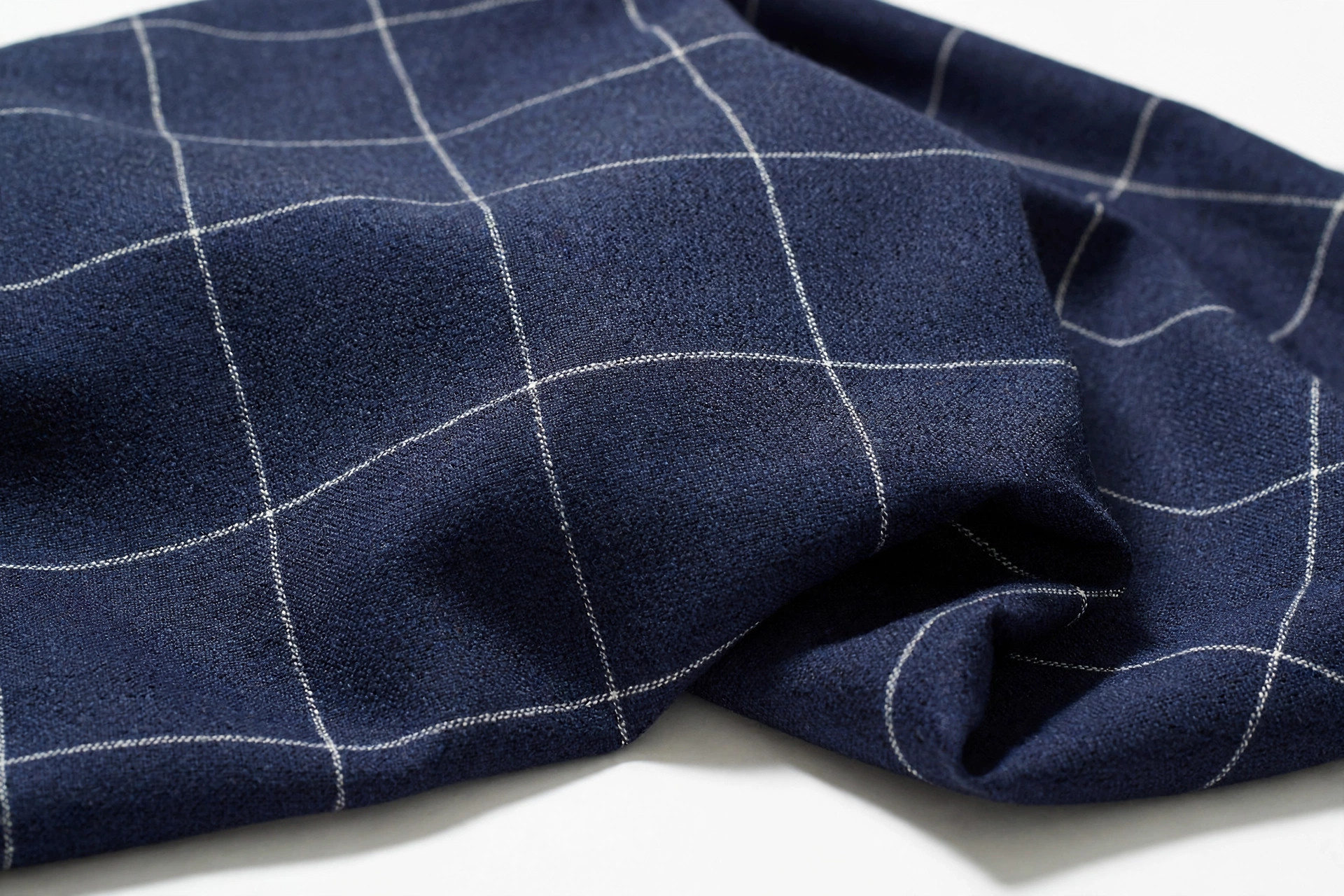
A windowpane check is a large, open check pattern formed by thin contrasting lines — usually a single fine stripe — crossing at wide intervals to divide the cloth into big squares or rectangles, like the panes of a window. The ground stays dominant and the lines stay delicate, so windowpane reads as a quiet suit pattern from across a room and a precise grid up close. It is a cornerstone of modern tailoring for suits, jackets, and trousers.
How Windowpane Check Is Woven
Windowpane is woven in at the loom: a contrasting yarn is introduced in both warp and weft at calculated wide intervals on a plain or twill ground, so the crossing lines form true squares where they meet. Because the panes are large, pattern matching at the centre front, pockets, and sleeves is a visible mark of tailoring quality — the lines must run unbroken around the garment.
The scale varies from bold overchecks on tweed jackets to the faint, chalky windowpanes on city worsteds, where the line may be a soft blue or burgundy thread barely stronger than the ground. Double windowpanes use paired fine lines for a dressier, more deliberate grid.
Where Windowpane Checks Are Worn
- Suits — navy or grey windowpane is the modern business classic, softer than stripes.
- Sport jackets — larger, bolder panes on tweed and flannel for country styling.
- Trousers and skirts — the grid elongates when panes are rectangular, taller than wide.
- Shirts and dresses — fine windowpanes scale down to shirting and shirt dresses.
FAQs
- What is the difference between windowpane and plaid?
- Plaid builds its pattern from multiple wide bands of several colours. Windowpane is a single thin line on a plain ground forming large squares — minimal and graphic by comparison.
- Is windowpane check hard to match with other patterns?
- It is one of the easiest checks to wear: its lines are thin, so plain shirts or small-pattern ties sit comfortably with it.
- Does windowpane suit shorter builds?
- The large scale can overwhelm very petite frames; choosing a smaller pane or a fainter line keeps the effect in proportion.
Detailed Guides: see Windowpane Check in the glossary A–Z listing of the Apparel Search fashion glossary for related terms.