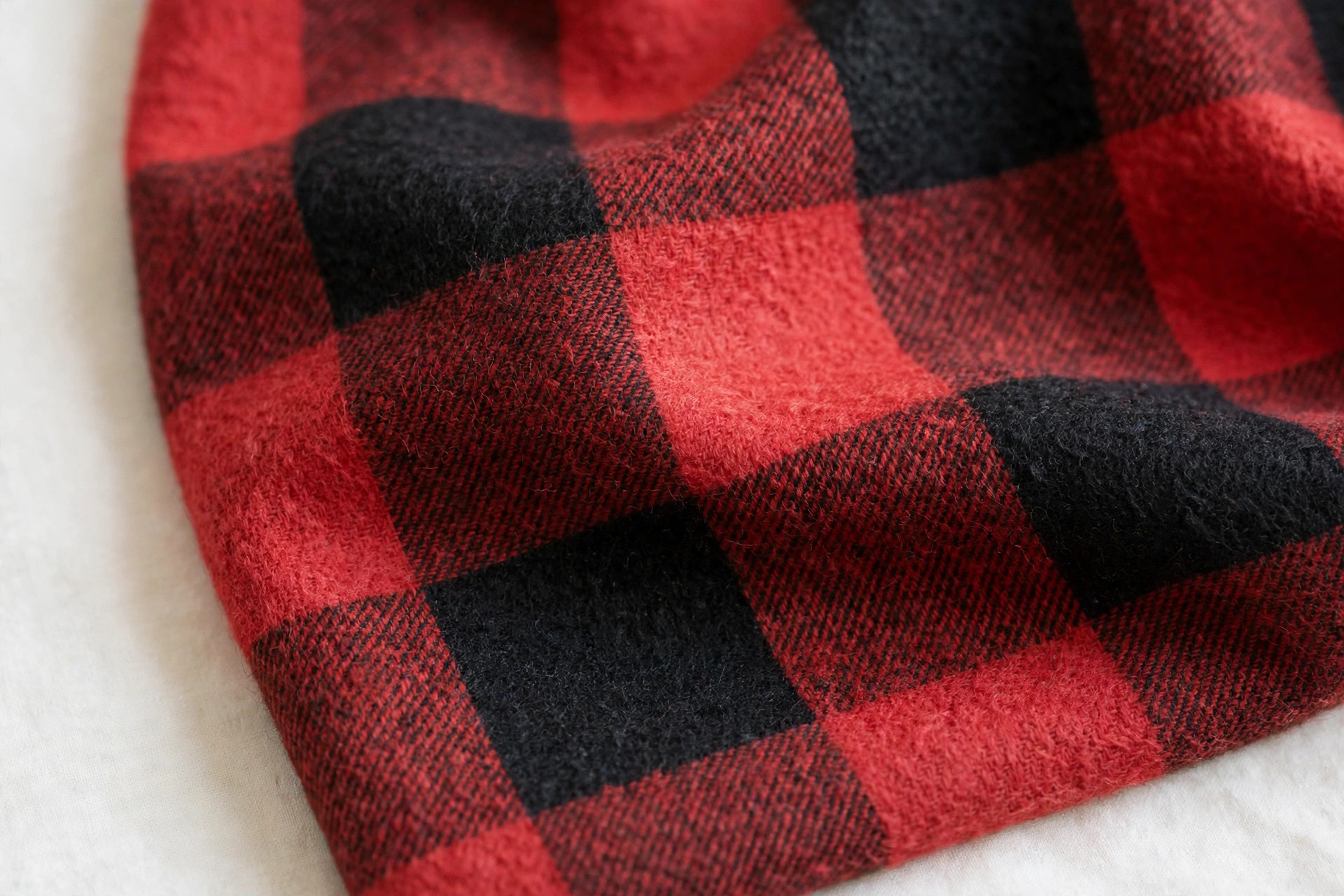
Buffalo check (also called buffalo plaid) is a large-scale check of two colours in wide, equal bands woven both ways, so the crossing creates three tones: solid colour where each band crosses itself, and a mixed tone where the two colours cross. The classic is red and black, introduced by Woolrich in the 1850s for lumberjack shirts — company lore ties the name to a herd of buffalo kept by the pattern's designer — and the pattern remains the emblem of rugged outdoor clothing, flannel shirts, and winter accessories.
How Buffalo Check Is Made
The pattern needs only two yarn colours and a plain or twill weave: wide warp bands of red and black are crossed by identical weft bands. Where black crosses black and red crosses red, the blocks stay pure; where they cross each other, the weave mixes them into a darker maroon middle tone — that automatic third shade is what gives buffalo check its richness despite its simple recipe.
- Versus gingham — gingham is the same two-colour logic at small scale in white and a colour, giving a lighter, summery check.
- Versus tartan — tartans use multiple colours and unequal bands with set patterns; buffalo check is strictly two colours, equal bands.
Where Buffalo Check Is Used
- Flannel shirts — the lumberjack shirt is the defining garment, usually brushed cotton flannel.
- Jackets and overshirts — wool buffalo check 'mackinaw' jackets and shirt-jackets.
- Winter accessories — scarves, hats, blankets, and trapper caps.
- Home and holiday décor — the red-and-black version is a rustic Christmas staple.
FAQs
- Why is it called buffalo check?
- Woolrich's 1850s introduction is credited with the name — company lore ties it to a herd of buffalo owned by the pattern's designer. The name stuck to the large red-and-black check.
- Is buffalo check the same as buffalo plaid?
- Yes — the two names are used interchangeably for the same pattern; 'check' is the more precise term for the two-colour block design.
- What colours does buffalo check come in?
- Red/black is classic; black/white, navy/black, and green/black are common modern versions, all keeping the two-colour equal-band structure.
Detailed Guides: see Buffalo Check in the glossary A–Z listing of the Apparel Search fashion glossary for related terms.