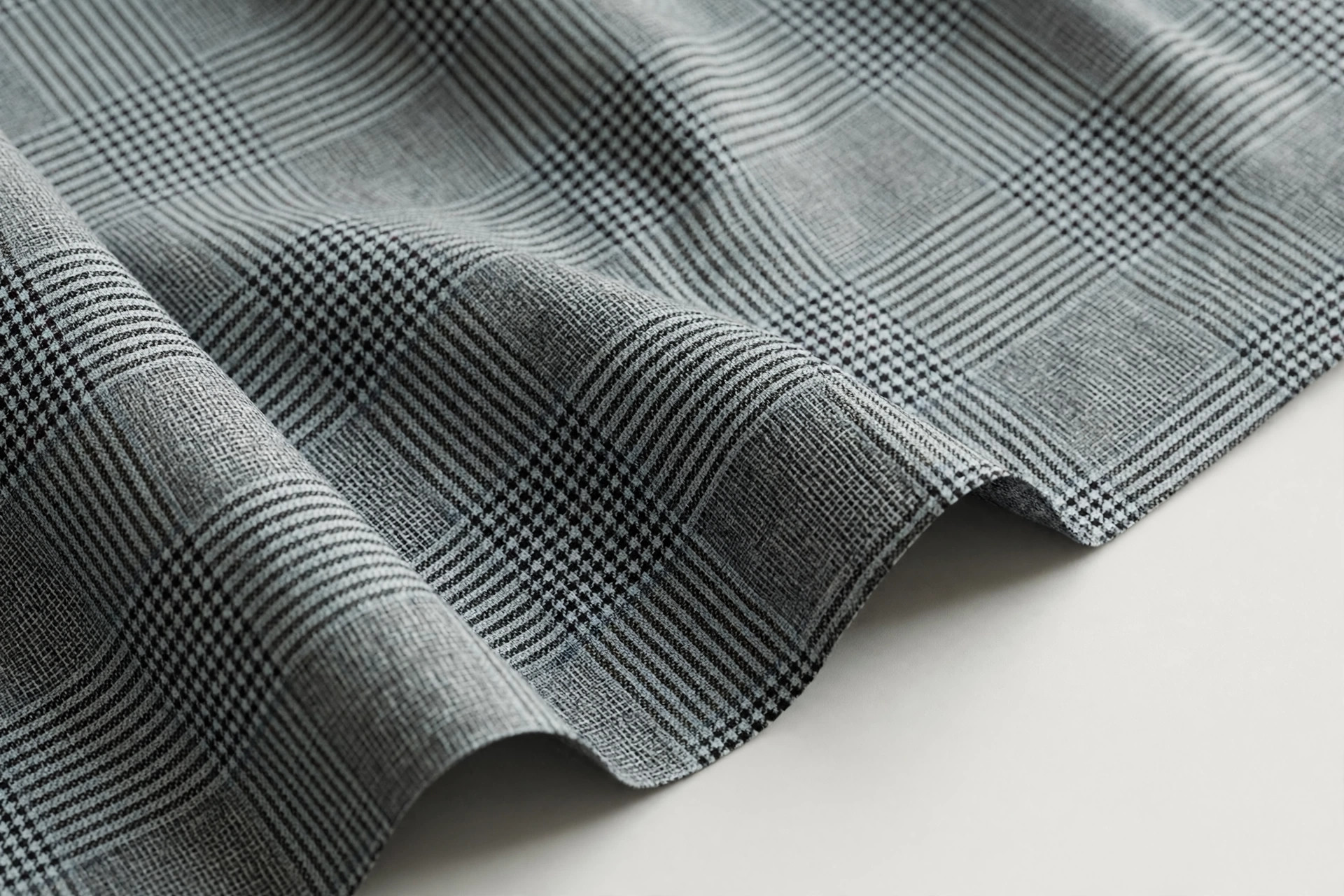
Glen check — also called glen plaid and, in its larger coloured form, Prince of Wales check — is a woven twill pattern combining small and large checks: blocks of houndstooth-like broken checks alternate with sections of fine stripes, producing a muted, textured grid that resolves into a soft check at a distance. It originates with the Glenurquhart estate in Scotland in the 19th century and became a suiting standard through the Duke of Windsor's famous Prince of Wales wardrobe.
How Glen Check Is Woven
Glen check is a true woven pattern, built in the warp and weft with the same sequence of dark and light yarns both ways — traditionally groups of dark and light threads in a 2-and-2 twill — so the crossing creates four effects at once: solid dark, solid light, a small check, and a broken houndstooth-like check. That four-part construction is the fingerprint of a genuine glen check; printed imitations copy the look without the weave logic.
The classic colourway is black, grey, and white, deliberately low-contrast. The Prince of Wales version overlays a fine coloured line — often blue, rust, or lilac — as an overcheck on the larger scale, adding the touch of colour that made the pattern famous.
Where Glen Check Is Worn
- Suits — grey glen check is a boardroom staple, patterned yet conservative.
- Sport jackets and trousers — larger-scale glen checks in country colourways.
- Women's tailoring — glen check suits and coats recur every autumn season.
- Overcoats — the muted grid suits large garment areas without shouting.
FAQs
- Are glen check, glen plaid, and Prince of Wales check the same?
- Essentially yes: glen check and glen plaid name the same Glenurquhart pattern; 'Prince of Wales check' is widely used for the version with a coloured overcheck line popularised by the Duke of Windsor.
- Is glen check a plaid?
- In American usage 'plaid' covers most woven checks, hence 'glen plaid'. Purists reserve plaid for tartan-style patterns; the glen is a check built from twill blocks.
- What patterns can I wear with a glen check suit?
- Plain shirts, or stripes fine enough to differ clearly in scale from the check; ties in solid, dot, or small neat patterns.
Detailed Guides: see Glen Check in the glossary A–Z listing of the Apparel Search fashion glossary for related terms.