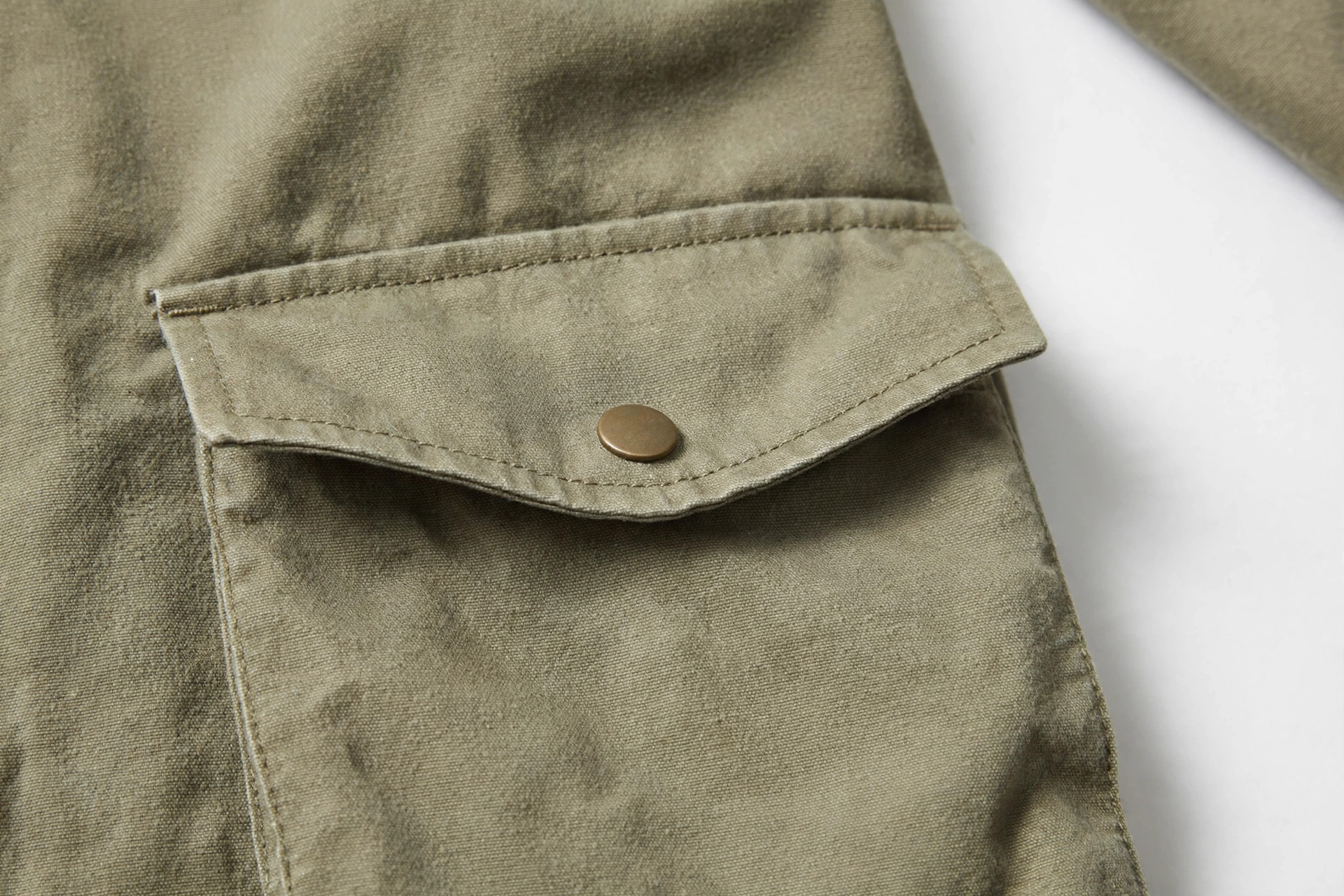
A flap pocket is any pocket whose opening is covered by a flap — a shaped piece of fabric attached above the opening that hangs down over it. The flap may cover a patch pocket sewn on the outside of a garment, or it may be set into a welt opening on a tailored jacket. Flaps protect the contents, keep the opening from gaping, and add a deliberate design detail.
Flap Pockets in Tailoring and Utility Wear
On a suit or blazer, the flap pocket is a welt pocket with a flap inserted into the opening. Traditional etiquette says the flap can be tucked in for a sleeker look, though most wearers leave it out. Flap pockets read slightly less formal than plain besom (double-welt) pockets, which is one reason black-tie jackets omit flaps.
On utility and outdoor clothing — field jackets, safari jackets, cargo styles — flaps cover large patch pockets and are often secured with a button, snap, or hook-and-loop fastening so contents stay put when you move or bend.
Common Flap Variations
- Straight flap — a simple rectangle; the tailored standard.
- Pointed or ticket-style flap — shaped or angled for a sportier look.
- Button-through flap — fastens down over a bellows or patch pocket on work and military jackets.
- Hacking pocket flap — set at an angle, borrowed from English riding jackets.
FAQs
- Should a jacket flap be tucked in or left out?
- Either is acceptable on a lounge suit. Leaving it out is the conventional choice; tucking it in gives a cleaner line. Formal evening jackets usually have no flap at all.
- Is a flap pocket the same as a patch pocket?
- No. A patch pocket is sewn onto the outside of the garment; a flap is the cover over an opening. Many casual jackets combine them — a patch pocket with a flap on top.
- Why do flaps have buttons on work jackets?
- The button keeps the flap closed so tools and contents do not fall out and rain does not get in — a practical detail inherited from military uniforms.
Detailed Guides: see Flap Pocket in the glossary A–Z listing of the Apparel Search fashion glossary for related terms.