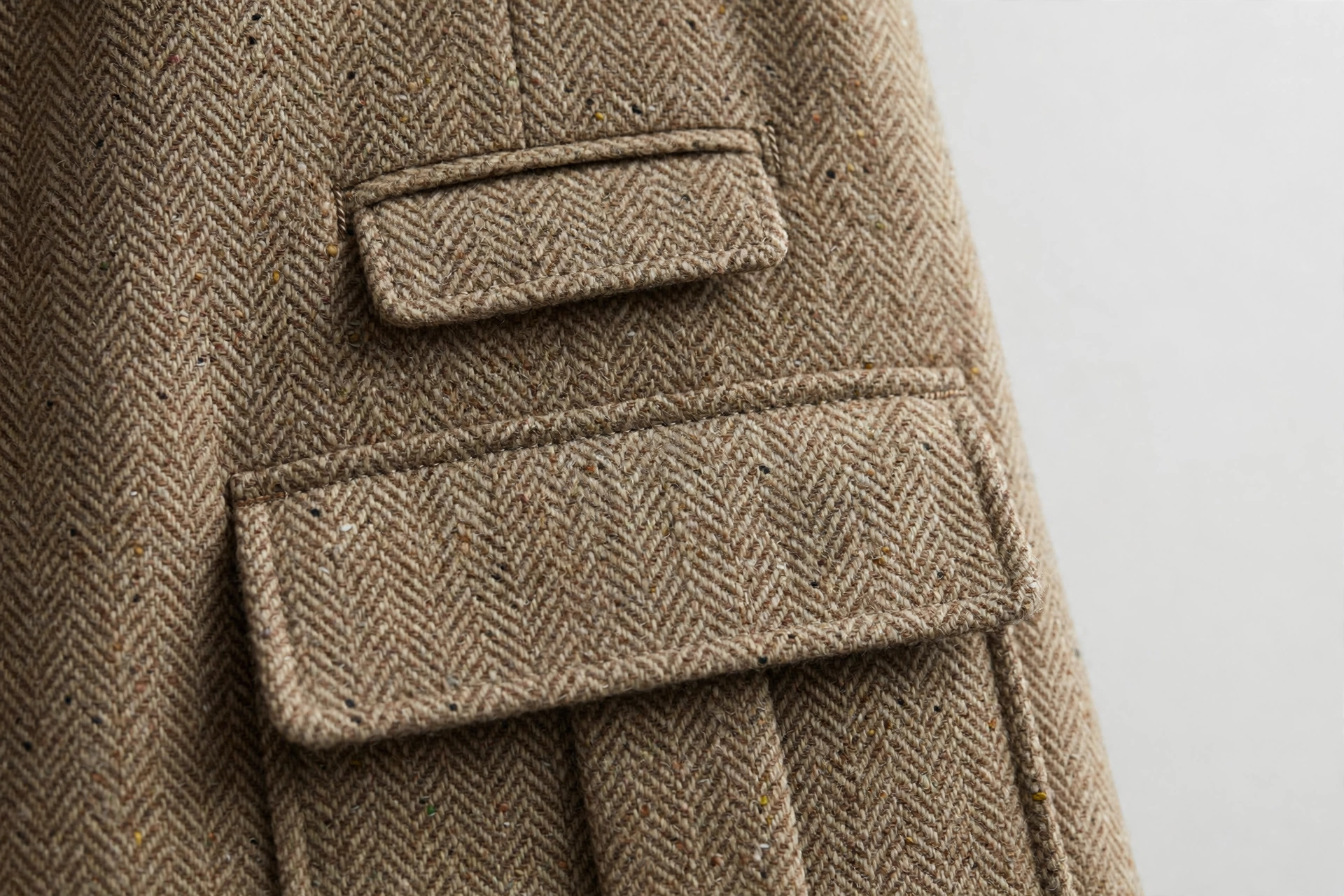
A ticket pocket is a small additional pocket set just above the main flap pocket on the right side of a jacket, usually with its own smaller flap. It dates from the age of rail travel, when a gentleman needed his return ticket somewhere he could reach it without disturbing the rest of his pockets. On modern jackets it survives as a mark of traditional, often British-influenced, tailoring.
History and Placement
The ticket pocket belongs to the world of country and sporting tailoring — tweed jackets worn for travel, racing, and the theatre, where a ticket, coins for a cab, or a folded banknote needed a home of their own. It sits above and slightly overlapping the line of the right hip pocket, following the same angle if the pockets are slanted (hacking style).
Because it is an extra, visually busy detail, ticket pockets appear on sport coats, tweeds, and casual suits rather than on formal or business-minimal tailoring.
Wearing a Ticket Pocket Today
- It suits textured, country-leaning cloths: tweed, flannel, corduroy, and checks.
- Use it as intended — for genuinely small things: a ticket, a key card, folded cash.
- Overfilling it spoils the jacket's line faster than overfilling a main pocket, because the pocket is small and high on the hip.
FAQs
- Why is a ticket pocket only on the right side?
- Convention places it above the right hip pocket, reachable by the right hand — the side where tickets and change were traditionally kept. Left-side versions are rare curiosities.
- Is a ticket pocket formal?
- No. It is a sporting, country detail. It is perfectly at home on a casual suit or blazer but is left off the most formal tailored jackets.
- What should you put in a ticket pocket?
- Flat, light items — exactly what it was built for: tickets, cards, a key, or folded notes.
Detailed Guides: see Ticket Pocket in the glossary A–Z listing of the Apparel Search fashion glossary for related terms.