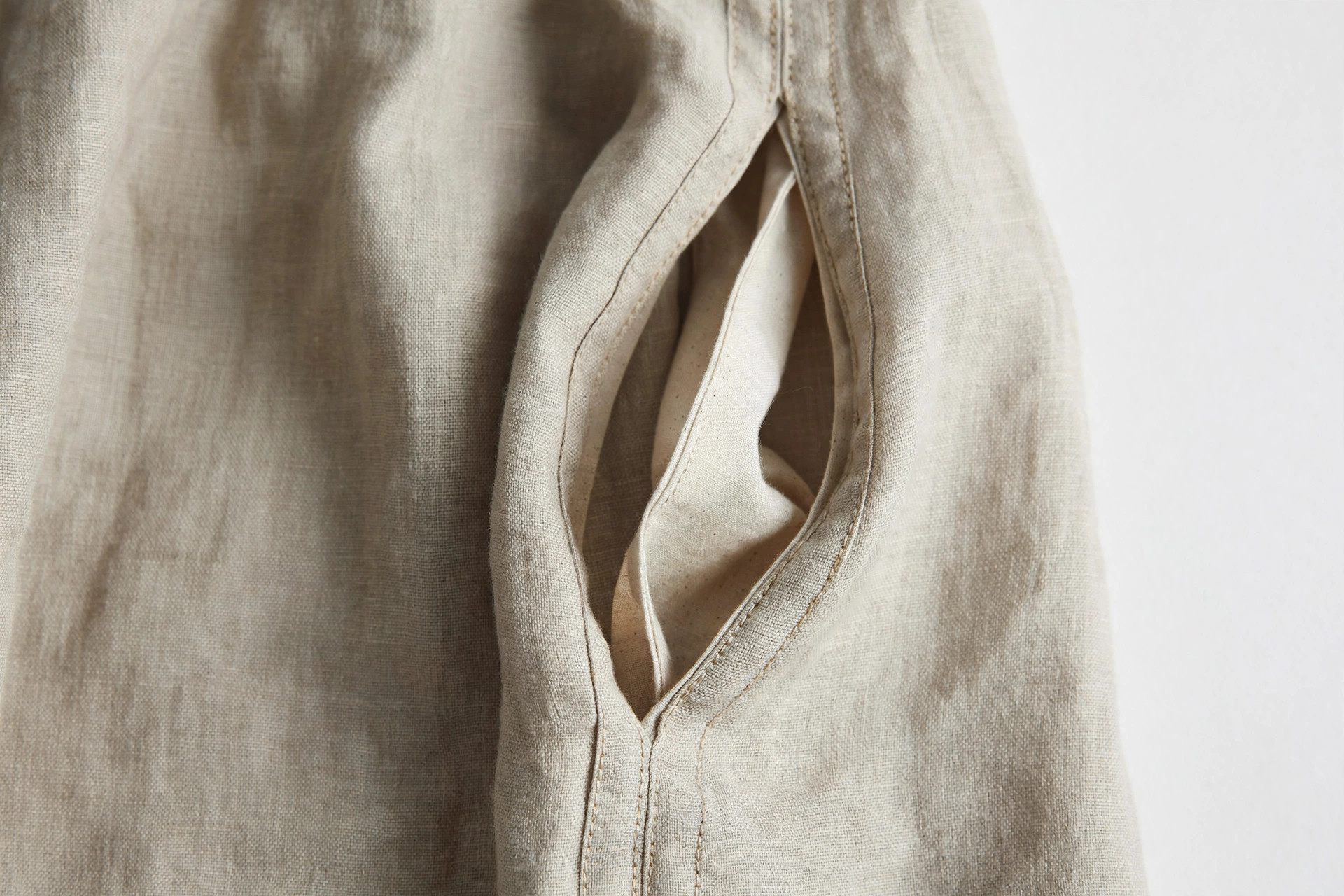
An in-seam pocket is a pocket whose opening lies exactly along a seam of the garment — most often the side seam of a skirt, dress, or pair of trousers. The pocket bag hangs inside, and when the garment is worn the opening follows the seam line so closely that the pocket is effectively invisible until you slip a hand into it.
Why Designers and Wearers Love It
In-seam pockets add function without changing a garment's silhouette — no bulk on the surface, no break in a print, no interruption to a clean line. That is why their presence in a dress or skirt is so often celebrated: the garment keeps its look and gains somewhere to put a hand, a key, or a phone.
The trade-off is capacity and strength. Because the opening is part of a structural seam, an in-seam pocket is best for light loads; heavy items pull on the seam and can make it gape.
How It Is Constructed
- The pocket bag pieces are sewn into the seam allowance as the seam itself is constructed.
- The seam is left open for a short stretch — the hand's width — where the pocket mouth sits.
- Bar tacks or careful backstitching at the top and bottom of the opening take the strain where the hand enters.
In tailored trousers a related form, the on-seam or seam pocket, sits at the side seam under the waistband and serves as the standard front pocket.
FAQs
- Are in-seam pockets strong?
- They are strong enough for everyday light items, but the opening interrupts a structural seam, so very heavy loads can strain or distort it.
- Why don't all dresses have in-seam pockets?
- Cost and construction time — each pocket adds cutting, sewing, and pressing steps — and some very fine or bias-cut fabrics cannot support one cleanly.
- What is the difference between an in-seam and an on-seam pocket?
- The terms overlap and are often used interchangeably. Both hide the opening in a seam; 'on-seam' is the term more often used for trouser front pockets.
Detailed Guides: see In-Seam Pocket in the glossary A–Z listing of the Apparel Search fashion glossary for related terms.