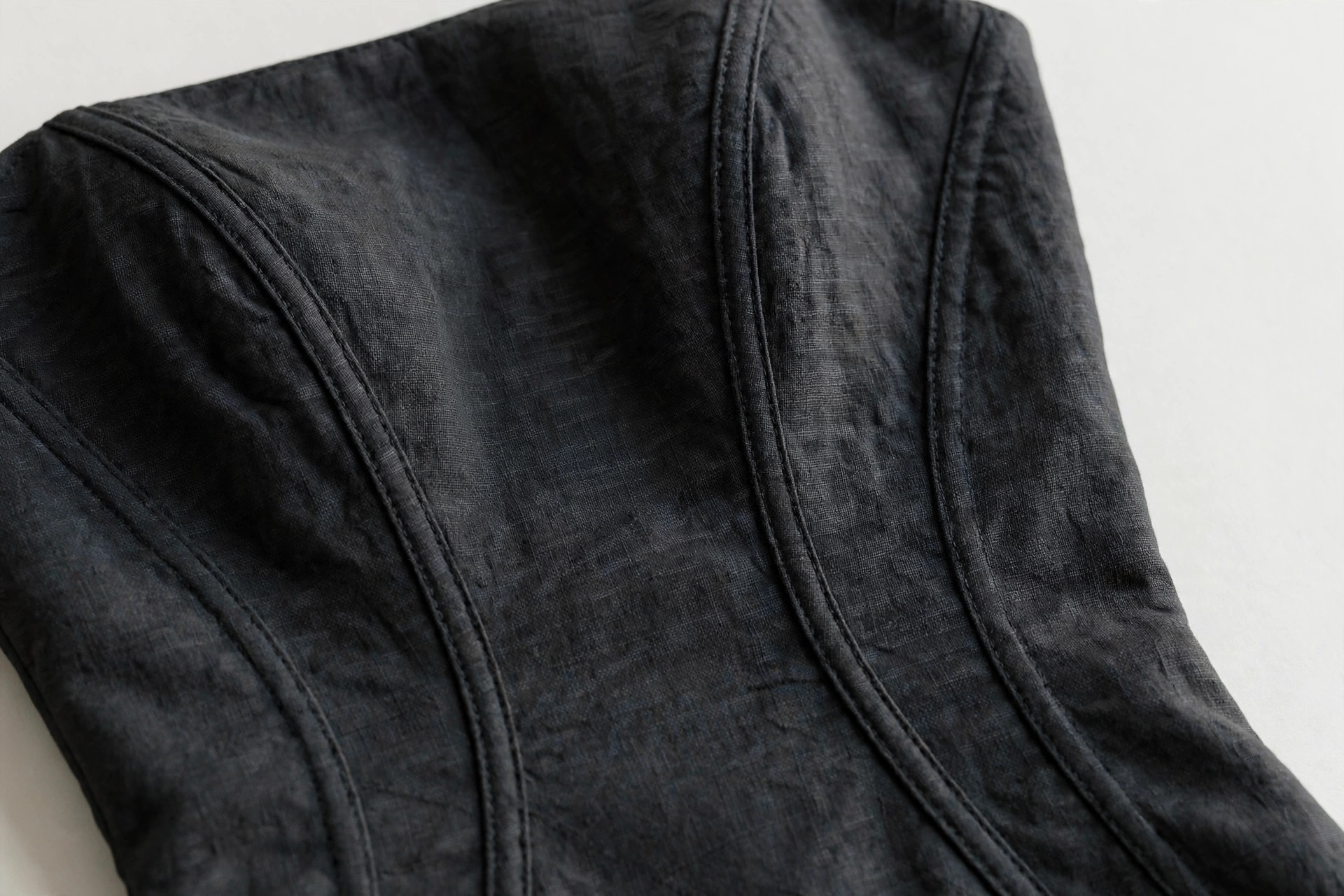
A princess seam is a long, curved seam that runs over the bust — from the shoulder or the armhole down to the hem — dividing the front and back of a garment into panels. Instead of using darts to shape flat fabric to the body, the curve of the seam itself does the shaping, giving a smooth, close, uninterrupted fit. It is named for the Princess of Wales, later Queen Alexandra, whose tailor-made gowns popularized the style in the nineteenth century.
Shaping Without Darts
A dart removes a wedge of fabric at one point. A princess seam achieves the same fit continuously along its whole length, which is why princess-line dresses and coats hang in such clean, body-skimming lines. Because each panel is cut separately, the style also invites design play: panels in contrasting fabrics, piping along the seam, or colour blocking.
There are two classic forms: the shoulder princess seam, which starts at the mid-shoulder, and the armhole princess seam, which starts partway around the armhole. The armhole version is the more common in modern dresses and jackets.
Fit and Alteration Advantages
- The seam passes over the bust point, so fit can be adjusted precisely where it matters most.
- Each panel can be let out or taken in independently — princess seams are among the easiest constructions to alter.
- The long vertical lines lengthen and slim the silhouette, one reason the style endures for formal and bridal wear.
FAQs
- Are princess seams more flattering than darts?
- For many bodies, yes — the shaping is distributed smoothly rather than concentrated at dart points, which avoids the pointed look darts can create.
- What garments use princess seams?
- Dresses, fitted coats, tailored jackets, evening gowns, and structured tops — anywhere a close, dart-free fit is wanted.
- Can a princess seam be added to any pattern?
- A darted bodice can be converted to princess panels by pattern drafting, joining the dart intake into the seam lines — a standard pattern-making exercise.
Detailed Guides: see Princess Seam in the glossary A–Z listing of the Apparel Search fashion glossary for related terms.