Childrenswear Buyers: Finding Buyers for Children's Clothing
Finding buyers for children's clothing — stores, directories and buyers guides
A fashion designer may find it easier to design and manufacture children's clothing than to find buyers to purchase it. That difficulty is shared across the fashion industry: finding buyers for clothing is one of its hardest challenges, and even owners and licensees of very popular brands do not always find it easy to place a line. Children's clothing adds its own structure to the search. Garments are bought by size band — infant, toddler, girls and boys sizes — as well as by category, and the buyers sit in children's specialty stores, in the children's departments of department and family clothing stores, and in specialist retailers for shoes, formal clothing, swimwear and costumes. This guide explains the working routes to childrenswear buyers, product category by product category.
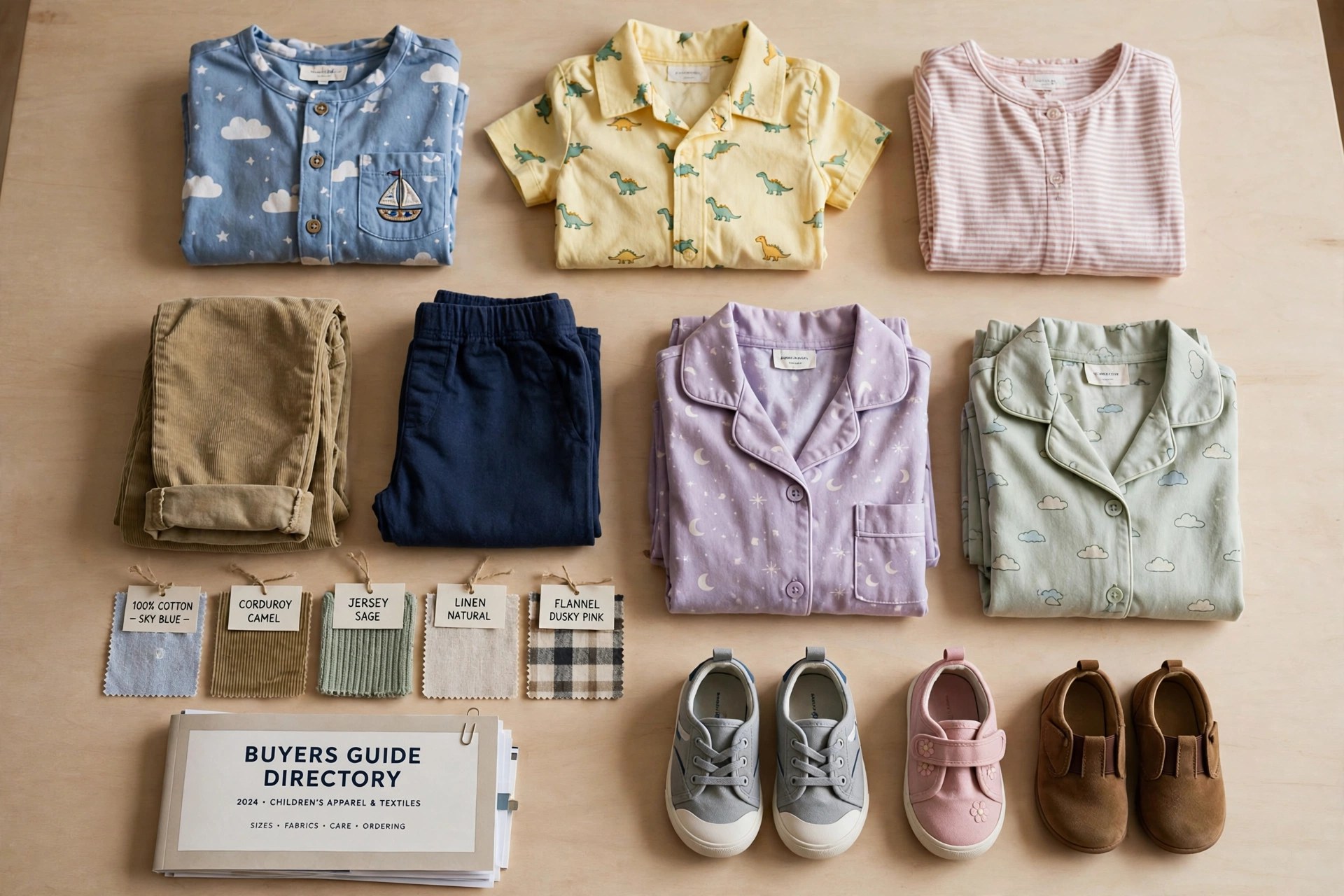
Start With Children's Clothing Stores
One way to find children's clothing buyers is to browse the internet for children's clothing stores. Contact the stores and ask them to provide information on the buyer contacts. Independent children's stores are usually approachable this way: the owner frequently selects the merchandise personally and can describe the size bands, price points and seasons the store buys. Large department stores are harder. Buyer names, buyer e-mail addresses and buyer phone numbers for the big chains are not published, and receiving the proper contact details through general inquiry channels can be a challenging task — which is why published buyers guides exist for this market.
Children's Clothing Store Directory Categories
If you wish to contact clothing stores without the use of a buyers guide, search the children's clothing store directory categories. The categories are: Girls Dresses; Children Hat Retailers; Children's Shoe Stores; Slippers; Infant Shoes; Adaptive Children's Clothing; Children's Swimwear Stores; Kids Costumes; Children's Raincoats; Children's Formal Clothing; Children's Clothing Guides; Plus Size Children's Clothing; Children's Sock Retailers; Children's T-shirt Stores; Children's Used Clothes Stores; and Children's Tennis Clothing Retailers.
Those categories map closely to how children's departments are bought. Footwear alone divides into children's shoe stores, infant shoes and slippers, each with its own buyers and sizing systems. Occasion and seasonal lines — formal clothing, costumes, raincoats, swimwear and girls dresses — are bought on calendars tied to holidays, weather and school terms. Adaptive children's clothing is a specialist category serving children whose garments need particular closures, fits or sensory considerations, and its buyers look for manufacturers who understand those product requirements in detail. Everyday categories such as T-shirts, socks and tennis clothing are volume lines bought on price, durability and reliable replenishment. Matching a product to its category first produces a short, relevant list of stores instead of a general mailing.
Salesman Buyers Guides for Named Contacts
If receiving the proper contact details is proving difficult, purchasing a salesman buyers guide is the standard route. The salesman buyer guides are typically updated on a regular basis to make certain that the contact details for children's store buyers are up to date and correct. All of the books may have a few errors, but for the most part they are kept well up to date. Clothing store buyer details change often, so a few outdated details are common — buyers change quicker than buyer guides can be printed. Look for apparel buyer guides at the Fashiondex Book Store, and check the Fashion Books section for related reading. Before sending samples, confirm the buyer's current role and the size bands and categories that buyer covers.
Selling a Children's Line, and Becoming a Buyer
Children's buyers evaluate product on fit by size band, fabric and care — garments must wash well and withstand active wear — construction quality, safety-conscious design, wholesale price and dependable delivery for school and holiday seasons. A clear presentation states the size range for each style, fabric content and care instructions, wholesale prices, minimum orders and delivery dates, with samples or photographs showing the garments flat and in detail. The Childrenswear Guide section of this site gathers further guides for this market, and the Children's Apparel overview explains how the children's trade is organized. For readers interested in the buying side of the desk, the childrenswear buyer job description covers what the role involves.
Common Questions
How can a designer find buyers for children's clothing?
Browse children's clothing stores, work from the store directory categories that match the product — shoes, formal clothing, swimwear, dresses and so on — and contact each store for its buyer. For large department stores, whose buyer contact details are not published, use a salesman buyers guide.
Why are children's clothing buyers organized by category?
Children's garments are bought by size band, such as infant and toddler, as well as by product category. Footwear, formal clothing, costumes, raincoats, swimwear and adaptive clothing each have specialist stores and buyers with their own calendars and product requirements.
How current are salesman buyers guides for children's stores?
The guides are updated on a regular basis to keep children's store buyer contact details correct, but buyers change quicker than guides can be printed, so a few outdated details are common. Confirm a buyer's role, size bands and categories before sending samples.