Childrenswear Buyer Job Description
Buying children's clothing across age bands, where safety, sizing and durability come first
A childrenswear buyer selects the clothing a store sells for babies, toddlers and older children, usually across distinct age bands that behave like separate departments. It is buying with an extra layer of responsibility: the customer who pays is a parent, the wearer cannot judge quality or fit in an adult way, garments are outgrown on a predictable clock, and safety requirements — on cords, fastenings, fabrics and labelling — shape what may be bought at all. A good childrenswear buyer combines ordinary commercial skill with rigorous attention to sizing by age and growth, durability through repeated washing, and value as judged by parents. This page explains the role's duties, its specialist knowledge, and its career routes.
More Buying Job Descriptions by Letter:
What a Childrenswear Buyer Does
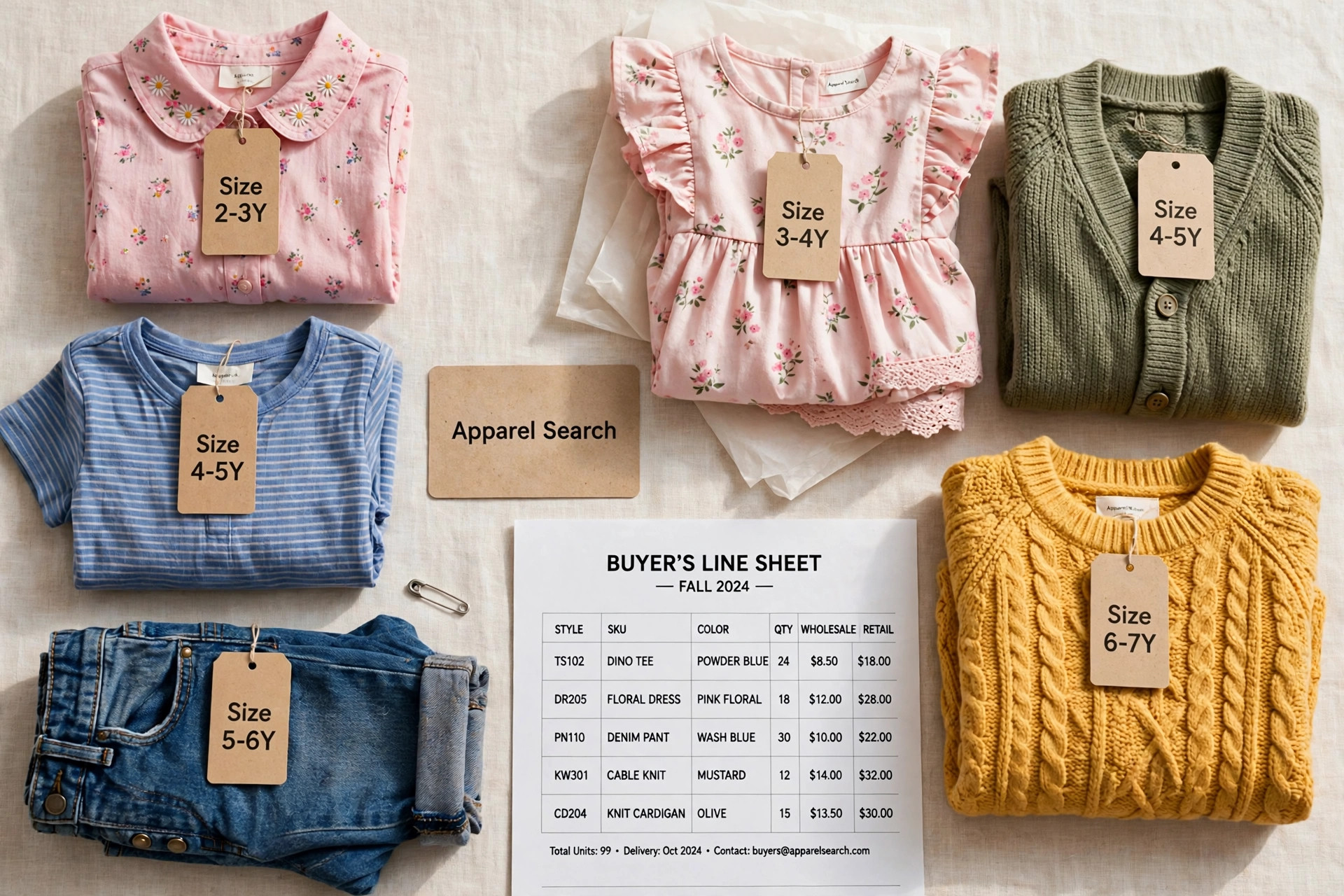
The buyer plans ranges by age band — typically baby, toddler, younger child and older child — because each band has its own sizes, price expectations, product needs and buying calendar, including the powerful back-to-school and holiday periods. Within each band the buyer builds an assortment of everyday essentials, school clothing, occasion pieces and seasonal outerwear, setting size ratios from the band's own sales history rather than the store's adult patterns. Parents buy ahead of growth and replace outgrown sizes constantly, so dependable availability of core sizes matters more in this category than in almost any other.
Vendor work follows the same discipline. Samples are checked for construction quality, seam strength, fastening security and wash performance, costs are negotiated against the sharp price sensitivity of the category, and orders are phased so stock arrives for the moments parents actually shop — nobody buys school uniform depth in the wrong month and recovers. In season, the buyer tracks sales by age band and size, repeats core lines aggressively while they are selling, and manages the hand-off between bands as ranges are refreshed.
Safety, Sizing and Durability: The Specialist Core of the Role
Safety standards are a buying input, not an afterthought. Children's garments are subject to specific requirements and guidance covering drawstrings and cords, small detachable parts, flammability — especially for nightwear — and fibre and care labelling. The childrenswear buyer must know which rules apply to which products and age groups in the markets served, buy only from vendors who can demonstrate compliance, and reject attractive product that fails a requirement. This compliance knowledge is a large part of what distinguishes an experienced childrenswear buyer from a generalist covering the department.
Sizing in childrenswear is organised by age and height rather than adult measurements, and children grow through sizes predictably, which changes the stock maths: demand concentrates in the middle sizes of each band, gift buying skews purchases, and a size that is out of stock loses a customer who may simply move to the next size elsewhere. Durability is the third specialism — knees, seats, elbows and fastenings take punishment adult garments never see, and parents judge a retailer's quality by how clothing survives growth-period wear and weekly washing. The buyer therefore specifies and tests for reinforcement, colourfastness and shrinkage in a way adult buyers rarely need to.
Skills and Abilities the Role Requires
Commercially, the childrenswear buyer needs the full buying toolkit: range planning, open-to-buy control, margin management and vendor negotiation, exercised in a category where price points are low, volumes are high and small cost differences decide competitiveness. Analytical work runs at age-band and size level, so comfort with detailed size data is essential, as is calendar discipline — the category's selling peaks are fixed by school terms and seasons, and late delivery cannot be recovered later.
Product judgement in this category is exercised on behalf of two customers at once. The buyer must anticipate what parents value — easy fastenings a child can manage, fabrics that wash well, honest sizing, sensible prices — and what children will agree to wear, which varies sharply by age band. Talking to parents, reading product reviews and returns reasons, and watching what actually wears out first are all part of how an experienced buyer keeps that dual judgement honest.
Qualifications, Training and Career Path
Childrenswear buyers usually come through the standard buying ladder — buyer's assistant and assistant buyer roles, often within childrenswear or family retailers — with fashion buying or business qualifications providing the common entry route into those posts. Employers hiring for the childrenswear desk itself look for category experience above general credentials, because the safety, sizing and durability knowledge is specific and is normally demonstrated through a track record in the department rather than examined on paper.
Progression runs to senior buyer within childrenswear or family clothing, and on to divisional merchandise management over children's and related departments. The specialism is also portable: childrenswear expertise is valued by school-uniform suppliers, children's brands developing wholesale ranges, and value and supermarket clothing operations where children's ranges carry significant volume. Buyers who master this category's discipline — compliance, size maths and calendar trading — are rarely short of moves.
Common Questions
How is childrenswear sizing organised?
Mainly by age band and height rather than adult measurements. The buyer plans size ratios separately for each band — such as baby, toddler and older child — using that band's own sales history, because demand patterns differ sharply between bands.
What safety issues must a childrenswear buyer check?
Requirements and guidance covering drawstrings and cords, small detachable parts, flammability (especially nightwear) and correct fibre and care labelling. The buyer sources only from vendors who can demonstrate compliance for the product and age group concerned.
Who is the childrenswear buyer really buying for?
Two customers at once: the parent who pays and judges value, durability and safety, and the child who wears the garment and has strong views by the older age bands. Ranges have to satisfy both to sell and to avoid returns.