Buying Job Descriptions — Letter K
Buying and purchasing job descriptions beginning with K
Two buying job descriptions begin with the letter K, and the pair is a useful warning against judging a role by its name alone. The Knit Fabric Buyer and the Knits Buyer sound almost identical, but they work at opposite ends of the supply chain: one buys cloth for factories to cut and sew, the other buys finished sweaters for stores to sell. Both descriptions are linked below, and reading them together shows how one fibre family supports two entirely different professions.
More Buying Job Descriptions by Letter:
K — Buying Roles
The Knit Fabric Buyer
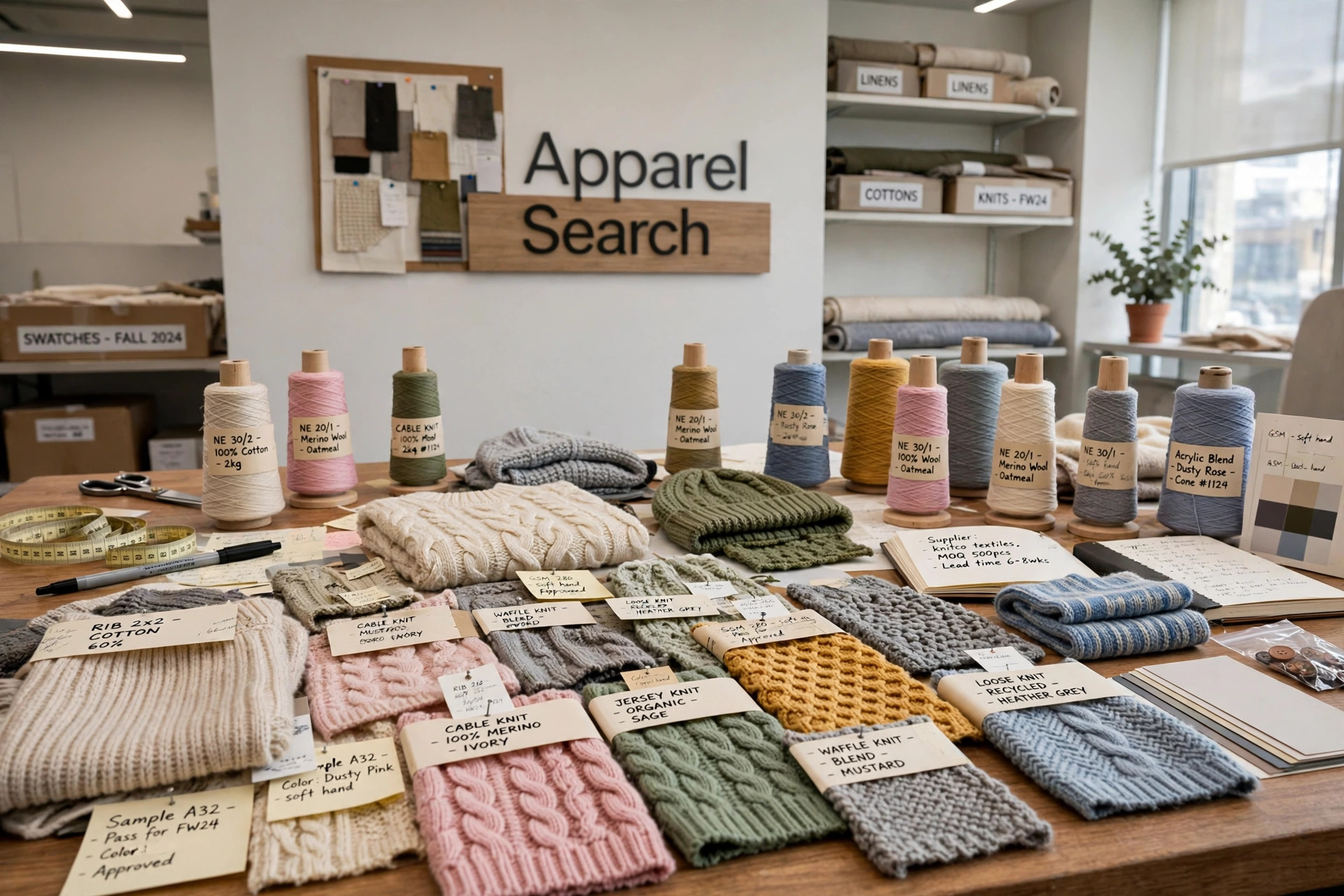
The knit fabric buyer is a production buyer. Working from a garment programme, the buyer orders knitted yardage from mills and converters — in yards or kilos, often partly as greige goods held undyed for flexibility — and manages yarn specification, dye-lot approval, fabric testing and mill capacity so cutting never waits on cloth. It is a technical, supply-chain role where the customer is the factory and the measure of success is tested yardage delivered on time. The full description covers the greige strategy, dye-lot management and textile knowledge the desk requires.
The Knits Buyer
The knits buyer is a retail buyer. The job is selecting finished knitted garments — sweaters, cardigans and knit tops — for a store's range, judging them by style, fit, gauge, yarn blend and seasonal weight, and trading them through a weather-driven selling season. Where the fabric buyer's product is cloth, this buyer's product is the garment the customer takes home. Anyone choosing between the two should start with the fabric description for the production route and the knits description for the retail route, and note how differently each role's skills, suppliers and calendars work.
Common Questions
What is the difference between a Knit Fabric Buyer and a Knits Buyer?
The knit fabric buyer purchases knitted yardage for production — cloth that a factory cuts and sews into garments. The knits buyer purchases finished knitted garments, such as sweaters, for resale in stores. One deals with mills, yarns and dye lots; the other deals with garment vendors, styles and size ranges.
Which K role suits someone who loves textiles but not fashion trends?
The knit fabric buyer role. It is built on yarns, constructions, testing and mill capacity rather than seasonal style selection, and its expertise is technical textile knowledge — a strong match for people who prefer materials and supply chains to the selling floor.