Knits Buyer Job Description
Buying finished knit garments — sweaters, cardigans and knit tops judged by gauge, yarn and weight
A knits buyer selects finished knitted garments — sweaters, cardigans, knit tops, dresses and co-ordinating sets — for a store or brand to sell. Despite the similar name, this is a completely different job from buying knit fabric: the knits buyer never commissions yardage or manages a dye house. Instead they judge completed garments the way any apparel buyer does — style, fit, price and customer — but with a specialist's knowledge of how knitted garments are made, because gauge, yarn blend and knitting method decide how a sweater looks, feels, wears and washes. This page covers the knits buyer's duties, that specialist product knowledge, and the routes into the role.
More Buying Job Descriptions by Letter:
What a Knits Buyer Does
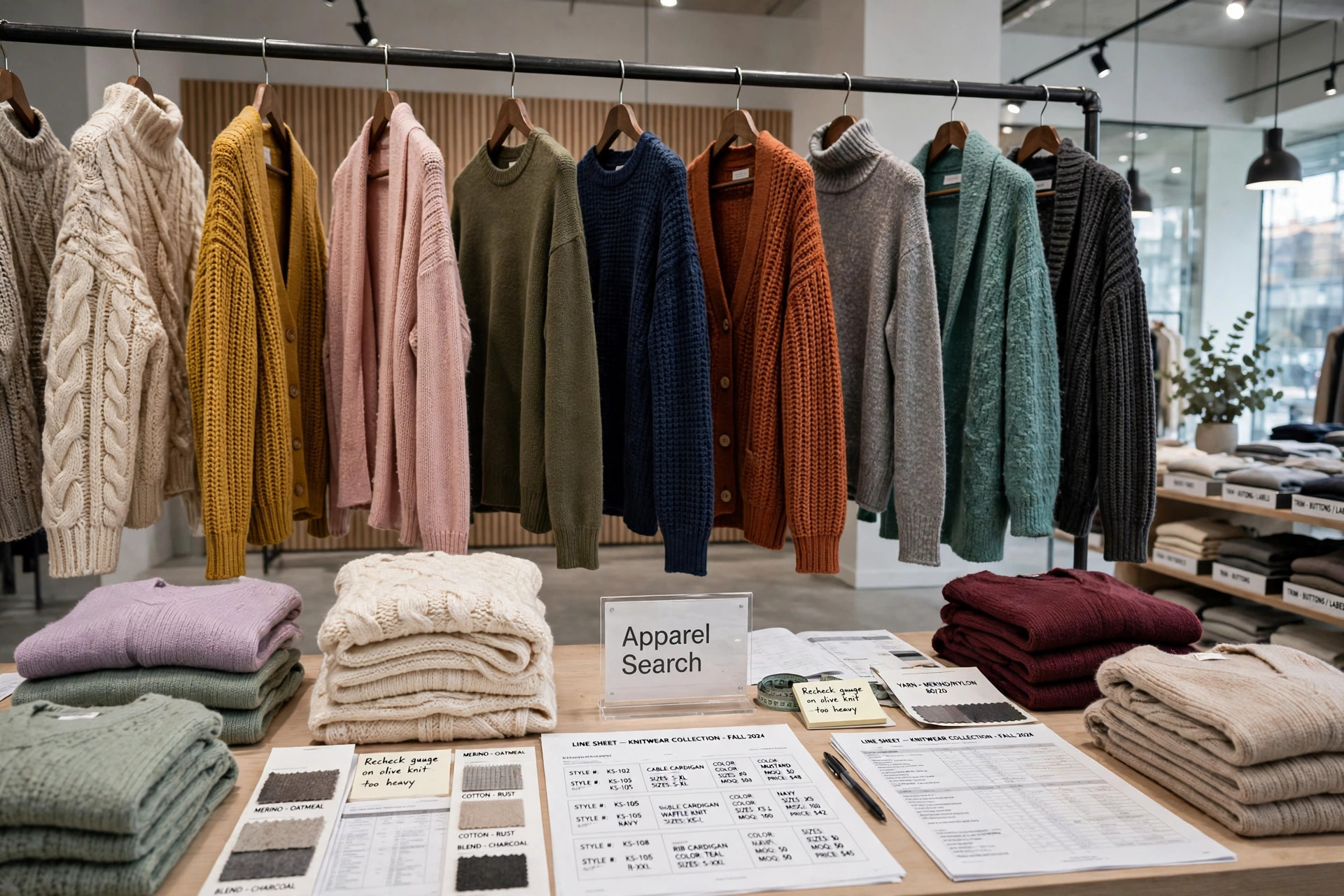
The knits buyer plans the knitwear range for each season: how many sweater styles, at which price points, in which colour stories, and balanced between fashion pieces and the dependable core knits customers replace year after year. Vendor appointments are spent editing collections and developing exclusive styles — trying garments on fit models, checking how a knit drapes and recovers, comparing yarn quality between suppliers offering similar looks at different prices, and deciding the depth each style deserves. Autumn and winter carry the category's weight, so the buyer's biggest commitments are placed early and conservatively on proven yarns, with open-to-buy held back for in-season reaction.
After orders are placed, the buyer approves pre-production samples for fit, colour and hand-feel, monitors delivery against the cold-weather selling window — a sweater that lands after the first frost has missed its best weeks — and trades the range in season: repeating the styles customers are reaching for, recolouring winners where vendors hold yarn, and marking down heavy or slow knits before the season turns and their value collapses. Knitwear is bulky to store and ship, so the buyer also plans intake in cube as well as in units, coordinating with merchandising on how much rail and shelf space each delivery phase can actually hold.
Gauge, Yarn Blends and Seasonal Weight
Gauge — the number of stitches per inch — is the knits buyer's basic vocabulary. Fine-gauge knits behave like tailored layers: smooth, lighter, suited to wearing under jackets and through spring. Chunky low-gauge knits are the opposite: textured, warm, statement pieces sold on hand-feel and presence. Between them sit the mid-gauge sweaters that carry most commercial volume. The buyer plans the range across gauges deliberately, because customers buy knitwear for a purpose — layering, warmth, or a look — and a range concentrated at one gauge serves only one of those purposes.
Yarn blend is the second judgement. Wool brings warmth and resilience but needs care and costs more; cotton knits cooler and heavier; acrylic and other synthetic blends lower the price and ease washing but can pill and lose shape; cashmere and fine blends anchor the premium end where hand-feel justifies cost. The buyer also plans seasonal weight: the same sweater shape is a different garment in a heavy winter yarn and a light spring one, and experienced knits buyers build transitional weights for the shoulder seasons rather than treating knitwear as a winter-only category — one of the clearest marks of a specialist rather than a generalist on this desk.
Skills and Abilities the Role Requires
The knits buyer needs a trained hand. Judging a sweater means stretching it and watching it recover, checking seam linking and finishing, feeling yarn quality against its price, and predicting pilling and shape retention that only appear after wearing and washing. That tactile judgement is learned on samples and in stores over seasons, and it sits on top of the standard buying toolkit: range planning, open-to-buy control, margin and markdown maths, size-ratio decisions and vendor negotiation across a supplier base that often includes specialist knitwear manufacturers overseas.
Seasonal timing sharpens every other skill. Knitwear demand is weather-driven and unforgiving: buy too cautiously and the best selling weeks run out of stock; buy too boldly and the business is discounting heavy stock in January. The buyer therefore works closely with planning colleagues on weather scenarios and phased deliveries, keeps some budget uncommitted for proven sellers, and reads early-season sales at style and colour level within days, not weeks. Communication with store teams matters too — how knitwear is folded, stacked and sized on the fixture changes how it sells, and the buyer feeds that back into the next range.
Qualifications, Training and Career Path
Knits buyers usually arrive from assistant buyer posts in womenswear or menswear knitwear departments, or move across from adjacent categories once they have range-planning experience. Fashion buying, merchandising or textile qualifications support entry into those assistant roles, and employers filling the knits desk itself look for evidence of knitwear product knowledge — yarn, gauge and construction — which candidates most convincingly show through the departments they have already worked on and the results those ranges produced.
From knits buyer, the path runs to senior buyer over a broader knitwear or seasonal division, and on to divisional merchandise management. The specialism also leads into knitwear product development and own-label design-direction roles, where the same knowledge of yarns and gauges is used to create ranges with manufacturers rather than select them, and into specialist knitwear brands where the category is the whole business. Few buying desks teach seasonal risk management as starkly as knits, and that training is recognised well beyond the category.
Common Questions
What is the difference between a knits buyer and a knit fabric buyer?
A knits buyer purchases finished knitted garments — sweaters, cardigans and knit tops — for resale, judging style, fit, gauge and yarn blend. A knit fabric buyer purchases knitted yardage for a factory to cut and sew. Same fibre family, entirely different job.
Why does gauge matter when buying knitwear?
Gauge is the fineness of the knit, and it decides what a garment is for: fine gauges layer smoothly under tailoring and suit milder weather, while chunky low gauges are warm statement pieces. A balanced knitwear range plans across gauges so customers find a knit for each purpose.
When is knitwear bought and sold?
Buyers place the main autumn and winter knitwear orders many months ahead, and the selling season peaks with cold weather. Because demand is weather-driven, knits buyers phase deliveries, hold some budget back, and react quickly to early sales rather than committing everything at once.