Knit Fabric Buyer Job Description
Buying knit fabric and yardage for garment production — yarn, greige goods and mill capacity
A knit fabric buyer purchases knitted yardage — jersey, interlock, rib, ponte, fleece and other knit constructions — for a business that cuts and sews garments. This is production buying, not retail buying: the customer is the factory, the purchase is measured in yards and kilograms rather than in styles, and a mistake shows up as a production line standing idle or a warehouse of cloth in the wrong shade. The knit fabric buyer works between the design and production teams who specify the fabric and the mills and converters who make it, turning a garment programme into secured, tested, on-time yardage. This page explains the duties, the textile knowledge the role demands, and how buyers build careers in it.
More Buying Job Descriptions by Letter:
What a Knit Fabric Buyer Does
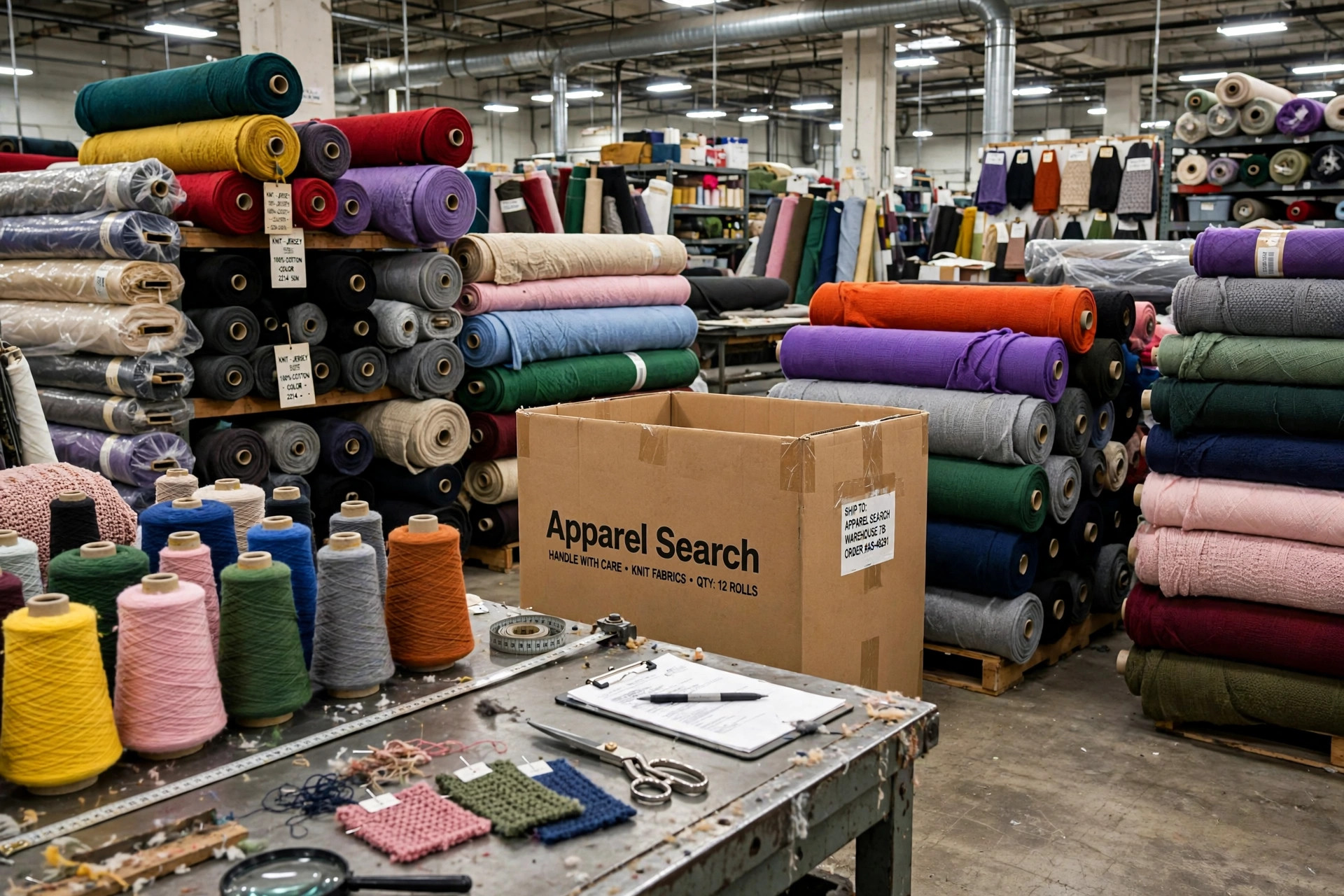
The knit fabric buyer's season starts with the garment programme: which knit styles are planned, in what volumes, colours and delivery windows. From that programme the buyer builds a fabric plan — how much of each base cloth is needed, how much can be bought as greige goods (undyed, unfinished knitted fabric held as a flexible stock) and dyed or finished to order, and how much must be committed finished from the start. Buying greige is the category's central tactic: it shortens the response time when a garment sells well, because the long knitting stage is already done and only dyeing and finishing stand between the stock and the cutting table.
With the plan set, the buyer sources and negotiates. Mills are compared on yarn quality, knitting capacity, dye-lot consistency, minimum order quantities, price per yard or kilo, and lead time. Orders are placed against mill capacity that the buyer has often reserved ahead, lab dips and strike-offs are approved for colour, bulk fabric is tested for weight, shrinkage, spirality and colourfastness, and deliveries are tracked into the warehouse so cutting is never waiting on cloth. In season, the buyer manages the greige position — deciding which colours to commit, which to hold back — and rebalances yardage between garment styles as sales evidence arrives.
Yarn, Dye Lots and Mill Capacity: The Technical Heart of the Job
Knit fabric quality is decided before knitting begins, by the yarn: its fibre, count, twist and consistency determine the finished cloth's hand, pilling behaviour and durability. A knit fabric buyer must be able to specify yarn precisely, judge whether a mill's offered substitute is genuinely equivalent, and understand how yarn price movements flow into fabric cost. Once knitting starts, construction choices — gauge, stitch, weight per square metre — fix what the fabric can become, so the buyer reviews knitted samples with the same care a garment buyer gives a finished style.
Colour is the second technical discipline. Dyeing is done in lots, and lots vary: the buyer manages dye-lot approval, shade continuity between repeat orders, and the acceptance standards that decide when a shade difference is commercially tolerable and when a lot must be rejected. Capacity is the third. Knitting machines and dye houses have finite throughput, and a buyer who has not secured capacity in a peak season may hold a perfect order that no mill can produce in time. Planning yardage, colour commitment and machine time together — months ahead of the garment — is what separates this role from simply placing fabric orders.
Skills and Abilities the Role Requires
Technical textile knowledge comes first: fibres and yarns, knit constructions and gauges, dyeing and finishing routes, fabric testing and fault recognition. A knit fabric buyer who cannot tell a yarn substitution from a specification, or read a shrinkage result, is dependent on suppliers for judgements the business is paying them to make. Commercial skill runs alongside: costing in yards and kilos, converting fabric consumption per garment into order quantities, negotiating mill terms, and managing a greige stock position whose value rises and falls with garment sales.
The role is also a coordination job. Designers want a fabric that behaves like the sample; production wants it early and identical; finance wants it cheap and not overstocked. The buyer holds those pressures in one plan, communicates delivery risk honestly and early, and keeps meticulous records of approvals — lab dips, test results, lot references — because when a shade dispute or quality claim arises, the paperwork is the evidence. Buyers who combine mill-floor credibility with that administrative rigour are the ones garment businesses trust with their largest fabric commitments.
Qualifications, Training and Career Path
Knit fabric buyers commonly come from textiles: degrees or diplomas in textile technology, textile design or fashion production give the technical grounding, and many buyers start as fabric assistants, production coordinators or mill-side sales staff before taking buying responsibility. Experience inside a knitting mill or dye house is unusually valuable here, because it teaches real lead times, real fault causes and real capacity limits — knowledge that changes how a buyer writes specifications and judges a supplier's promises.
Progression runs to senior fabric buyer, raw materials manager, or sourcing and production management roles with responsibility for the whole fabric and trim buy. The specialism also transfers to the fabric buyer roles used across apparel production, and to textile sales and merchandising on the mill side, where the same product knowledge is used to sell yardage rather than buy it. Because every knitted garment in a business passes through this desk, an experienced knit fabric buyer holds one of the broadest views of a production operation anywhere in the company.
Common Questions
What are greige goods, and why do knit fabric buyers hold them?
Greige goods are knitted fabric that has not yet been dyed or finished. Holding greige stock lets a business respond faster: when a garment sells, the fabric only needs dyeing and finishing before cutting, instead of the full knitting lead time. Managing how much greige to hold, and when to commit it to colours, is a core knit fabric buying decision.
How is a knit fabric buyer different from a knits buyer?
A knit fabric buyer buys yardage for production — cloth that a factory will cut and sew into garments. A knits buyer buys finished knitted garments, such as sweaters and knit tops, for resale. The first works with mills, yarns and dye lots; the second works with garment vendors, styles and size ranges.
What qualifications help a knit fabric buyer most?
Textile training — textile technology, design or production — plus hands-on experience with mills, dye houses or fabric departments. Employers weigh demonstrated knowledge of yarns, knit constructions and fabric testing heavily, because the role's judgements are technical as much as commercial.