The Man-Made Fibre Industry in Japan
A Textiles Intelligence research report on Japanese fibre producers and their high added value strategies
Japanese fibre producers play a key role in shaping world market conditions. Advances are being made in automation, and new processes are used to develop high added value man-made fibre textiles for apparel and industrial applications where technology can be patented. This Textiles Intelligence report provides a detailed examination of the main production, consumption, export and import statistics, and gives in-depth profiles of the major fibre producers. It describes those products which the Japanese are developing in order to add value to their product mix, and covers in detail the prospects in fields such as high technology fibres and products. It also provides information on the suppliers and purchasers of raw materials and machinery. Textiles Intelligence, formed in 1992 as a spin-off from the Economist Intelligence Unit, supplies global business information to the fibre, textile and apparel industry, with customers in more than 60 countries across five continents.
Background, Suppliers and Market Trends
Part 1 builds the statistical and structural picture. Chapter 1 introduces processes and products, the Japanese man-made fibre industry, the history of man-made fibre production, related sectors and a changing industry. Chapter 2 covers suppliers to the industry: raw materials for cellulosic fibres, raw materials for synthetic fibres, machinery and man-made fibre machine producers. Chapter 3 examines consumption and production trends, with consumption forecasts, technology availability, problems facing the industry, Japanese production trends, production of synthetics by fibre type, capacity, and employment and productivity. Chapter 4 covers exports, imports and consumption for man-made fibres and yarns and for man-made fibre fabrics, and Chapter 5 sets out the structure of the Japanese industry — the major fibres, the polyolefins and other synthetics.
Ten Producer Profiles
Part 2 profiles the major producers in depth, each in the same form — the group, its position in fibres, its other textile interests, its fibre products, its research and development, and its future. The companies are Asahi Chemical Industry, Kanebo, Kanegafuchi Chemical Industry (Kaneka), Kuraray, Mitsubishi Rayon, Teijin, Toho Rayon, Toray Industries, Toyobo and Unitika. Together they represent an industry competing on technology rather than volume: automation advances and patented processes run through the profiles as the means by which Japanese producers add value to their product mix for apparel and industrial applications.
Yarns, Fabrics, High Technology and the Future
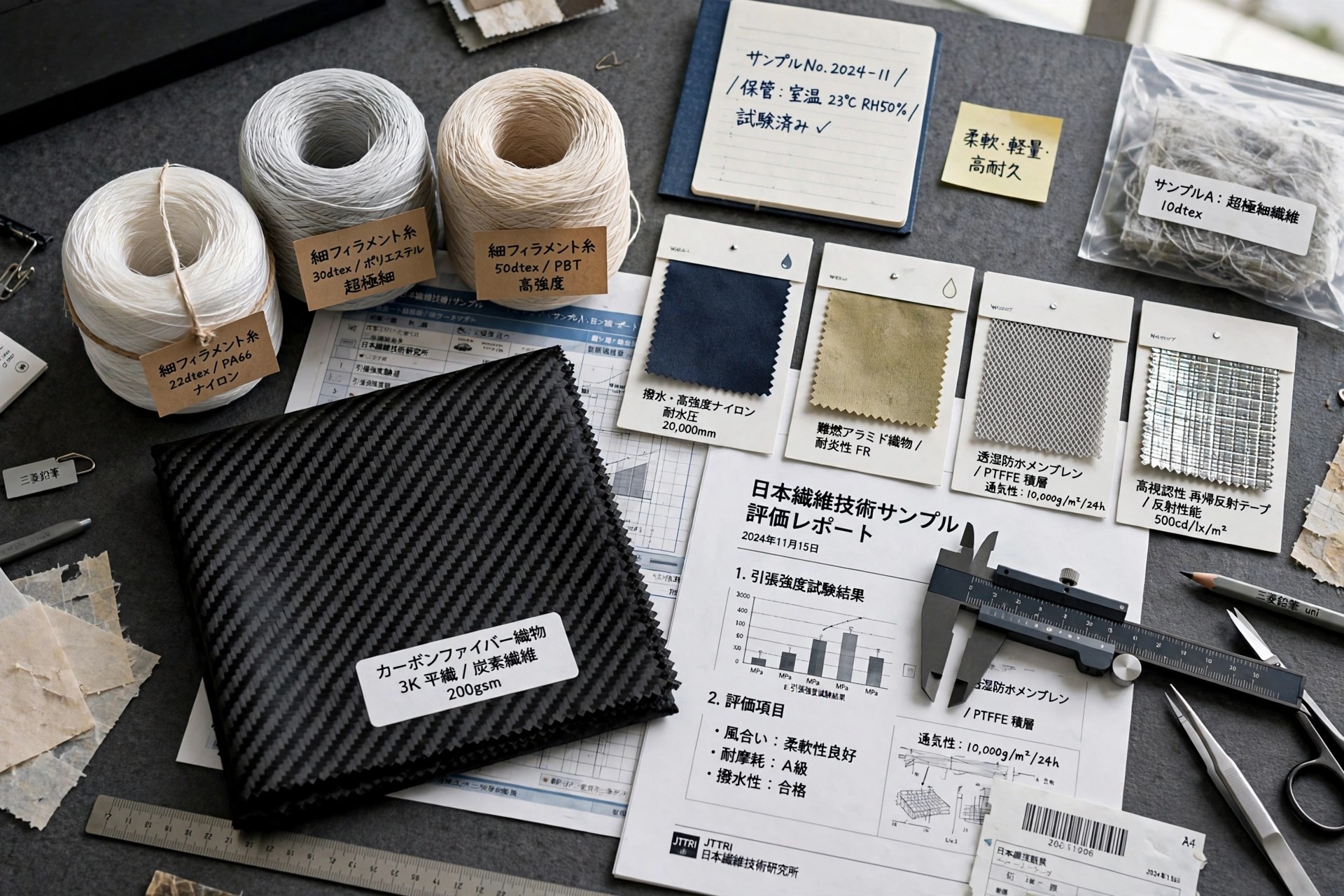
Part 3 follows the fibres into yarns and fabrics: staple fibre yarn spinning, filament yarn texturising — machinery installed and production of textured yarn — and fabrics, covering man-made woven fabrics, man-made knitted fabrics, carpets and rugs, and selected industrial fabrics. Part 4 covers high technology products: products for apparel, including silk-like products, fine and very fine filaments and spandex; carbon fibres, with end uses, production, capacity and demand and the Japanese carbon fibre producers; flame fibres and Japanese producers of flame retardant fibres; nonwovens, with process routes, Japanese producers, production, consumption by end use and trade; and patents, with an overview of the subjects patented. Part 5 closes on threats and strategies — the rising yen, competition from South East Asia, and fibre producers' strategies of higher value products, emphasis on the domestic market, and diversification.
Common Questions
Which Japanese fibre producers are profiled?
Asahi Chemical Industry, Kanebo, Kanegafuchi Chemical Industry (Kaneka), Kuraray, Mitsubishi Rayon, Teijin, Toho Rayon, Toray Industries, Toyobo and Unitika — each covering the group, its fibre products, research and development and future.
How were Japanese producers adding value?
Through advances in automation and new processes developing high added value man-made fibre textiles for apparel and industrial applications where technology can be patented — silk-like products, fine and very fine filaments, spandex, carbon fibres and flame retardant fibres.
What threats does the report's final part assess?
The rising yen and competition from South East Asia, answered by producer strategies of higher value products, emphasis on the domestic market, and diversification, alongside detailed production, consumption, export and import statistics.