The Trim of the Season
Movement Is the Whole Point
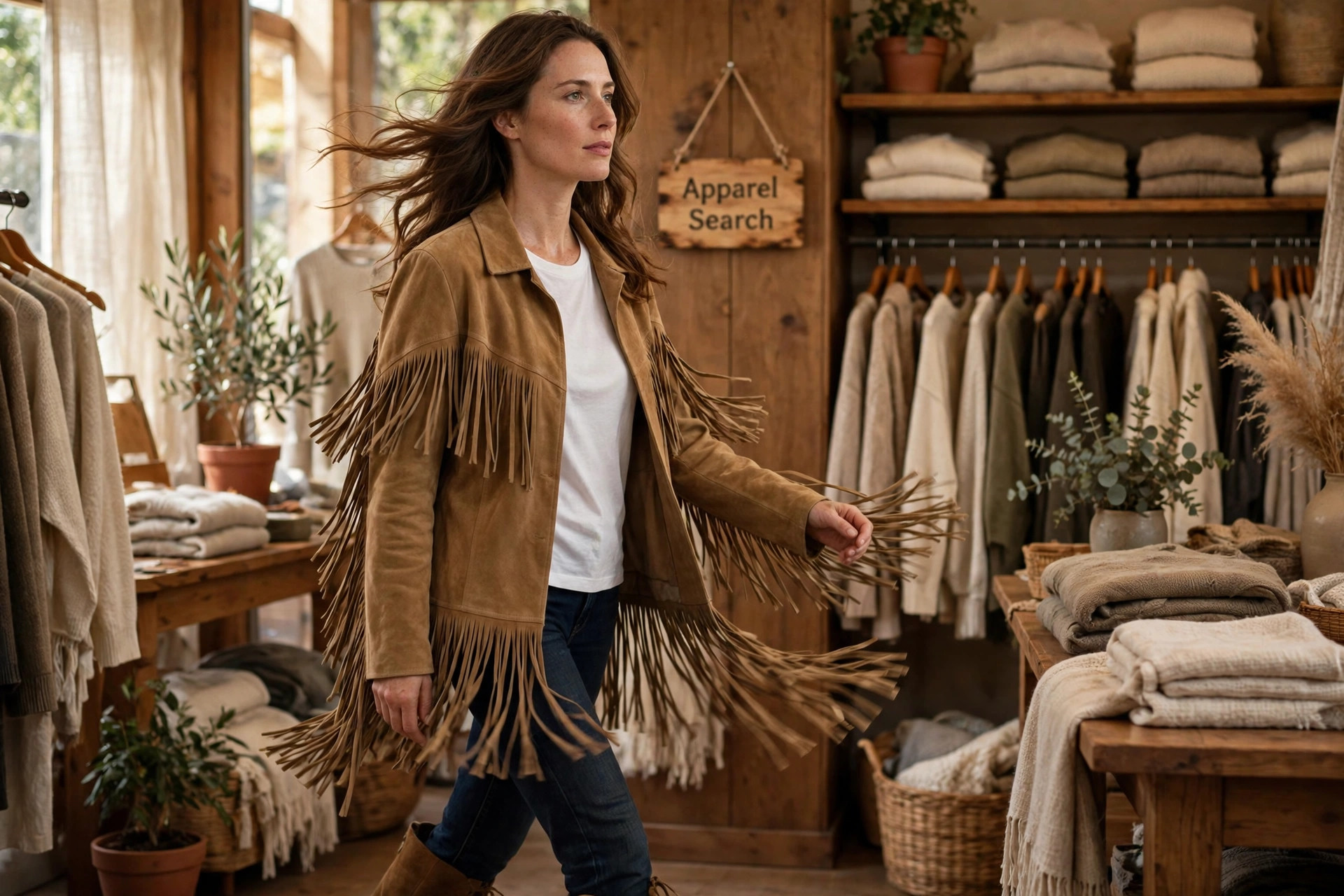
Fringe is fashion’s most kinetic trim: a border of hanging strands, cut or attached, that swings, sways and settles a half-second after you do — see the fringe definition for its origins in the loose ends of woven cloth. Forecasters noticed it everywhere this season: in an analysis of 105 social-media videos predicting the coming autumn’s trends, “fringe” was the single most-mentioned word of all, appearing in 78 of them — fringe jackets, skirts, bags and belts, tassel pendants and western ponchos all riding the same wave.
That popularity comes with one fear attached: looking like a costume. The fear is understandable and entirely avoidable. Fringe fails when an outfit asks it to do everything at once; it succeeds when one piece is allowed to move against calm, quiet clothes. This guide sets out that discipline — piece by piece, material by material — so the fringe reads as style, not fancy dress.
“Fringe is jewellery that happens to be attached to a garment — and like jewellery, one statement at a time is enough.”
Search Apparel Search
The Golden Rule
One Fringe Piece at a Time
Everything in this guide follows from a single rule: wear one fringed piece per outfit. Fringe never sits still, so it draws the eye continuously; a second fringed piece does not double the effect, it halves it, as jacket fringe fights skirt fringe and the whole look starts to shiver. Choose the piece that will carry the outfit — the jacket, the skirt, the bag — and let everything else be still. If you love two fringed pieces, give each its own day. The rule is also what separates the current fringe moment from fancy dress: costumes stack signals, outfits edit them.
Piece by Piece
Jackets, Skirts, Dresses and Tops
The signature piece, usually suede, with fringe across the back, sleeves and hem. Wear it open over a plain tee and straight denim, and let it be the whole story.
Fringe hems turn walking into choreography. Keep the top tucked, plain and close-fitting so the movement stays at the hem where it belongs.
Tiered or hem fringe on a simple shift or slip silhouette. Choose one fringe zone — hem or tiers, not both — and plain shoes.
The gentlest entry: fringe at a yoke, sleeve or hem of an otherwise plain top. Pair with tailored trousers to keep it modern.
Whichever piece you choose, try it on and walk in it. Fringe is bought in motion, not on the hanger — check that the strands fall cleanly, swing freely and do not catch on zips, buttons or bag hardware.
The Small Way In
Fringe Accessories: Bags, Boots, Belts and Jewellery
Accessories are fringe with the commitment removed. A fringed bag — a suede hobo or crossbody with a swinging side fringe — adds movement to the plainest jeans-and-knit outfit and can be put down when you have had enough. Fringed boots work the same trick at ground level; our cowboy boots styling guide shows how western footwear pairs with dresses, denim and tailoring without tipping into costume. A fringed belt defines a waist and moves at the hip, lovely over a plain dress. And jewellery — tassel pendants and fringe earrings — is the smallest dose of all: a single tassel necklace on a plain neckline delivers the trend in miniature. Pick one accessory category, as you would one garment.
Two Moods
Western Fringe vs Evening Fringe
Western fringe is suede or leather, cut in sturdy strands, in tans, chestnuts and black, attached to jackets, bags and boots. Its natural partners are denim, cotton and boots, and its natural home is daytime. Lean into it honestly — one western piece with modern, simple companions looks intentional; head-to-toe western looks like an outfit for a theme party.
Evening fringe is a different material language: fine beads, silk threads and chain, in black, metallics and jewel tones, on dresses, clutches and jewellery. It catches light as it moves, which is why beaded fringe has belonged to evening wear for a century. Keep the silhouette sleek and the colours deep, and nobody thinks of the rodeo at all. The two moods should not be mixed in one outfit — suede says day and dust, beads say night and candlelight.
Placement & Proportion
How Fringe Moves: Placement and Length
Fringe adds volume exactly where it hangs and draws the eye to wherever it ends, so place it where you want attention. Fringe across the back and sleeves of a jacket broadens the shoulders as it swings; a fringed hem lengthens the line of a skirt with every step; fringe at the bust or hip emphasises those points, welcome or not. Length sets the drama: short fringe, under about 10 centimetres, reads as texture; mid-length fringe is the versatile everyday range; very long fringe is a statement that needs space, still companions and an occasion. If you are petite, shorter strands keep the proportions yours; if you are tall, long fringe finally has room to behave. And remember that fringe shortens visually as it swings — a hem that grazes the floor standing still will dance above it.
Materials & Care
Suede and Leather vs Fabric and Bead — and Keeping Strands Straight
Suede and leather fringe is cut from the garment’s own material, so it has weight, body and a matte finish; it is the durable, western-leaning option, and it pairs naturally with the guidance in How to Wear Suede. Fabric and bead fringe is attached rather than cut in — threads, cords or strung beads sewn along an edge — lighter, dressier and more delicate, and the right choice for dresses and evening pieces.
Care is mostly about tangles and water. Detangle with your fingers, working gently from the ends, and never brush suede fringe. A whisper of steam from a distance relaxes curled strands; store pieces flat or hanging with the fringe free, not pressed under other clothes. Keep suede fringe out of rain, which spots and stiffens it, and let any wet fringe dry naturally, strand by strand, before it is worn again. Looked after this way, fringe keeps its swing for years — ready to move with the rest of the family, from boho style to How to Wear Velvet.
Questions
Common Questions
How much fringe is too much in one outfit?
One fringed piece is the reliable limit for everyday wear. Fringe moves constantly, so a single jacket, skirt or bag already supplies all the motion an outfit can hold; two fringed pieces compete, tangle visually and tip the look toward costume. On a stage or at a festival the rules relax — everywhere else, let one piece swing.
Can fringe be worn in the evening without looking western?
Yes — choose beaded or fine fabric fringe instead of suede, and keep the silhouette sleek. A black dress with a beaded fringe hem, a fringed clutch, or a tassel pendant on a plain column dress reads as evening movement rather than rodeo. The material, not the fringe itself, carries the western association.
How do you stop fringe tangling and keep it straight?
Untangle gently with your fingers, never a brush, working from the ends upward, and steam very lightly from a distance if strands curl. Store fringed pieces flat or hung with the fringe hanging free and uncovered by other garments, and keep suede fringe out of rain, which spots, stiffens and curls it.