Wedding Bands
The plain, enduring band exchanged at the ceremony
A wedding band, also called a wedding ring, is the band exchanged during a wedding ceremony as the lasting symbol of marriage, traditionally worn on the fourth finger of the left hand, the finger once believed in Roman tradition to carry a vein running directly to the heart. Its form carries the meaning: a continuous circle with no beginning and no end, usually simpler than an engagement ring and made to be worn every day for decades. The classic band is plain metal, and the main decision is which metal. Yellow gold is the traditional choice, platinum is prized for purity and durability, white gold gives a platinum-colored look for less, titanium is light and strong, palladium is naturally white, tungsten is extremely scratch resistant, and silver is the budget option that tarnishes. Modern bands add comfort fit interiors, milgrain or brushed finishes, and sometimes a row of small diamonds or an engraved interior message. This guide compares the band metals for daily wear, covers widths and profiles, explains matching a band to an engagement ring, and sets out sizing points for a ring that is rarely taken off.
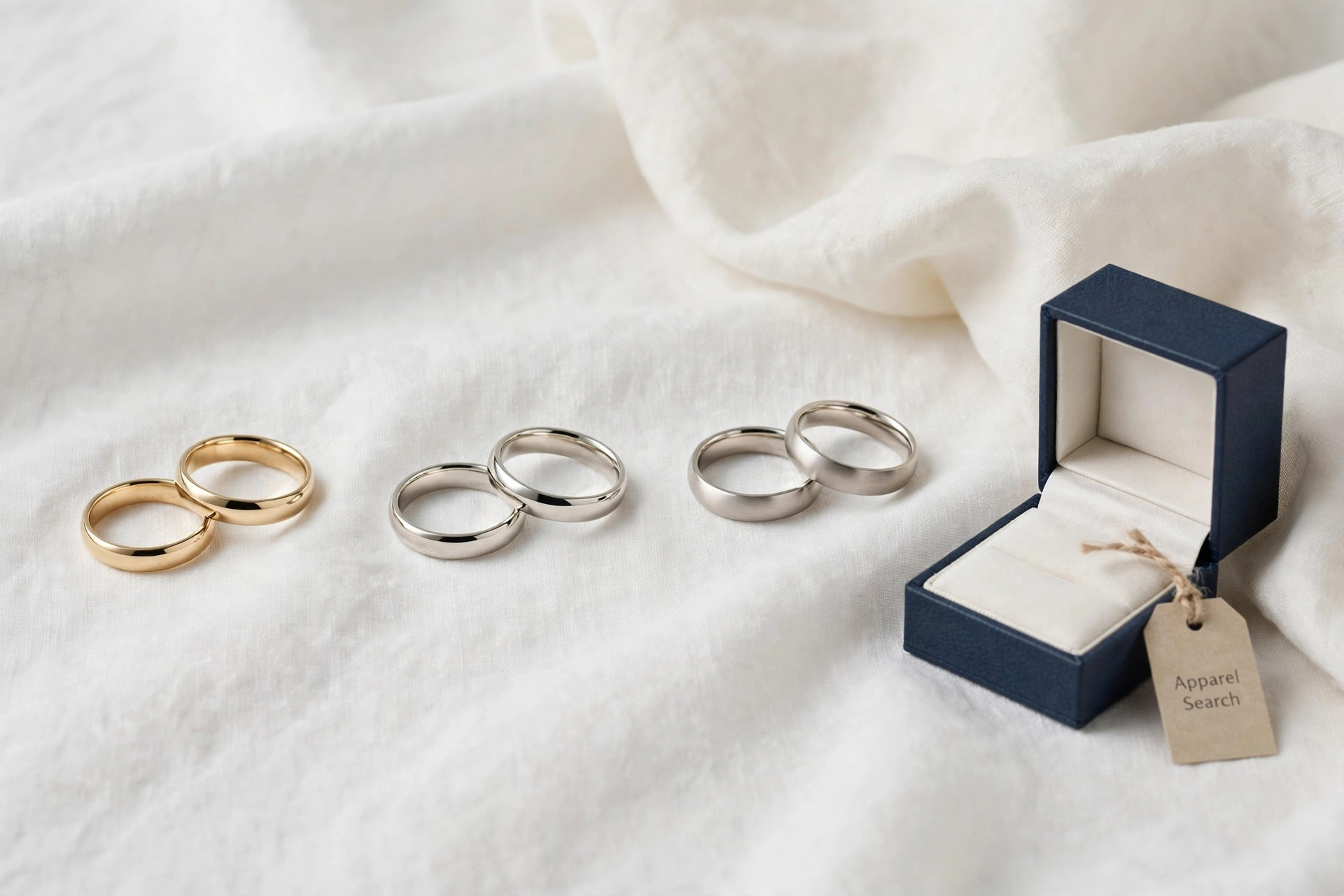
Wedding Bands: Symbolizing Eternal Love and Commitment
A wedding band, also known as a wedding ring or wedding ring band, is a timeless and meaningful piece of jewelry that symbolizes the eternal love and commitment between spouses. These rings are exchanged during a wedding ceremony, often worn on the fourth finger of the left hand, known as the ring finger.
Visual Appearance and Common Materials:
Visual Appearance: Wedding bands are typically simple and elegant in design, representing the unending circle of love and commitment. They are often a continuous band of metal, free of gemstones or elaborate ornamentation.
Materials:
Gold: The most traditional and popular material for wedding bands, available in various colors such as yellow, white, and rose gold. Learn about gold rings.
Platinum: Known for its durability and purity, platinum is a popular choice for wedding bands, valued for its elegant, silver-white appearance. Learn about platinum rings.
White Gold: A popular and more affordable alternative to platinum, with a similar appearance due to its rhodium plating. Learn about white gold rings.
Titanium: Known for its durability and lightweight properties, making it an increasingly popular choice, especially for men's wedding bands. Learn about titanium rings.
Palladium: A durable and naturally white metal, an alternative to platinum and white gold. Learn about palladium rings.
Tungsten: Known for its strength and scratch resistance, tungsten is gaining popularity in modern wedding band designs. Learn about tungsten rings.
Silver: Less common for wedding bands due to its tendency to tarnish, but still used for more affordable options. Learn about silver rings.
History and Cultural Significance:
Ancient Origins: The tradition of exchanging wedding rings dates back to ancient Egypt, where rings were believed to symbolize eternity and the unbreakable bond of marriage.
Roman Influence: The Romans adopted the tradition and wore the ring on the fourth finger of the left hand, as they believed that the vein in this finger (vena amoris) directly connected to the heart.
Christian Tradition: In Christian ceremonies, the wedding band is often blessed by a priest or minister, signifying God's blessing on the union.
Cultural Significance:
Universal Symbol of Love: Wedding bands universally symbolize the eternal love and commitment between spouses.
Cultural Variations: While the exchange of wedding bands is a common practice, specific designs, materials, and customs may vary across cultures and regions.
Marital Status: In many cultures, wearing a wedding band signifies a person's marital status and commitment to their spouse.
Where to Purchase:
Jewelry Stores: Local jewelry stores, chain retailers, and independent jewelers often have a wide selection of wedding bands to choose from.
Online Retailers: Numerous online platforms like Blue Nile, James Allen, and Brilliant Earth offer a wide variety of wedding bands, allowing for easy comparison and selection.
Custom Jewelers: Some couples opt for custom-designed wedding bands, and local or online custom jewelers can help bring their unique designs to life.
Specialty Boutiques: Specialty jewelry boutiques may offer a curated collection of wedding bands, including unique and artisanal designs.
A wedding band is not only a piece of jewelry but a symbol of love, unity, and commitment. The choice of wedding bands is deeply personal and significant, reflecting the couple's unique bond and style preferences.
Learn more about wedding rings.
Learn about bridal rings and engagement rings.
Matching a Band to an Engagement Ring
A wedding band worn with an engagement ring should agree with it in metal color, profile height and style. Matching metals matters for wear as well as looks, since a harder metal worn against a softer one can wear the softer band down over years, a common issue when a platinum ring is worn against gold. Contoured and shadow bands are shaped to curve around a raised setting so the two rings sit flush, while a straight band leaves a small gap that many wearers accept. Coordinated sets sold together solve the matching questions in advance and usually share the same finish and proportions.
Width is the other visible choice: narrow bands of about 2 to 4 millimeters read as delicate and leave room for an engagement ring on the same finger, while bands of 5 to 8 millimeters make a stronger statement worn alone, a common choice for men's bands. Trying the band together with the engagement ring, in daylight, shows the true color match, since white gold, platinum and palladium differ subtly in tone beside each other.
Common Questions
On which finger and hand is a wedding band worn?
In the United States, Britain and many other countries the wedding band is worn on the fourth finger of the left hand, the ring finger, a custom traced to the Roman belief in a vein from that finger to the heart. In a number of European and other traditions the band is worn on the right hand instead. At the ceremony the band is usually placed after or alongside the engagement ring, and afterwards many wearers keep the wedding band closest to the hand, with the engagement ring above it.
Should a wedding band be plain or set with stones?
A plain band is the most durable and lowest-maintenance choice: there are no stones to loosen, it never catches, and it can be polished or refinished easily. Stone-set bands, such as eternity and half-eternity styles with a row of diamonds, add sparkle and mark anniversaries as well as weddings, but they need prong and setting checks, and a full eternity band generally cannot be resized. Choose based on the wearer's work and habits: hands-on jobs favor plain or low, channel-set designs.
How should a wedding band fit for everyday wear?
It should slide over the knuckle with slight resistance and sit snugly at the base of the finger without pinching or leaving a deep mark, since it is worn through heat, cold and activity that change finger size during the day. Comfort fit bands, domed on the inside, feel looser than flat-inside bands of the same size and often size down slightly. Be measured in the width you will actually wear, later in the day, and remember that titanium and tungsten bands cannot be resized if the fit is wrong.