Cotton Clothing Manufacturers
Factories that cut and sew cotton apparel — how they work, what a buyer should ask, and the cotton manufacturers listed in this directory.
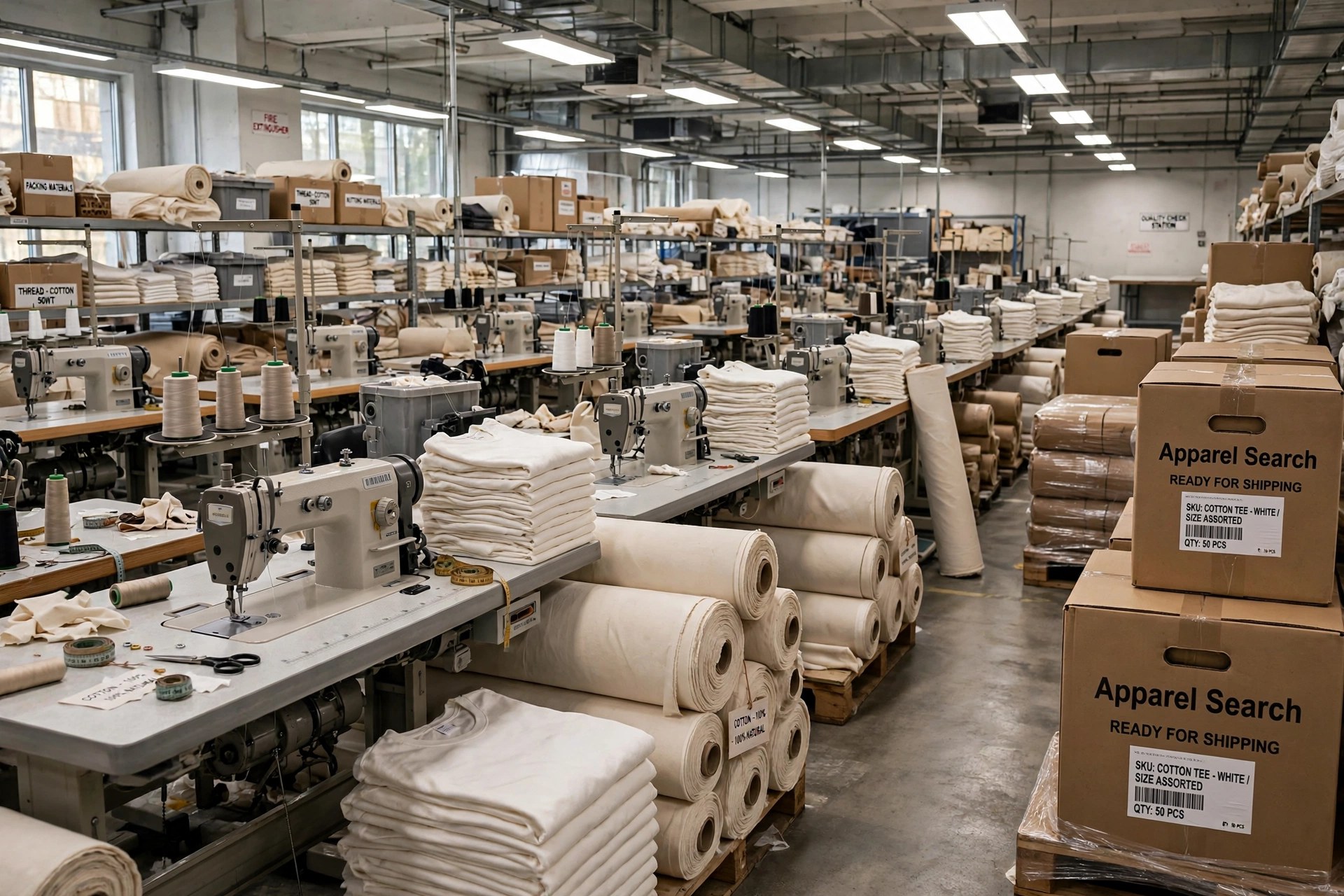
A cotton clothing manufacturer turns cotton fabric into finished apparel at scale: sourcing or receiving knitted or woven cotton cloth, cutting it to pattern, sewing and finishing garments, and packing them to a buyer specification. Because cotton covers everything from baby bodysuits to heavy denim, cotton factories usually specialize — a knit factory running t-shirts and underwear all day is a different business from a woven factory making shirts and trousers, even though both sew cotton.
This page explains what happens inside a cotton apparel factory and the questions a buyer should settle before placing an order. The directory listing below is the cotton manufacturer carried in this section — a factory working in the Peruvian cotton types, Pima and Tanguis, and in organic cotton, across baby, children and adult ranges.
Cotton Manufacturing Resources
How a Cotton Garment Factory Works
Production starts before the sewing floor: fabric is inspected, relaxed so knitted cotton releases its tensions, and tested for shrinkage, because cotton goods are sold on dimensions that must survive the first wash. Markers lay the pattern pieces for the best fabric yield, cutters cut the plies, and sewing lines assemble the garment through a sequence of specialized operations — overlock for knit seams, lockstitch for woven construction, dedicated machines for collars, cuffs, buttonholes and hems.
Finishing decides how the garment feels and measures: washing or softening where specified, pressing, thread trimming, final inspection against the buyer measurement chart, folding and packing. Cotton adds two factory concerns that synthetics ease: moisture. Cotton fabric and garments pick up moisture from the air, so factories control storage and packing to prevent mildew, and shrinkage allowances are built into patterns rather than discovered after delivery.
Questions to Settle Before Ordering
A workable factory conversation covers five things early. First, fabric: who supplies it, in which cotton type and weight, and what shrinkage and colorfastness results were tested. Second, specialization: whether the line runs knits or wovens, and garment types close to yours. Third, quantities and timing: minimum order per style and color, and realistic lead time across fabric production, sewing and shipping. Fourth, quality system: inline and final inspection, and how defects are handled. Fifth, compliance: the labor, safety and certification standards your market requires, verified by documents rather than by assurance.
Samples and approvals protect both sides of the order. A pre-production sample in the actual fabric settles construction, measurements and finishing before bulk cutting, and a shipment sample confirms what left the factory. Buyers who skip sampling to save a week usually spend the saved week arguing about bulk goods instead, so established cotton factories build the sample stage into their quoted lead times and treat approval comments as part of the production specification.
Cotton type deserves its own line in the specification. Pima and other long-staple cottons cost more and deliver smoother, stronger garments; Tanguis, the Peruvian long-staple type, is valued for consistency and dye uptake in knitwear; certified organic cotton answers a sourcing claim that must be documented bale to garment. A factory fluent in those distinctions, as the listing below is, is telling you something useful about its fabric sourcing before you ask about price.
Cotton Clothing Manufacturer Listings
The following manufacturer was listed in this directory for cotton apparel production.
Anazer
Anazer has wide experience in the textile market. They offer garments made in Pima, Tanguis and organic cotton, and manufacture garments for babies, boys, girls, women and men. They work with some international brands.
Cotton apparel manufacturing: Pima cotton, Tanguis cotton, organic cotton; baby, children, women and men ranges.
More to Explore
Common Questions
What is the difference between a knit and a woven cotton factory?
Knit factories sew stretch jersey and fleece garments such as tees and underwear, using overlock-based construction. Woven factories sew shirts, trousers and dresses from non-stretch cloth. Most cotton factories specialize in one side or the other.
Why do cotton garment patterns include shrinkage allowance?
Cotton fabric shrinks in its first washes, so patterns are cut slightly larger by a tested allowance for each fabric. Without it, garments that measure correctly at the factory would measure small after the customer washes them.
What cotton types should a buyer know by name?
Upland for everyday goods, Pima and other long-staple types for premium smooth garments, Tanguis for consistent Peruvian knitwear quality, and certified organic cotton where a documented organic claim is required.