Spaghetti Strapping
Manufacturers of spaghetti strapping — the narrow fabric tubes used as straps on swimwear, dresses, lingerie and camisoles.
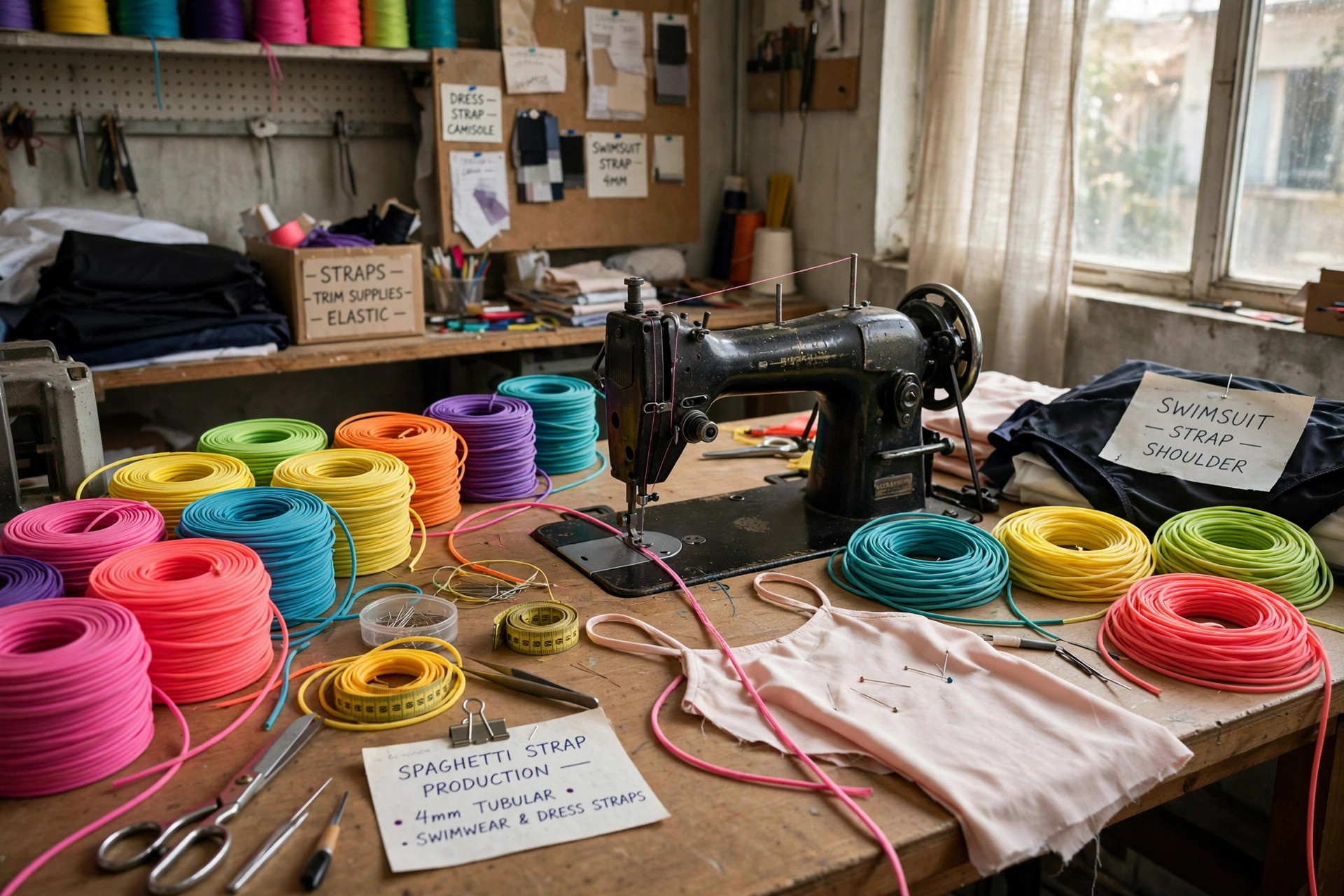
Spaghetti strapping is the narrow tube of fabric — named for its resemblance to a strand of spaghetti — that forms the thin shoulder straps on swimsuits, sundresses, camisoles, lingerie and evening wear. It is a small trim with a structural job: the strap carries the weight of the garment, sets how it hangs, and is one of the first places a garment fails when the strapping is weak or badly made. This directory covers spaghetti strapping factories supplying the garment industry.
Strapping is made by specialist trim factories rather than by the garment factories themselves, because turning a consistent, smooth fabric tube at volume — in garment fabric or in a matched standard fabric, in many colors — is its own production skill. The sections below explain how spaghetti strapping is made and used, the difference between bias cut and straight cut production, and what a garment factory specifies when it orders strapping for a style.
Strapping & Trim Resources
What Spaghetti Strapping Is and Where It Is Used
Spaghetti strapping starts as a narrow strip of fabric folded and stitched into a slim cord or tube, sometimes with a filler or elastic core, and finished so no raw edge shows. Sewn to a garment, it becomes the fine strap that gives spaghetti-strap dresses, camisole tops, slip dresses, lingerie and swimwear their name and their look. The same tubing is also used for loops, ties, drawstring-style details and the hanging loops and bows that finish lightweight garments.
Swimwear is one of the most demanding uses, which is why the factory listed below counts swimwear manufacturers among its accounts: straps on a swimsuit must stretch and recover with the garment, resist pool and salt water conditions in use, and stay comfortable on skin under tension. Dress and camisole straps are less stressed but more visible, so there the priority is a smooth, even tube that matches the garment fabric and color exactly.
Bias Cut, Straight Cut and Related Trims
Trim factories produce strapping in both bias cut and straight cut forms. Bias cut strapping is cut on the diagonal of the fabric, which gives the finished tube more give and a softer drape that follows curves — useful for straps that must move with the body. Straight cut strapping is cut along the grain, giving a firmer, more stable strap with less stretch. The right choice depends on whether the strap is decorative, load-bearing, or expected to work with elastic inside.
Spaghetti strapping is normally made and sold alongside the other narrow fabric trims a garment factory buys from the same specialist: bias and straight cut bindings, gathered lace, flat lace and other trims, plus craft trims for special occasions. Buying the narrow goods from one trim factory keeps color, hand and quality consistent across a garment that may carry several of these components at once.
How Garment Factories Specify Strapping
A strapping order names the finished width of the tube, the fabric or fabric type, the color, whether the core is plain, filled or elasticated, and the put-up — cut lengths for a production run or continuous yardage for the factory's own cutting. Where the strap must match a garment fabric exactly, the factory may supply its own fabric for the trim maker to convert; where a standard fabric is acceptable, the trim factory works from its own stock in a matched color.
Samples come before volume. The garment factory sews sample straps into prototype garments and checks comfort, strength at the join, appearance after pressing, and — for swimwear — stretch and recovery against the swimsuit fabric. Because a strap failure is a garment failure, reputable trim factories build their business on repeat accounts with known garment manufacturers, as the listing below shows with its long-standing swimwear customers.
A Note on Lace and Trim Coordination
Spaghetti straps are often designed together with lace: a lace-trimmed camisole or swimsuit may carry straps, gathered lace edging and flat lace inserts that must all arrive in the same color standard. The factory listed below also operates as a lace source — its second website is devoted to gathered lace — which reflects how the trade actually buys: the narrow trim package for a style is coordinated from one supplier wherever possible.
For garment factories sourcing strapping for the first time, the practical route is to start from the garment: bring the style, the fabric and the strap function to the trim factory, and let the factory propose cut, width and core. The directory resources on this page connect strapping buyers with the wider trim and component trade.
Spaghetti Strapping Factory Listings
Factories producing spaghetti strapping and related narrow fabric trims.
J&B Binding and Trimming Mfg, Inc.
J&B Binding and Trimming Mfg, Inc. (also www.gatheredlace.com) is a USA factory. Formerly known as A&S Novelty, the business was purchased by John Bonet in order to continue servicing their valued customers, and the name changed to J&B Binding and Trimming Mfg., Inc. They currently have a factory in Hicksville, NY and have accounts with several well known swimwear manufacturers such as Swimwear Anywhere and Lisa Curran Swimwear. They produce spaghetti strapping, bias cut, straight cut, trims, gathered lace, flat lace, and crafts for special occasions.
Spaghetti Strapping, Bias Cut, Straight Cut, Trims, Gathered Lace, Flat Lace
Address: 29B Midland Avenue, Hicksville, NY 11801 — Office: (516) 433-6341 — Fax: (516) 433-6342 — Email: webmaster@jbbindingandtrim.com or webmaster@gatheredlace.com — Contact: John Bonet, President, or Kathy Rose, Director of Marketing (alt for K. Rose (954) 562-5014)
Also From This Factory
More Trim & Component Resources
Common Questions
What is spaghetti strapping?
Spaghetti strapping is a narrow tube of fabric, named for its resemblance to a strand of spaghetti, used to make the thin shoulder straps on swimwear, dresses, camisoles and lingerie. It can be plain, filled or elasticated depending on the garment.
What is the difference between bias cut and straight cut strapping?
Bias cut strapping is cut on the diagonal, giving the tube more give and a softer drape that follows curves. Straight cut strapping is cut along the grain and is firmer and more stable, with less stretch.
Who buys spaghetti strapping from trim factories?
Garment factories buy it as a specialist narrow trim — swimwear manufacturers are a major customer group, along with dress, lingerie and camisole makers who need straps matched to garment fabric and color at production volume.