Levi's Arcuate Stitching History
Earlier company descriptions, brand line-ups, store counts and photographs from the history of Levi's Arcuate Stitching, kept for historical reference.
← Back to the current Levi's Arcuate Stitching profile
The Company Description of Its Time
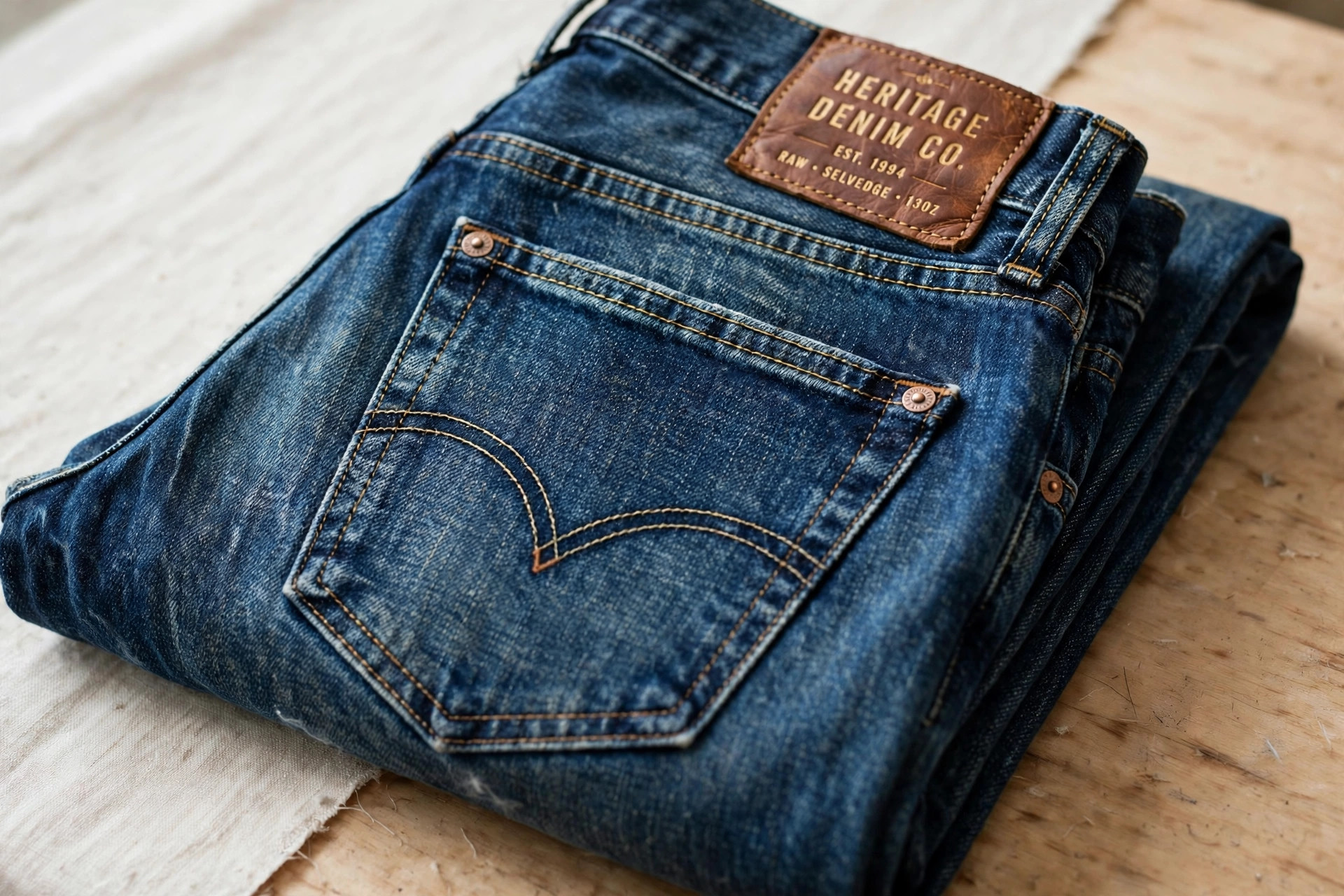
This page is about a line of thread. Arcuate means shaped like a bow, curved, the historical record begins, and an arcuate pocket is a type of pocket used in clothing, especially jeans made by Levi Strauss. The iconic stitching on the back pockets of Levi's jeans is called the Arcuate Design because of its arc formation - one of the most globally recognisable design details on a pair of Levi's jeans, used on Levi's earliest waist overalls. The pants had been called waist overalls before becoming the blue jeans patented in 1873: in that year Levi Strauss and Jacob Davis were granted patent number 139,121, dated May 20, for riveting pants, and the waist overalls of the patent had one back pocket with the Arcuate stitching design, a watch pocket, a cinch, suspender buttons and a rivet in the crotch.
Painted On: The Arcuate in World War II
War turned decoration into a regulated material. World War II forced changes to the Arcuate stitch design as the overalls were altered to conform to the rules set by the War Production Board for the conservation of raw materials: the crotch rivet, watch pocket rivets and back cinch were removed to save fabric and metal, and the Arcuate stitching design itself was removed, as the thread was decorative only and not vital to the usefulness of the garment. The United States government told the company it could not stitch its Arcuate back pocket design on the 501 jeans because decorative thread was not a functional use of an essential war item. So LS&CO. sewing machine operators painted the Arcuate stitching on each pair - on the pockets of the 501 men's and 701 women's jeans - 'For The Duration' of the war.
The historical record page illustrates that episode with a marketing item used to explain War Production Board General Limitation Order No. L181 and its effect on the jeans, and with a photograph of a World War II war production label; both images are carried in the gallery on the history page by reference. The painted arc is the design's biography in one gesture: a trademark so commercially essential that, forbidden to sew it, the company brushed it on by hand, pair after pair, knowing paint would fade where thread would have lasted. In 1943, the filing adds, the Arcuate stitching design was registered as a trademark - mid-war, while it was still being painted rather than sewn.
The Diamond Point, and the Batwing
Circa 1947 the post-war version of the 501 jeans started coming off the production line. The cinch was gone forever, the rivets were put back on the watch pocket, and the Arcuate was now stitched with a double-needle machine, which gives it the 'diamond' shape at the point where the two lines of stitching meet. This created the uniform look of the Arcuate, in contrast to previous years, when the single needle application gave each Arcuate design a unique appearance depending on the skill of the operator. That contrast is a dating tool as much as a design note: a pre-war arc was one operator's hand-guided curve, slightly individual on every pair, while a post-war arc carries the machine-made diamond where its two stitched lines cross.
The page closes with the logo that borrowed the stitch. The Batwing logo, which mirrors the Arcuate Design stitching on the pockets of Levi's jeans, has become synonymous with Levi's authenticity and quality, in the historical record - the pocket arc abstracted into the company's housemark. Use this page for the stitching facts only: the 1873 single-pocket beginning, the lost origin and the bird myth warning, the wartime removal and painting under Order L181, the 1943 trademark registration, and the circa-1947 double-needle diamond. The company profile, the founder's biography and the red Tab pages in this cluster each carry different facts, and none of them is a substitute for this one's thread-level record.
Photos


More to Explore on Apparel Search
References & Further Reading
Looking for More Fashion Companies?
This profile is one filing in the Apparel Search company names directory. Browse the full A-to-Z listing on the Fashion Company Names directory, or shop by category in the Apparel Search shopping directory.