The Difference Between Chambray and Denim
Plain weave versus twill — and the underside test that never fails
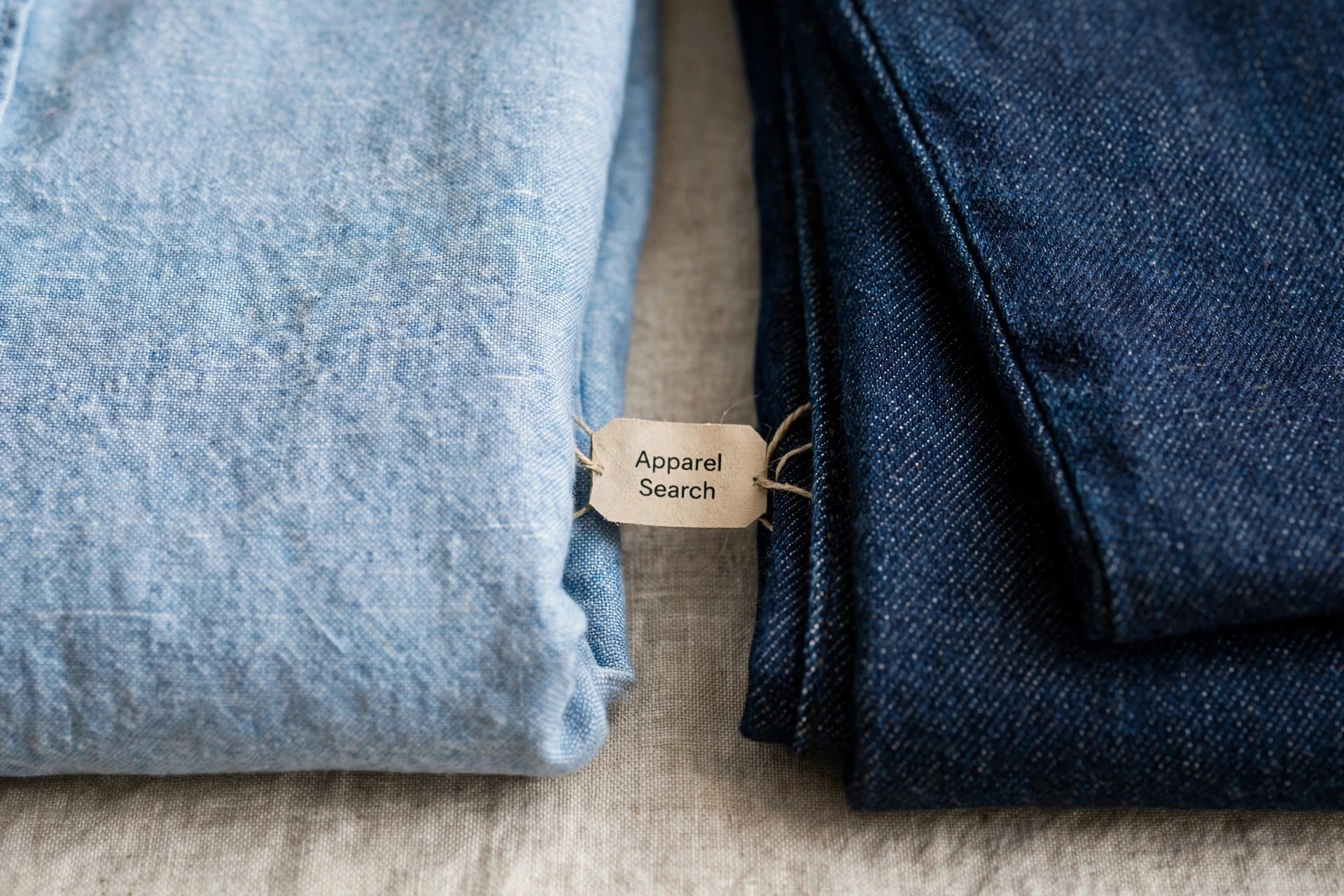
The difference is the weave: chambray is a plain weave, while denim is a twill weave — even though both fabrics traditionally combine a coloured warp with a white weft and can look almost identical from the front. The quickest test is to turn the fabric over: the underside of denim is noticeably lighter in colour, while the underside of chambray looks much more similar to its face side.
Both fabrics can be produced in heavy or light weight versions, so weight alone will not identify them, and both are staples of shirts and casual clothing. If you enjoy fashion, it is worth learning fabrics as well as styles, because chambray and denim behave differently in drape, texture and wear even when their colour is the same classic indigo blue.
Related Fashion Questions & Guides
Chambray: A Plain Weave With a Mottled Look
Chambray is a plain weave — also called tabby weave, linen weave or taffeta weave — which is the most basic of the three fundamental types of textile weaves, alongside satin weave and twill. In a plain weave the warp and weft threads alternate one over the other in the simplest possible interlacing, which produces a smooth, even surface with the same appearance on both sides of the cloth. That evenness is exactly why chambray's underside matches its face.
Chambray was originally a linen-finished gingham cloth with a white weft and a coloured warp, producing a mottled appearance, and it is now also produced with cotton. Although it is the same type of fabric as cambric, chambray typically has a coloured warp and a white weft, though it can be made with any colour in the warp and in the filling, as long as the two differ from each other. That contrast between lengthwise and crosswise yarns is what creates the soft, slightly heathered blue-grey tone most people associate with a chambray shirt.
Denim: A Twill Weave With a Pale Underside
Denim is also made with a coloured yarn in the warp and white yarn in the weft, but it is woven in a twill weave construction. In the twill, the warp thread goes over two threads in the weft before going under one, instead of alternating one over and one under as in chambray. That stepped interlacing creates twill's pattern of diagonal parallel ribs on the face of the fabric, a texture you can see and feel on any pair of jeans if you look closely.
The twill structure also explains the pale underside. Because the coloured warp threads dominate the face of the cloth while the white weft threads show more on the back, the reverse of denim is visibly lighter than its front. That front-back contrast is a direct result of the weave geometry, not of printing or finishing, which is why flipping the fabric over is such a reliable identification test in a shop or fabric store.
Warp and Weft: The Vocabulary You Need
Two terms unlock both definitions. The warp is the set of lengthwise threads attached to a loom before weaving begins — the foundation threads held under tension while the cloth is made. The weft is the yarn that is shuttled back and forth across the warp to create the woven fabric; it can also be referred to as woof or fill. Every woven fabric is an interlacing of these two thread systems, and the pattern of that interlacing is the weave.
With those words in place, the whole comparison reduces to one sentence: chambray and denim share a coloured warp and a white weft, but chambray interlaces them in a plain weave, one over and one under, while denim interlaces them in a twill, over two and under one. The shared yarn colours explain why the fabrics are confused; the different interlacing explains everything else — the diagonal ribs, the two-tone face and back, and the different hand and drape of the finished cloth.
Choosing Between Them
For shirts, chambray's plain weave gives a smoother, lighter and more even cloth that reads as slightly more refined, which is why chambray shirts are often styled as a softer alternative to denim while keeping the same blue workwear heritage. Denim's twill is the sturdier, more textured construction behind jeans and denim shirts, with the diagonal rib adding visual depth and the warp-faced surface showing the familiar fade patterns as the coloured warp yarns wear.
Neither fabric is inherently heavier: both denim and chambray can be produced in heavy or light weight versions, so a lightweight denim shirt can easily be thinner than a heavy chambray. Judge a garment by its stated weight and feel rather than by its name alone. And when a label leaves you unsure, use the field test — check the underside. A back that matches the front points to chambray; a back that is clearly lighter points to denim, every time.
Photos

Common Questions
How can you tell chambray from denim quickly?
Turn the fabric over. The underside of denim is noticeably lighter in colour than its face, because the white weft shows on the back of the twill weave. The underside of chambray, a plain weave, looks much more similar to its face side. The two fabrics are hard to tell apart from the front, so the back is the reliable test.
Is chambray lighter than denim?
Not necessarily. Both chambray and denim can be produced in heavy or light weight versions, so a light denim can be thinner than a heavy chambray. Chambray's plain weave tends to feel smoother and more even, while denim's twill weave gives a diagonal ribbed texture, but weight depends on the yarns and construction chosen.
What weave is each fabric?
Chambray is a plain weave, also called tabby weave, in which warp and weft threads alternate one over the other. Denim is a twill weave, in which the warp thread goes over two weft threads before going under one, creating diagonal parallel ribs. Both traditionally use a coloured warp and a white weft.
If You Have More Questions About Fashion
You may want to try these sections here on Apparel Search: